
In daily reports, we often hear about terms such as resistance, support, or price ceilings and floors, but sometimes the true meaning of these terms may not be entirely clear.
To help everyone better understand the commonly used terms in futures and financial markets, we will explain these terms in a simple way.
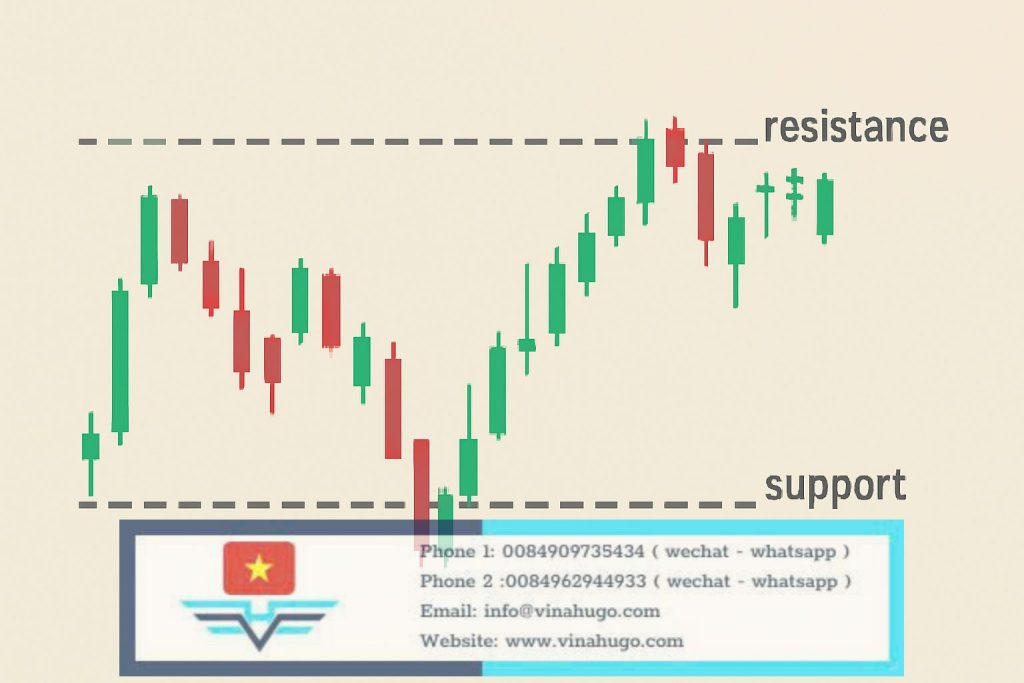
Resistance and Support are terms commonly used in technical analysis charts for financial markets, including stocks and derivatives (futures, options, etc.).
-
Resistance (often referred to as “price ceiling”) represents the level where prices are expected to face selling pressure. It is the collection of the highest points in a price chart. In simpler terms, it’s the price at which selling increases, causing the price to drop or face difficulty moving above that level.
-
Support (also known as “price floor”) represents the opposite, marking the level where prices tend to find buying interest. It is the collection of the lowest points in a price chart. In simpler terms, when the price drops to this level, buyers tend to enter, and the price typically rises again.
These levels are based on actual previous trades, not imaginary data.
Typically, when the market hits a high point compared to the current trading price, the price tends to fall if there is significant selling pressure. Conversely, if the price surpasses the previous resistance level, it may continue rising. The same logic applies to support levels: when the price hits support, it often bounces back up if there is sufficient buying interest.
Commodity traders use these concepts to measure selling pressure, inventory levels, and market expectations. For example, if the expected coffee price is 41,000 VND/kg, it could represent a resistance level. If the domestic price reaches 40,000 VND/kg and coffee starts being sold in higher quantities, buyers may reduce the price to continue buying if the price goes lower. On the other hand, if the price touches 41,000 VND/kg but there are no buyers, the price may rise further, breaking through the next resistance level, such as 43,000 VND/kg or even higher.
Therefore, “resistance” is often viewed as a level where the market is reluctant to push higher, while experienced market participants use resistance and support levels to assess selling pressure, buying interest, and inventory levels.
In summary, these terms are key not only in technical analysis but also in understanding market psychology, such as supply and demand and the intent of buyers and sellers in a given market.