
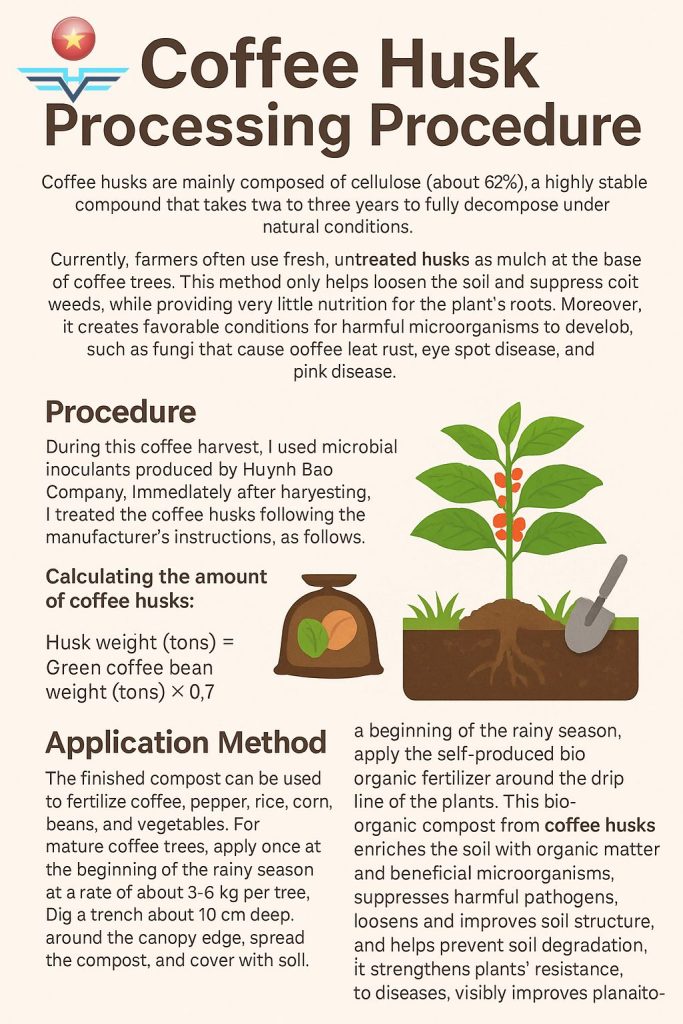
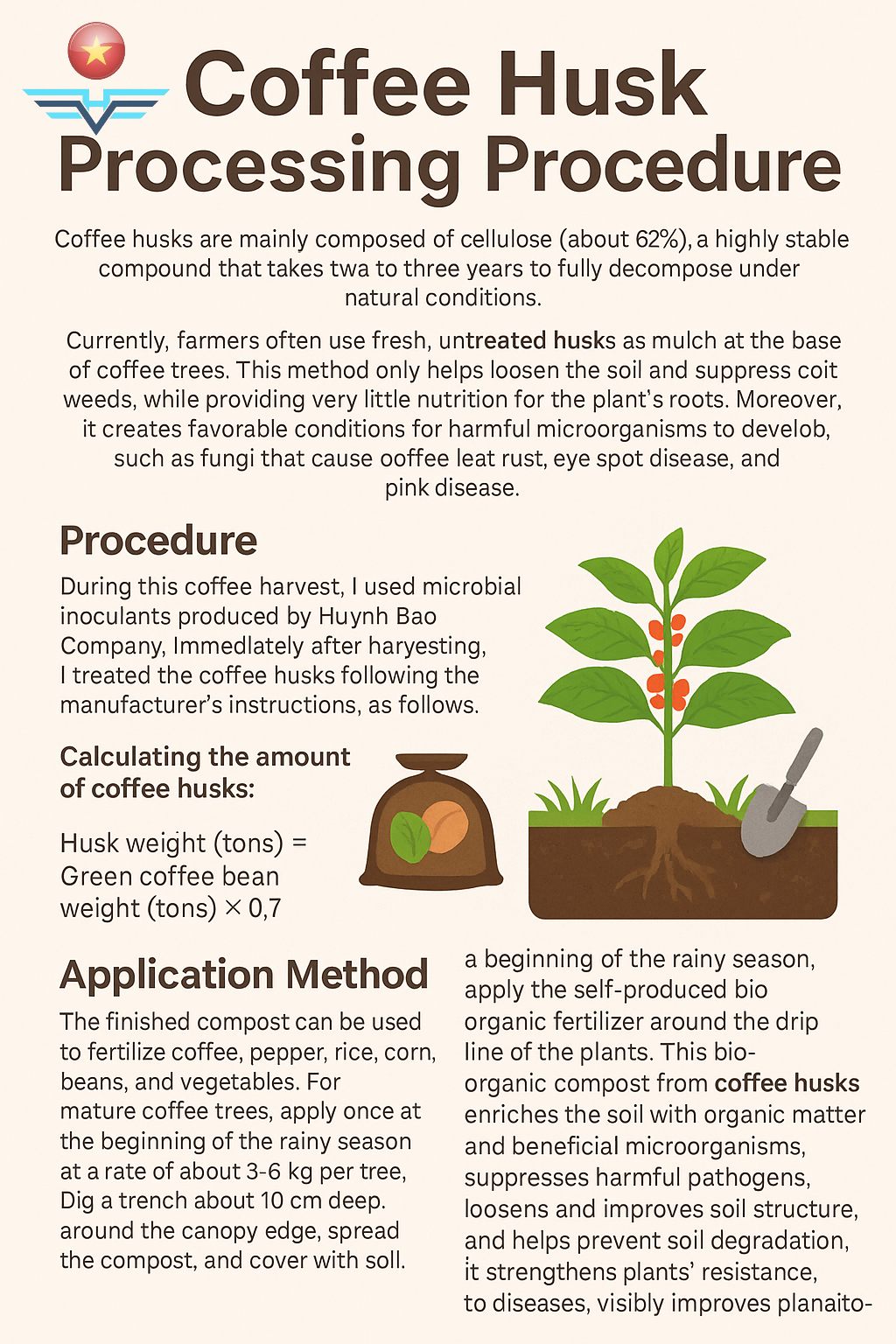
Coffee husks are mainly composed of cellulose (about 62%), a highly stable compound that takes two to three years to fully decompose under natural conditions.
Currently, farmers often use fresh, untreated husks as mulch at the base of coffee trees. This method only helps loosen the soil and suppress weeds, while providing very little nutrition for the plant’s roots. Moreover, it creates favorable conditions for harmful microorganisms to develop, such as fungi that cause coffee leaf rust, eye spot disease, and pink disease.
Procedure
Table of Contents
During this coffee harvest, I used microbial inoculants produced by Huynh Bao Company. Immediately after harvesting, I treated the coffee husks following the manufacturer’s instructions, as follows:
Calculating the amount of coffee husks:
Husk weight (tons) = Green coffee bean weight (tons) × 0.7.
Application Method
The finished compost can be used to fertilize coffee, pepper, rice, corn, beans, and vegetables. For mature coffee trees, apply once at the beginning of the rainy season at a rate of about 3–6 kg per tree. Dig a trench about 10 cm deep around the canopy edge, spread the compost, and cover with soil.
Results
At the beginning of the rainy season, apply the self-produced bio-organic fertilizer around the drip line of the plants. This bio-organic compost from coffee husks enriches the soil with organic matter and beneficial microorganisms, suppresses harmful pathogens, loosens and improves soil structure, and helps prevent soil degradation. It strengthens plants’ resistance to diseases, visibly improves the plantation, and reduces the need for chemical fertilizers, thereby lowering production costs.
Notes
During composting, the temperature of the pile can rise to about 70 °C, causing significant moisture loss and drying of the pile. Therefore, every 20 days, water should be added to maintain moisture. After about 90 days, the compost is ready for use.