
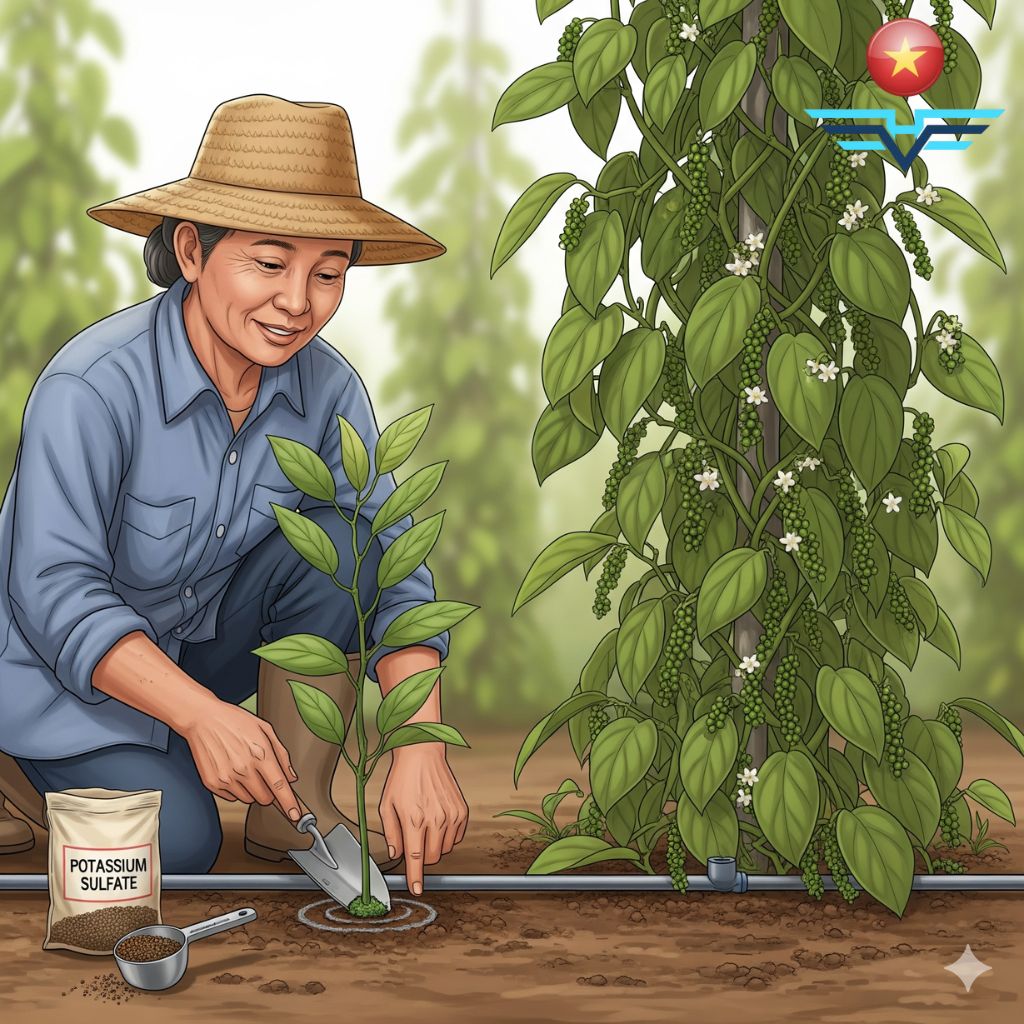

By Trinh Van Ba – Ea Knop Town, Ea Kar District, Dak Lak, Vietnam
After many years cultivating black pepper (Piper nigrum L.), seasoned grower Trinh Van Ba shares his hard-earned experience on preventing the serious problem of flower and fruit drop, which can sharply reduce yields. Below are the three main causes he has repeatedly observed and the practical prevention methods that have worked in his own pepper gardens.
1. Hot Dry Foehn Winds (Gio Phon)
Table of Contents
These dry winds typically occur from late March to June (lunar calendar).
-
Effect: Foehn winds drastically lower humidity, which is critical during the pepper’s flowering and pollination stage. When humidity is too low, pollen sacs cannot open, pollination fails and flowers drop massively.
-
How to recognize: In the early morning you will not see the usual dew on leaves.
Prevention Measures
-
Plan for early flowering by controlling irrigation and timing water cuts.
-
Apply foliar sprays rich in secondary and trace elements, especially calcium and boron, at the “cua ga” (flower bud) stage.
-
Keep soil surface humidity high; avoid pruning the living support trees at this time.
-
Ground cover plants such as peanut grass or other beneficial cover crops help maintain moisture.
2. Spraying Copper-Based Fungicides During Flower or Fruit Set
Copper fungicides are useful after harvest to sanitize the garden, but spraying while pepper vines are flowering or bearing young fruit can cause massive flower and fruit drop.
-
Damage pattern: Dropping occurs weeks after spraying, making it hard to trace the cause. Fruit that remains grows unevenly in size, and additional fertilization or foliar sprays can worsen the problem.
Prevention Measure
-
Never spray copper-based fungicides when pepper vines are carrying flowers or young berries.
3. Heat Shock from Midday Irrigation
During the fruiting stage, pepper vines need regular watering to transport nutrients and regulate temperature. But watering during extreme midday heat (often 39–40 °C or higher) can cause a sudden temperature shock:
-
The hot plant tissues suddenly cool, causing cellular contraction in the flower stalk.
-
This breaks the abscission layer between flower and branch, leading to delayed but heavy flower and fruit drop.
Prevention Measure
-
Avoid watering during the hottest part of the day. Schedule irrigation for early morning or late afternoon instead.
Key Takeaways
-
Identify the cause before acting; random treatments often make losses worse.
-
Foehn winds, copper fungicide misuse, and sudden heat shock are the three most common and damaging triggers of pepper flower and fruit drop.
-
There is no curative treatment once the damage is done—prevention is the only effective strategy.
Meta Description: Experienced farmer Trinh Van Ba from Dak Lak shares three main causes of flower and fruit drop in black pepper—foehn winds, copper fungicide misuse, and heat shock—and proven prevention methods.