
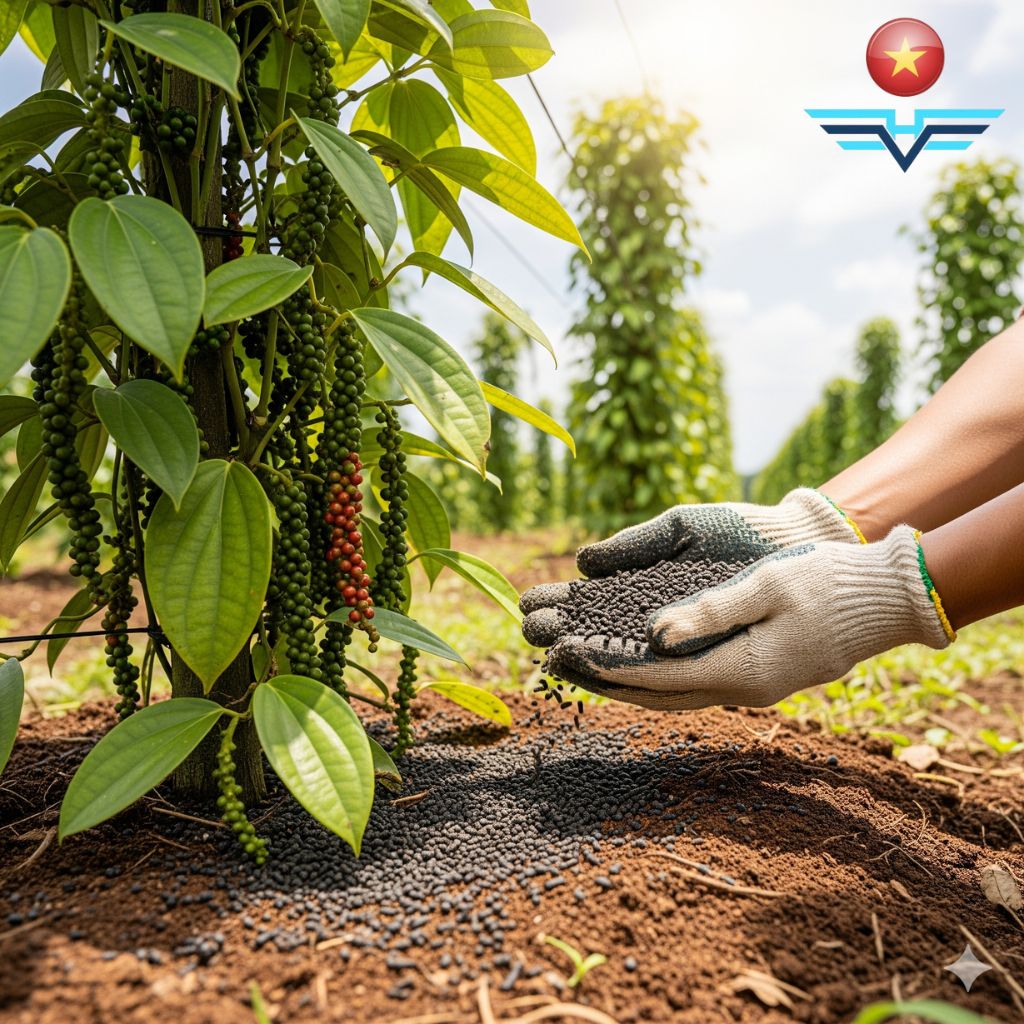

Black pepper (Piper nigrum) is a high-value but extremely demanding crop. According to seasoned grower Nguyen Minh Vinh from Cam My, Dong Nai, proper fertilization and soil care are critical for healthy vines and consistent harvests. Below is his practical guide to organic–biological fertilization combined with timely chemical inputs.
1. Preparing the Soil and Young Plants
Table of Contents
-
Select healthy seedlings matched to the local soil.
-
Base fertilization: Mix 10–15 kg of well-decomposed animal manure per plant with Metarhizium fungi (from Chu Se soil) to prevent root mealybugs.
-
During the first three years, pepper vines rarely suffer disease if the soil is well prepared.
-
At the end of the rainy season, add a small dose of organic phosphorus or well-composted chicken manure to strengthen drought resistance.
-
If young vines show yellowing leaves from micronutrient deficiency (Mg, B), spray a foliar micronutrient or a concentrated bio-organic fertilizer for rapid recovery.
2. Top Dressing & Irrigation Tips
-
Protect the roots: Pepper roots are fragile—avoid deep digging. Dissolve fertilizer in water before application and place it 50–60 cm from the stem, just beyond the canopy line.
-
Best timing: Early morning or late afternoon (before 9 a.m. or after 3 p.m.).
-
If applying dry fertilizer, lightly loosen soil at 60 cm from the stem and cover with soil. Add ~2 kg of well-composted chicken manure around the canopy.
3. Fertilizing Mature Pepper Vines
Fertilizer scheduling depends on harvest time and variety:
a. Post-Harvest “Rest” Period
-
Do not fertilize immediately after harvest. Prune and rest vines for 30–45 days depending on vine vigor.
-
Near the start of the rainy season, wash leaves with copper-based fungicide + lime to prevent fungal diseases.
-
Afterward, irrigate 2–3 times like heavy rain—but do not fertilize yet.
-
When new shoots appear, apply a strong dose of humic-rich organic fertilizer—this is critical to ensure uniform flowering and avoid multiple blooming phases.
b. Flowering & Fruit Set
-
Spray micronutrient foliar feed (especially Calcium–Boron) and treat for pests such as planthoppers and root nematodes.
-
As fruit sets, apply bio-organic fertilizer to the root zone and spray for fruit-drop and rot prevention.
c. Grain Development & Ripening
-
Fertilize again with bio-organic fertilizers (Humic, etc.) during grain formation.
-
For final fruit sizing, use an NPK blend with high potassium (K) and low nitrogen (N).
-
When Indian pepper varieties begin early ripening, add amino-based organics for strong seed fill and to prevent plant exhaustion.
Tip: Split fertilizer into multiple small applications—just as people cannot eat a whole sack of rice at once, pepper vines absorb nutrients best in small, regular doses.
4. Sustainable Practices for Long-Term Productivity
-
Remove diseased vines completely—burn or destroy infected material.
-
Avoid grazing goats in the pepper garden; it depletes soil fertility.
-
Build good drainage ditches because pepper is highly susceptible to root rot in waterlogged soils.
-
Keep the vine base clean, removing “runner” shoots within 40–50 cm of the stem.
-
Always follow the “Four Rights” of fertilization: right type, right amount, right time, right method.
Key Takeaways
-
Combine organic, bio-organic, and chemical fertilizers for a balanced nutrient supply.
-
Time fertilization carefully: post-harvest rest → uniform flowering → fruit set → grain development.
-
Healthy soil and proper drainage are as important as nutrient management.
Meta Description: Discover expert tips for fertilizing black pepper plants from Vietnamese grower Nguyen Minh Vinh. Learn how to combine organic and chemical fertilizers, schedule applications, and boost sustainable yields.