

Rapid Expansion and Market Volatility
Table of Contents
In the past decade, black pepper prices once soared above 220,000 VND/kg, drawing farmers across Đăk Lăk, Đăk Nông and Gia Lai into large-scale planting. Even after prices fell to around 80,000 VND/kg, pepper profits still looked attractive compared with coffee or cashew.
-
Explosive growth: From just a few thousand hectares in 1986, pepper acreage rose to over 71,000 ha by 2014, far exceeding the 2020 regional target.
-
Major producers: Đăk Lăk leads with 28,000 ha, Đăk Nông follows with nearly 25,000 ha, and Gia Lai has about 16,000 ha—all well above planned limits.
Consequences of Uncontrolled Planting
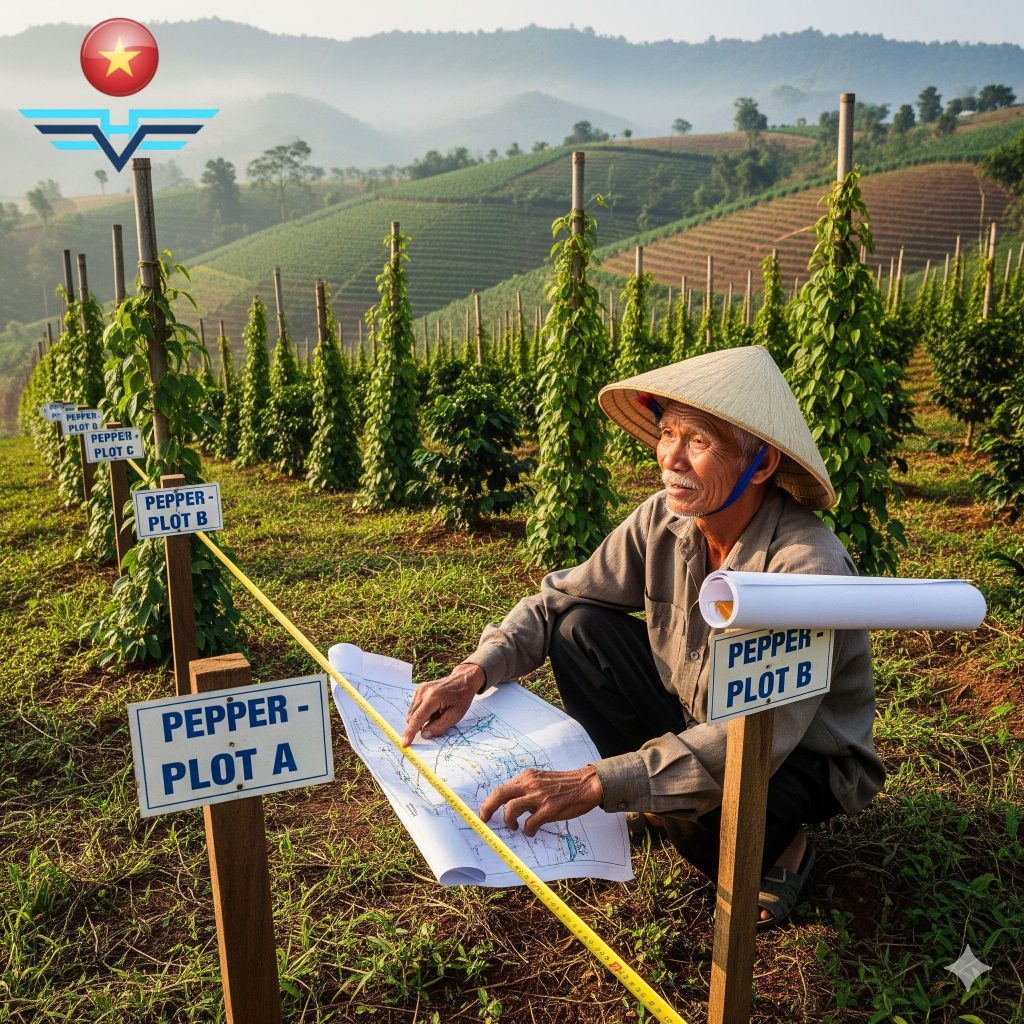
The unplanned “pepper rush” has disrupted crop zoning and created serious agronomic problems:
-
Soil and site mismatch: Farmers planted pepper on marginal land without improving soil fertility or following scientific practices.
-
Poor seed quality: Use of unverified pepper varieties increased vulnerability to pests and diseases.
-
Rising losses: In 2016, Gia Lai reported more than 6,155 ha of diseased pepper, including quick wilt, slow wilt, root-knot nematodes and mealybugs, causing losses worth thousands of billions of VND.
Recommendations for Sustainable Growth
The Standing Committee of the Central Highlands Steering Committee urges immediate action:
-
Zoning & Acreage Control
-
Define and protect suitable pepper-growing zones.
-
Encourage farmers in unsuitable ecological areas to shift to alternative, higher-value crops.
-
-
Research & Technical Support
-
Develop and distribute high-quality, disease-resistant pepper varieties.
-
Provide standardized cultivation protocols and integrated pest management guidance.
-
-
Farmer–Enterprise Linkages
-
Promote cooperative production groups that partner with agribusinesses for stable input supply and guaranteed market outlets.
-
Strengthen regional branding and marketing to increase the value of Central Highlands pepper.
-
Building a Sustainable Pepper Industry
Experts emphasize that careful planning and coordinated action—from government agencies to farmers and enterprises—are essential. Stabilizing acreage, improving technical standards, and creating strong market linkages will protect both farmers’ incomes and the long-term reputation of Central Highlands black pepper.