
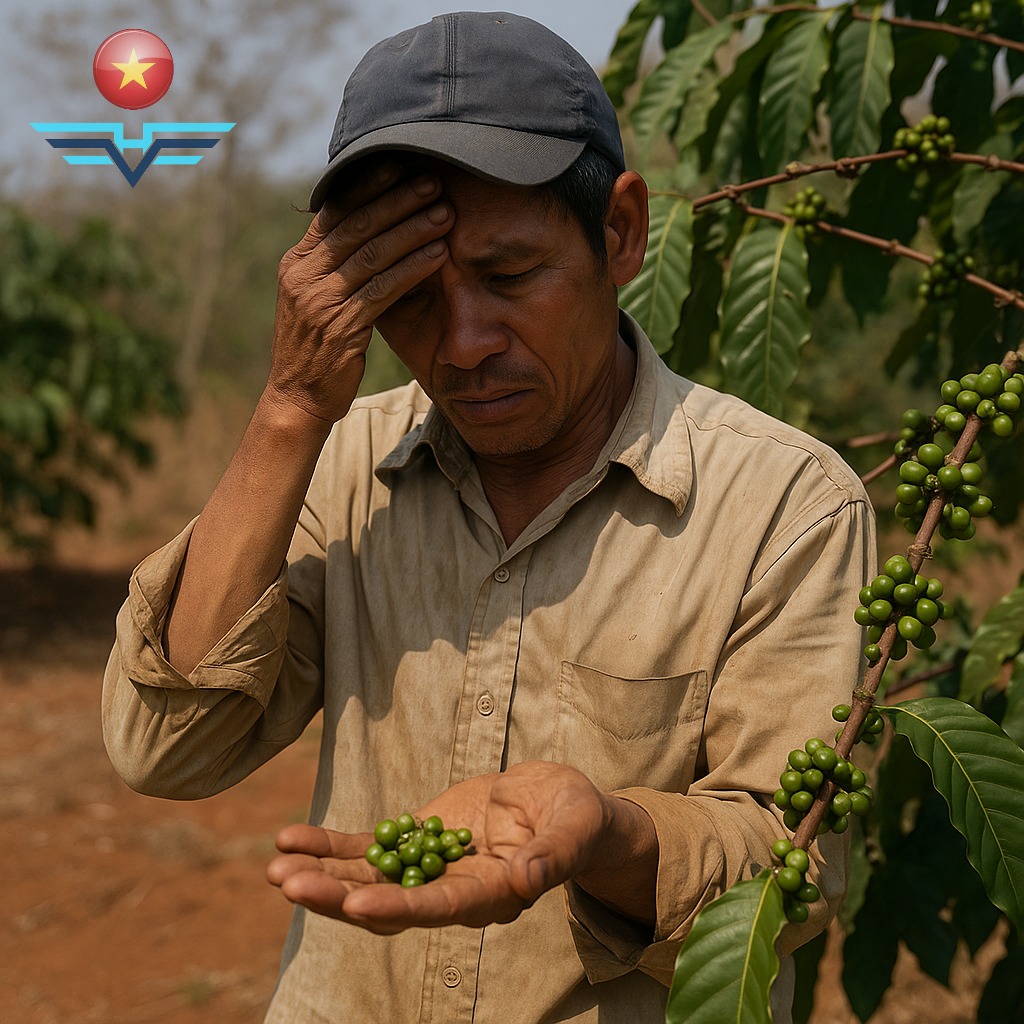
In Bon Sê Rê Ú village of Đắk Nia Commune, just 20 km from Gia Nghĩa town (Đắk Nông Province), 204 households—mostly of the M’nông and Mạ ethnic groups—struggle to escape poverty. Their income depends almost entirely on coffee and cassava, yet a lack of access to affordable credit drives many into the hands of private moneylenders charging 50–70% annual interest.
When the 2013–2014 coffee harvest ended, many homes had no beans left to store even though prices were at a multi-year low. Normally, farmers keep beans to sell later at higher prices, but this year they were forced to sell immediately to repay debt, often ending the season empty-handed.
The Costly Cycle of High-Interest Loans
Table of Contents
K’Song’s Story
-
Farm size: 2 hectares of coffee
-
Official loan: 20 million VND from the Social Policy Bank, only enough for one fertilizer round when three are needed each year.
-
Agribank loan: Refused due to “no available funds.”
Desperate, K’Song borrowed 40 million VND at 5% per month (≈60% annually) from a private lender. Poor yields brought only 2.5 tons of beans, and prices dropped to 33–34 thousand VND/kg.
“Even though prices are at their lowest in years, I’ve sold every kilo immediately to repay debt—every day I delay means more interest. Now I have no beans left and don’t know how I’ll support my children or next year’s crop,” K’Song said.
K’Thanh Faces the Same Trap
With 3 hectares of coffee, K’Thanh secured only a 30 million VND social policy loan and, despite holding a land-use certificate, was denied credit by Agribank. He also turned to a private lender at 5% monthly interest:
“Farming with 60% annual interest just makes the rich richer while we stay poor,” he lamented.
Like many others, both men refuse to name their lenders, fearing loss of future access to this informal but often their only source of credit.
Widespread Hardship Among Ethnic Minority Farmers
Across Bon Sê Rê Ú and Đắk Nia, many ethnic-minority families are trapped in high-interest debt. After repaying both principal and usurious interest, little remains—especially painful as Tet approaches.
Village chief K’Bình has appealed for greater access to preferential government loans to help farmers invest in production and escape poverty.
Commune vice-chairman Nguyễn Thái Ban confirmed that local authorities are reviewing the crisis and will petition higher-level agencies and banks to:
-
Expand formal credit programs for farmers, and
-
Crack down on loan-sharking to protect rural livelihoods and public order.
Breaking the Debt Cycle
To end this destructive cycle, experts recommend:
-
Increasing low-interest credit lines from state banks.
-
Strengthening oversight to prevent predatory lending.
-
Supporting coffee farmers with training and access to sustainable financing.
Without swift action, Đắk Nông coffee growers will remain vulnerable—forced to sell their crops at the lowest prices while high-interest lenders profit from their hardship.