
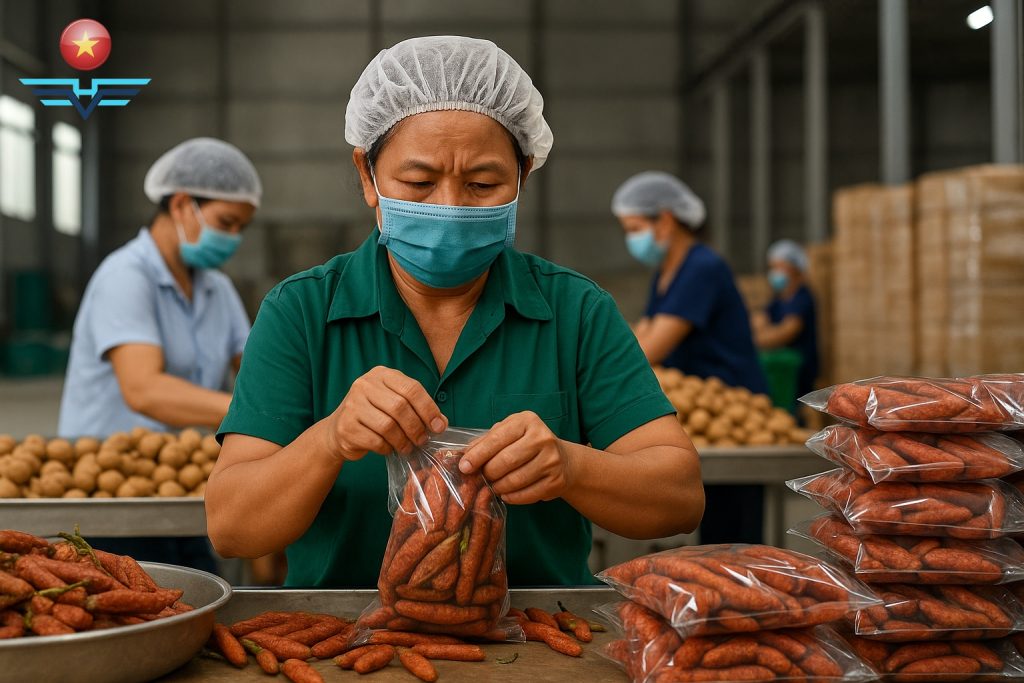
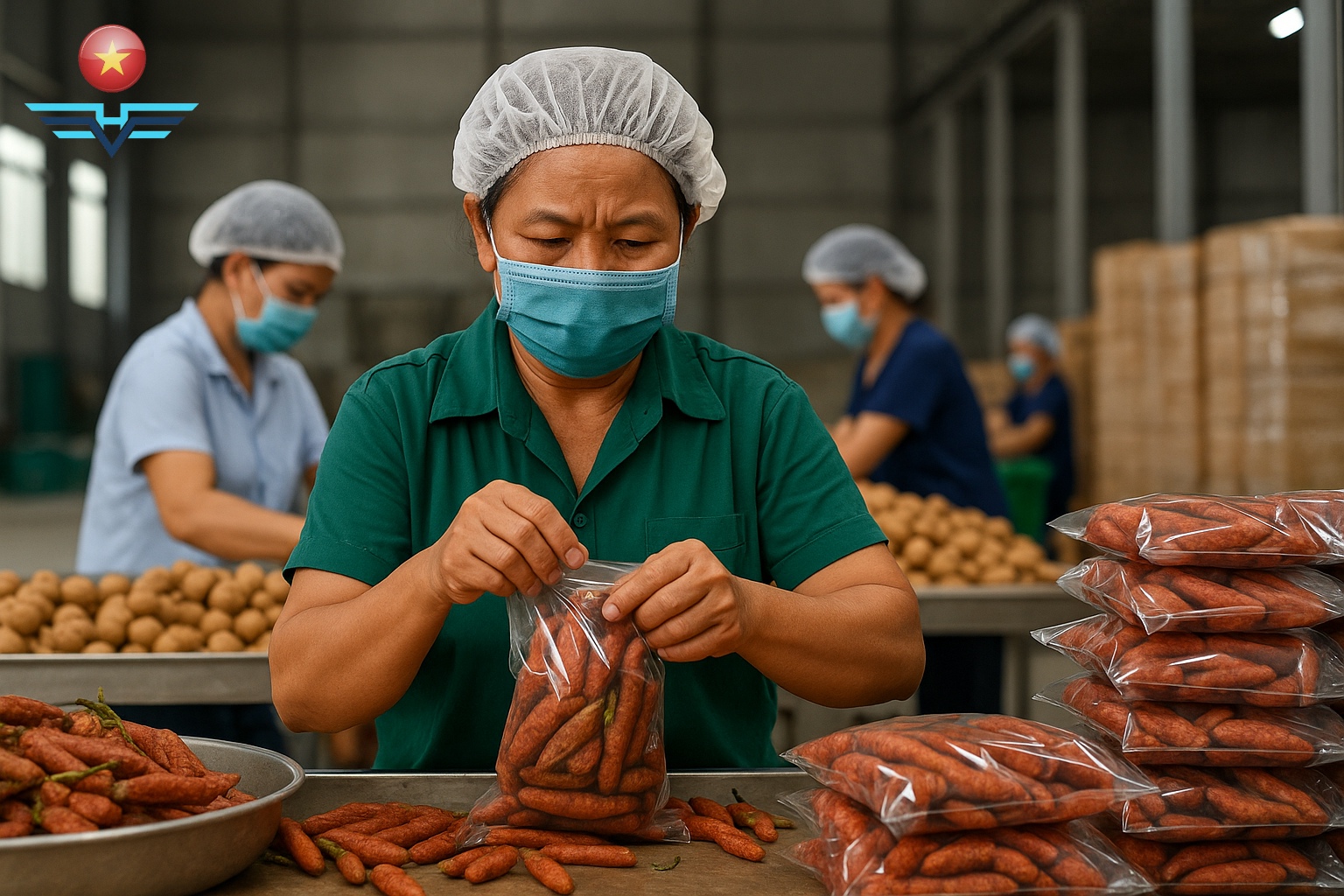
Weaknesses in processing, preliminary processing, and brand building are among the main reasons why Vietnam’s agricultural products remain at a disadvantage in global markets.
Failure to Capitalize on Branding
As Minister of Industry and Trade Vũ Huy Hoàng emphasized during a recent National Assembly Q&A session, Vietnam produces many high-quality agricultural products, yet these are often exported in raw form. Foreign buyers then process and rebrand them, selling the products under different labels for much higher prices.
Experts confirm that this phenomenon is real. For example, Vũ Đình Bác, Chairman of the Thanh Hà Lychee Export Association (Hải Dương), noted that even though Thanh Hà lychees have been granted geographical indication certification, their brand remains poorly protected.
“There are low-quality lychees exploiting this brand for profit. Moreover, our lychees are mostly exported fresh. In neighboring countries, they only need to perform simple preliminary processing—peeling, repackaging, and re-labeling—to multiply the product’s value many times over,” Bác explained.
Lawyer Hoàng Ngọc of Nhiệt Tâm Law Office (Hanoi) added:
“When a country imports fresh produce, processes it, and rebrands it under their own name, from a legal standpoint, they are not violating any trademark rules.”
This leaves Vietnam at a clear disadvantage. For instance, China often buys raw Vietnamese products, repackages them, and sells them at higher prices. Even with geographical indication certification, it is difficult to trace the original source.
“In this case, we can only blame ourselves. Vietnamese enterprises have neglected processing and thus have essentially surrendered their own brands,” Ngọc concluded.
Processing Remains a Weak Link
Economist Nguyễn Minh Phong (Vietnam Academy of Social Sciences) pointed out:
“Vietnam’s agricultural export value remains low mainly because we export in raw form. Take coffee as an example: farmers might sell raw beans for around 15,000 VND per kilogram, yet after processing abroad, the same coffee sells for as much as 1.5 million VND per kilogram—about 1,000 times more.”
Similarly, Vietnamese rice was once imported raw by Thailand, then milled and sold at significantly higher prices. Phong stressed the need to identify strategic crops, plan carefully, invest in high-quality varieties, stabilize output, and focus on post-harvest processing to diversify products and raise value.
According to Nguyễn Viết Vinh, Secretary-General of the Vietnam Coffee-Cocoa Association, most Vietnamese agricultural and aquatic products still rely heavily on foreign markets for consumption.
“Currently, a kilogram of coffee sells for about 2 USD, but after processing, it can sell for 7 USD per cup. To truly raise the value, we need to improve every stage—from production to harvest to processing,” Vinh explained.
“We should focus on sustainable production, establish geographical indications, and invest in post-harvest preservation and processing. This will increase product value and farmer incomes,” he added.