
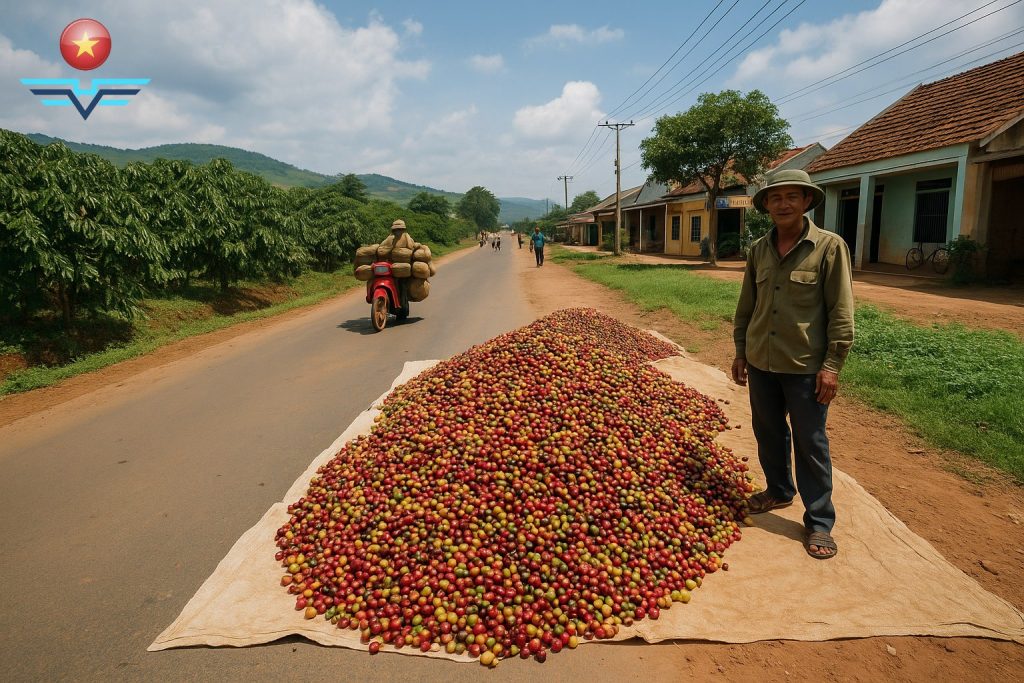
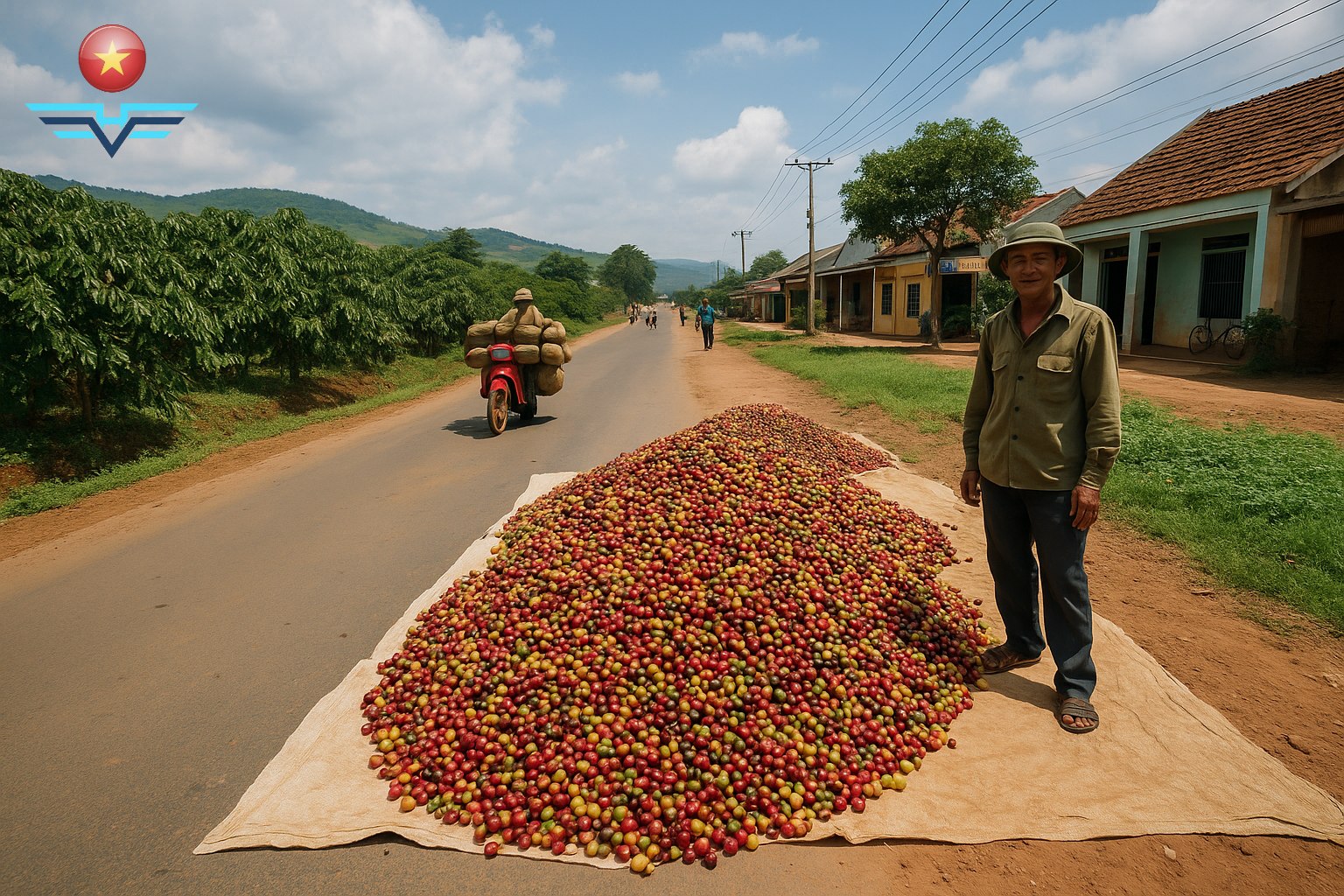
Chiềng Ban Commune in Mai Sơn District, Sơn La Province is now enjoying the “sweet fruit” of coffee farming—but its path to success was far from easy.
In the 1990s, local authorities tested multiple high-value crops such as basil for essential oils, mulberry, and sugarcane, yet none produced the expected economic returns. After study trips to other provinces, Mai Sơn leaders identified coffee as the key crop to transform Chiềng Ban’s economy.
Coffee was first planted here in 1997 with less than 100 hectares. But with limited cultivation skills and unstable prices, farmers were hesitant. In 1999 a devastating frost wiped out coffee just as it was about to fruit, discouraging many growers.
Local authorities responded with technical training courses and support programs. Gradually, confidence returned and farmers continued to plant coffee—laying the foundation for a dramatic agricultural turnaround.
Stories of Perseverance
One emblem of Chiềng Ban’s resilience is Hoàng Văn Chát, an ethnic Thai farmer from Cù 2 hamlet.
-
In 1993, encouraged by local policies, his family borrowed 30 million VND to plant coffee and later took on 50 million VND more in bank loans plus high-interest private loans.
-
In 1999, the severe frost destroyed nearly 14 hectares of coffee, plunging him into debt of nearly 1 billion VND.
-
Chát sold assets and half his land to repay part of the debt and even faced legal troubles.
Despite the hardships, his family never abandoned coffee. Their persistence mirrored the determination of the entire commune.
A Thriving Coffee Economy
Nearly twenty years later, Chiềng Ban has become a 950-hectare coffee powerhouse:
-
1,401 households and 6,322 residents; about 70% of families own at least 1 ha of coffee.
-
300 households cultivate 2–5 ha, and more than 30 households own bulldozers or excavators to modernize production.
-
By 2011, coffee revenues reached 130 billion VND, with stable incomes over 100 million VND per hectare annually.
Among the largest growers is Cầm Văn Dua of Ang hamlet, who manages 7 hectares of coffee. Even long after harvest, his house is packed with sacks of dried coffee beans.
“In the past, without much knowledge, we sold early when prices were low. Now we monitor the market closely and store coffee until prices are right,” Dua explains.
Even when prices fall to 10,000 VND per kilogram of fresh coffee, Dua’s family still earns nearly 1 billion VND each year—proof that farmers now understand market economics and modern farming techniques.
Building a Sustainable Coffee Brand
Chiềng Ban has no additional land for expansion, so the focus is now on intensive cultivation.
Pham Van Khanh, Chairman of the Chiềng Ban People’s Committee, confirms:
“Coffee will remain the key economic crop. We will invest in scientific methods—especially pruning and fertilizing—to build a recognized Chiềng Ban coffee brand with stable prices. This will help ensure sustainable poverty reduction for our commune and for Mai Sơn District as a whole.”
Persistence Pays Off: After early setbacks and severe frost damage, Chiềng Ban has become a leading coffee region of Sơn La Province. Economic Transformation: Coffee now delivers over 100 million VND per hectare annually, lifting hundreds of households out of poverty. Future Focus: With land limits reached, the commune will invest in intensive cultivation and brand building for long-term stability.