
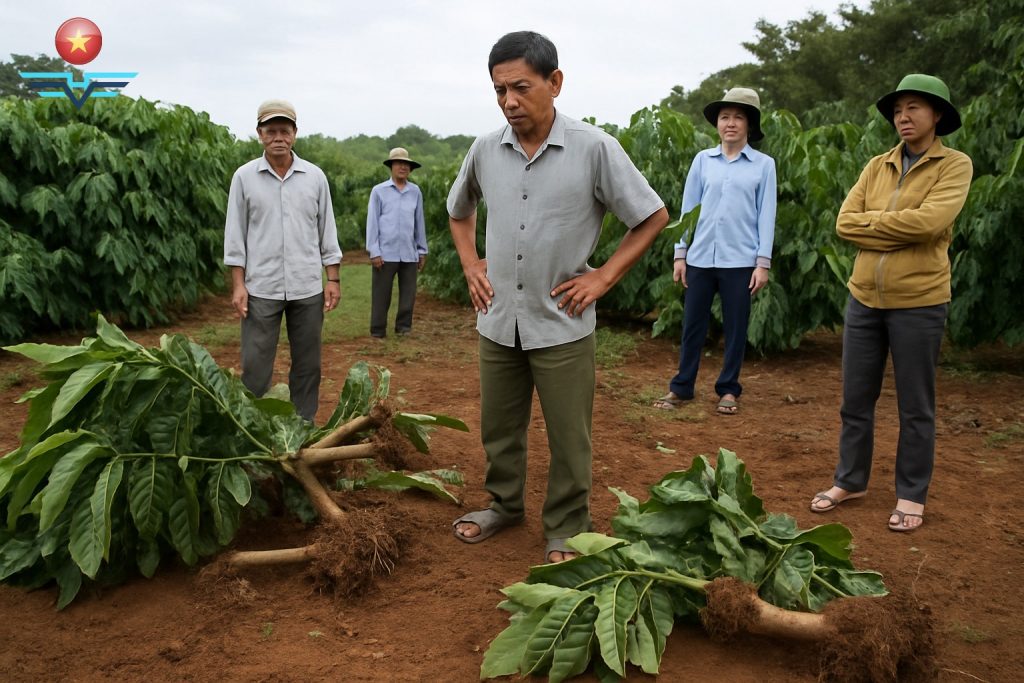
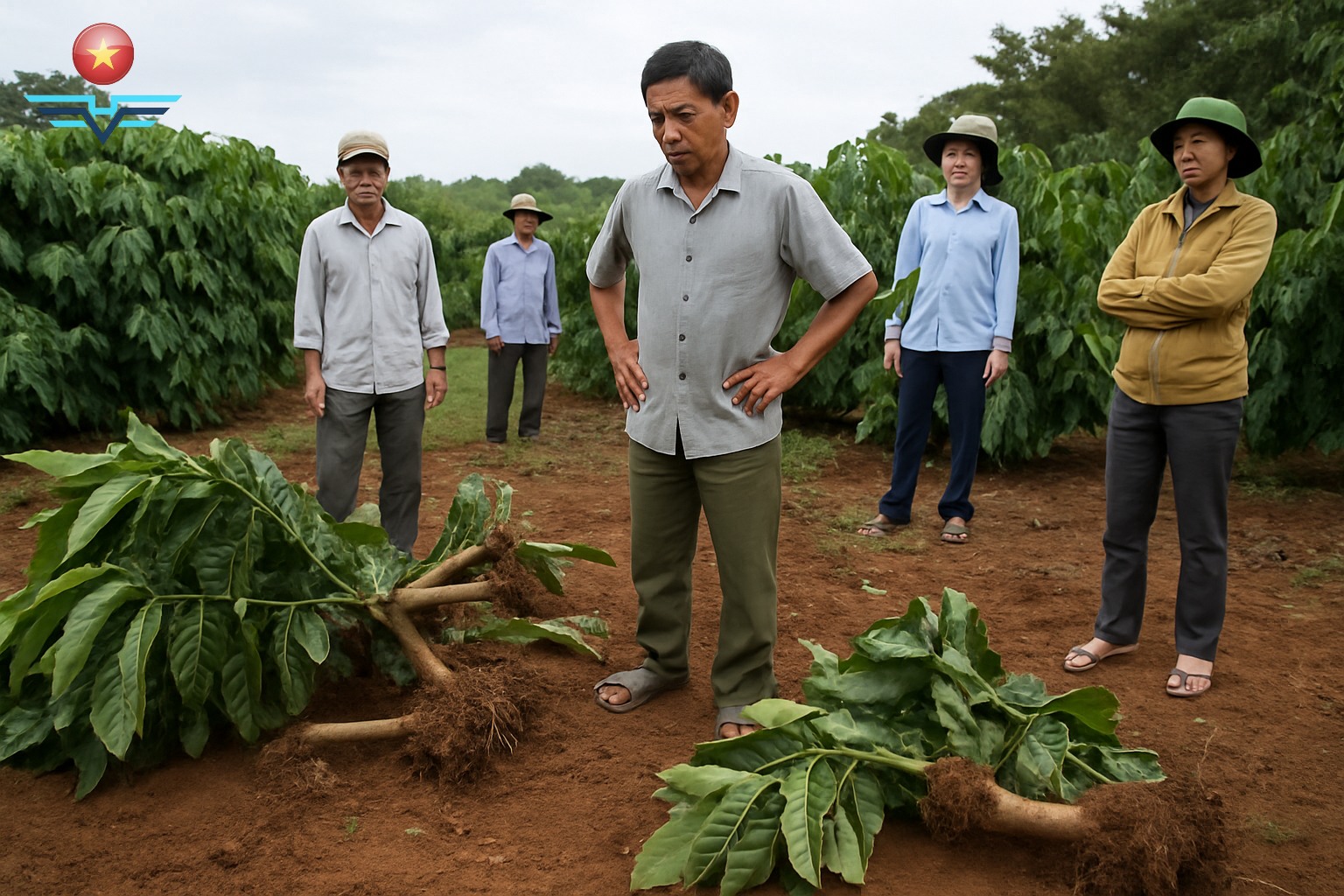
Coffee growers in Hướng Hóa District, Quảng Trị Province, spent significant time, money, and effort pursuing a lawsuit officially labeled a “land use rights dispute,” but in essence it was about one farmer who had “accidentally” planted coffee trees on his neighbor’s property.
The plaintiffs—brothers Nguyễn Đức Diệu and Nguyễn Đức Điền of Phùng Lâm Hamlet, Hướng Phùng Commune—filed suit against their neighbors, two coffee-farming couples Hoàng Sơn and Hồ Ngọc Sơn.
At the first-instance trial on April 3–4, 2012, the Hướng Hóa People’s Court ordered the defendants to return the land they had encroached on while the plaintiffs were away for many years. For the thousands of coffee trees—already at peak harvest—planted and carefully tended by the defendants, the court ruled that the landowners must compensate them for the trees and their investment of labor and capital. (Specifically, Hồ Ngọc Sơn had 2,253 coffee trees valued at 72,000 VND each, totaling about 162 million VND; Hoàng Sơn had 1,644 trees, valued at about 118 million VND.)
The plaintiffs, however, maintained that they only wanted their land back and insisted the defendants remove their coffee trees themselves.
In the recent appellate hearing, the Quảng Trị Provincial People’s Court upheld the plaintiffs’ position: the defendants must return the land and are not entitled to any compensation for planting and caring for the coffee trees.
Still, those attending the trial were left unsettled by the obvious pain and disappointment of the farmers who had lost their investment. Even the plaintiffs admitted during questioning that establishing such a productive coffee plantation required tremendous effort, fertilizer, and years of hard work.
The sense of vindication or defeat may fade with time, but the case has stirred a lingering question among Hướng Hóa’s farming community: Was this outcome truly in keeping with conscience?