
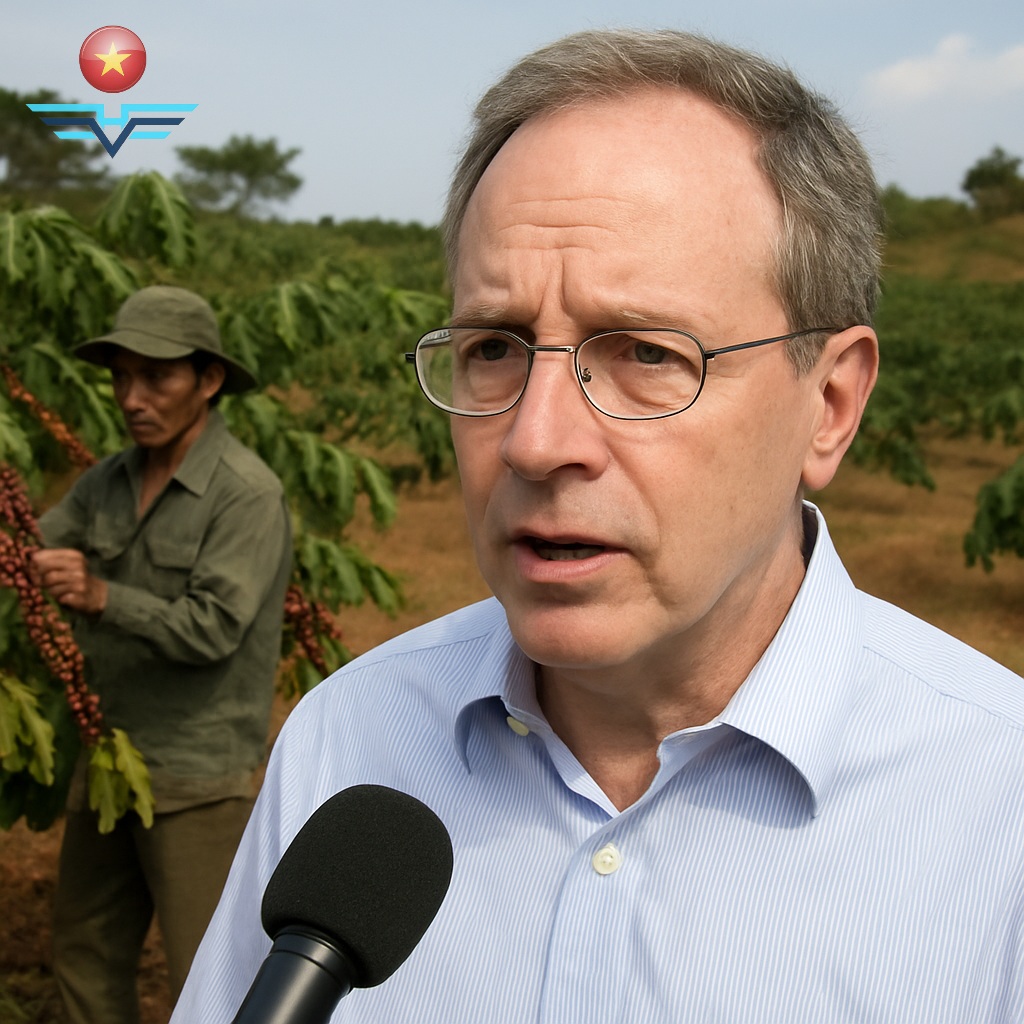
One of the big economic stories of 2011 was the talk of restructuring Vietnam’s economy, but agriculture barely came up. Tiền Phong spoke with Steven Jaffee, the World Bank’s Rural Development Coordinator in Vietnam, about the country’s agricultural future.
On Vietnam’s plan to shift rural workers out of farming
Table of Contents
“To be honest, I’m concerned,” Jaffee said, “that Vietnam intends to cut the share of people working in agriculture from the current 62 % to just 30 % by 2020 under its national socio-economic strategy. As a country built on agriculture, where will the remaining workers go?
“In the next decade, as Vietnamese wages rise, the garment and footwear industries may move to Cambodia, Myanmar or Laos. Will Vietnam really have become a high-tech exporter—say of computer chips—within ten years?”
Agriculture remains a strength—but low value
“Vietnam has a long tradition of farming,” he noted, “but the value added per person is very low—even lower than in Thailand, China, or the Philippines, and surprisingly, even lower than in Cambodia. Much of Vietnam’s land is planted in rice, a relatively low-value crop.”
Yes, Vietnam is the world’s second-largest rice exporter. “But think about it,” Jaffee said. “Thailand sells rice for $700–800 a ton; Vietnam’s sells for only $300–400. Thai farmers are far wealthier. They run large farms with modern methods that generate far higher value.”
Most of Vietnam’s rice goes to state buyers in countries like the Philippines and Indonesia for subsidized low-income food programs. “These aren’t premium customers,” he explained. “Affluent markets such as Germany or the U.S.—where buyers pay thousands of dollars per ton—prefer rice from Thailand, Pakistan or Indonesia.”
“When Vietnam was a low-income country, exporting low-price rice made sense. But now that it is a middle-income economy, farmers need to sell higher-value products worthy of the land, water and effort they invest.”
Needed changes beyond rice
“This applies not just to rice but also to aquaculture,” he continued. “Exporting two million tons of fish isn’t necessarily good; it depletes land, water and labor. The goal must be higher value, not sheer volume.”
Why progress has been slow?
“I’m surprised how little foreign direct investment comes into Vietnamese agriculture,” Jaffee said. “State-owned companies still dominate, creating uncertainty for foreign investors and discouraging private competition.
“Second, Vietnamese agriculture is fragmented. There are no huge estates; land is divided into small plots, so investors would have to work with thousands of farmers. In Thailand or Cambodia you find holdings of thousands of hectares.”
Building a higher-value rural economy
“Vietnam’s abundant labor could produce high-value agri-food products,” Jaffee suggested. “Workers could move into processing plants or modern distribution services. Right now Vietnam exports mostly raw materials. Take bamboo: Vietnam grows plenty, but the profits are made in China, which imports the bamboo and makes high-value products. Or cassava: exported to others who turn it into animal feed.
“Without investment, Vietnam will remain a supplier of raw materials while others reap the profits. My strong impression is that Vietnamese farmers do not yet share in the wealth their hard work creates—they still labor very hard for modest returns.”
Thank you, Mr. Jaffee.