
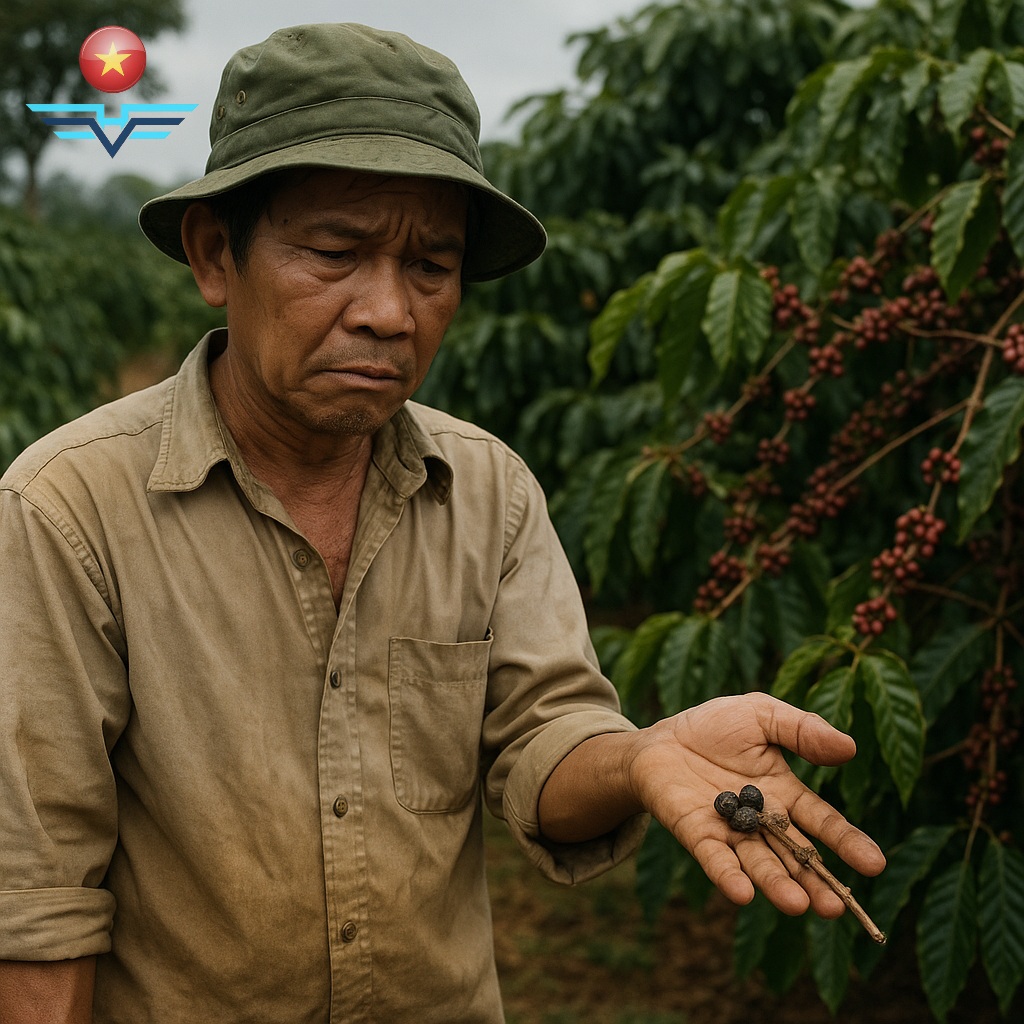
Pests, crop losses, theft, and falling prices are leaving coffee farmers struggling to keep their plantations afloat.
Prices Drop, Yet Farmers Are Forced to Sell
By mid-October—the start of the 2011–2012 coffee harvest in Vietnam’s Central Highlands—the price of coffee beans in provinces such as Gia Lai, Đắk Lắk, Đắk Nông, and Lâm Đồng began to fall sharply. On October 15, prices ranged from 43,600–43,700 VND/kg, but soon dropped to just 40,400–40,500 VND/kg, a decline of more than 3,000 VND/kg.
Local coffee traders explain that prices typically drop sharply during harvest due to abundant supply. As in previous years, prices often rebound—and even surge—only after farmers have already sold most of their beans.
So why not wait for higher prices? Farmer Trần Thanh Ngọc from Nam Yang Commune, Đắk Đoa District (Gia Lai), explains that his 2-hectare coffee farm supports four family members, including two school-age children. “I have debts for fertilizer and pesticides that must be paid immediately after the harvest. Bank loans are due. Hired laborers need to be paid in cash. We can’t delay—we have no choice but to sell even when prices are low,” he says.
Severe Drop in Yields
At the start of the season, farmers were optimistic thanks to abundant rainfall. But just two months before harvest, coffee cherries began falling off the branches in large numbers. Farmers believe excessive rains caused root waterlogging, while plant protection experts attribute it to sudden humidity changes that created conditions for pests such as scales and mealybugs, or the fungus Colletotrichum coffeanum, which causes stem-end rot. They also point to nutrient imbalance problems.
Vũ Ngọc Vĩnh, a farmer in Phú Hòa Town, Chư Păh District (Gia Lai), says over 30% of his 7-year-old coffee plantation suffered fruit drop. In half of that area, over 90% of cherries fell, with each tree normally yielding 12–15 kg of fresh fruit.
Additionally, mid-season outbreaks of cicadas in districts such as Đắk Đoa and Ia Grai further damaged yields. Recovery is slow, and heavily affected trees may never return to productivity. Many farmers are already considering replacing their coffee with black pepper, which currently commands higher market prices.
Rampant Theft
This year, theft has devastated many coffee growers. Thieves not only steal coffee beans drying in yards but also carry away bags of harvested beans stored in barns. Some even strip branches bare, or worse, cut entire branches—or even the whole tree—to haul away for easier cherry collection.
If only cherries are stripped, the branch can eventually recover; if a branch is cut, regrowth is slow; but if the tree is severed, it must be replanted entirely. Such organized theft, with lookouts and coordinated crews, has left many farmers in financial ruin, compounding the already harsh challenges of pests, crop losses, and plunging coffee prices.