
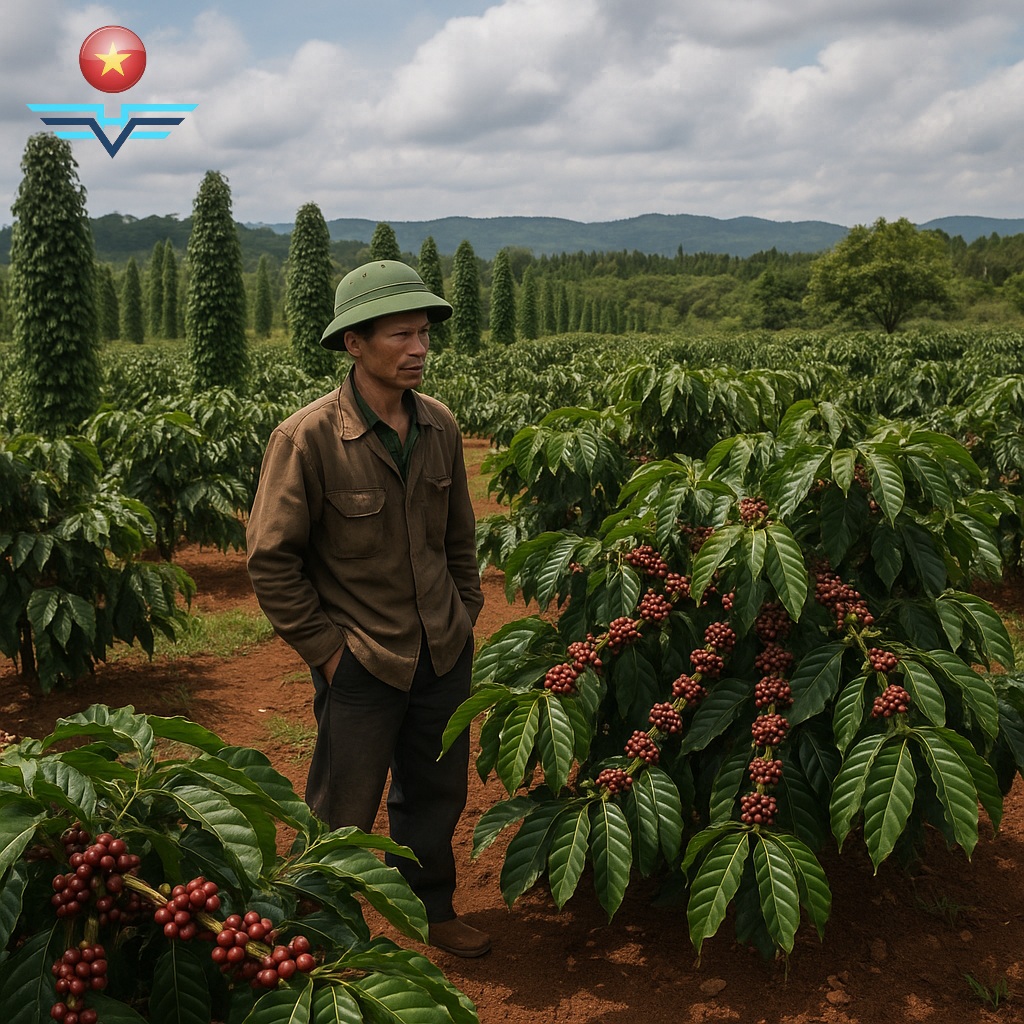
The Central Highlands is in the midst of the rainy season. The vibrant coffee, pepper, and rubber farms owe their vitality to the effects of the government’s agricultural credit policy, which has “refreshed” the red basalt soil and made it greener than ever. Everywhere we traveled, we clearly felt the joy and excitement of the people as their crops enjoyed both good yields and high prices.
Helping Farmers Build Prosperity
Coffee farms are now in the fruit-setting stage for the upcoming harvest, yet in the house at the center of his seven-hectare plantation in Phu Xuan Hamlet, Dak Nia Commune, Gia Nghia Town (Dak Nong), farmer Lau A Sy still stores more than ten tons of coffee beans from the previous season. He kept the beans because prices kept climbing.
“Coffee prices have reached 50 to 51 thousand dong per kilogram, double the level at the beginning of the season. I’m planning to sell soon. At this price, after deducting all costs, each hectare of coffee can bring a profit of seventy to eighty million dong,” Sy said enthusiastically.
Unlike in the past—when farmers typically sold their entire crop immediately after harvest—recent years have seen growers like Sy holding their beans until the best selling time. They now have savings, and bank loans have become easier and more convenient.
“Being able to borrow up to 50 million dong without collateral is a real advantage for farmers,” Sy explained, referring to Government Decree 41/2010/ND-CP on agricultural and rural credit. “Farmers often lack property for collateral. With just 30 or 50 million dong, we can do a lot.”
Starting as a tractor driver and initially borrowing 49 million dong from the Dak Nong branch of the Vietnam Bank for Agriculture and Rural Development (Agribank), Sy has built a seven-hectare farm of oranges, coffee, and pepper with annual revenue exceeding three billion dong.
Similarly, Nguyen Minh Phu in Nam N’Jang Commune, Dak Song District, once harvested low-yield coffee from his single hectare due to lack of capital. After learning of Decree 41, he borrowed 50 million dong from Agribank to invest in fertilizer and irrigation equipment. As a result, his coffee yield doubled—from two tons to over four tons. With higher coffee prices this year, even after repaying both principal and interest, he earned a profit of 70 million dong.
“Previously, borrowing from the bank required many procedures and long waits for disbursement,” Phu said. “Now the process is simpler and faster. I plan to borrow more to expand and plant other industrial crops.”
According to Tran Dinh Chanh, Director of Agribank Dak Nong, the implementation of Decree 41 has brought farmers significant benefits. It offers them easier access to credit and also presents new opportunities and challenges for the banks themselves.
Strengthening Agriculture’s Role
Agriculture and rural areas have played a vital role in Vietnam’s economic growth. Alongside the Government’s Resolution 11/NQ-CP on stabilizing the macroeconomy, curbing inflation, and ensuring social welfare, efforts continue to make investment in production easier.
Decree 41 has provided a critical boost—a “lifeline” of credit for agriculture and rural areas—spurring production, supporting economic growth, narrowing the rich-poor gap, and advancing social welfare.
At a recent national teleconference reviewing Resolution 26-NQ/TW on agriculture, farmers, and rural development, Prime Minister Nguyen Tan Dung acknowledged the key contribution of bank credit. Many banks have developed specialized agricultural financing programs, offering preferential interest rates 1–2% lower than for other sectors by pooling multiple capital sources.
Agricultural GDP growth has lifted the incomes of the poor to two to four times those from non-agricultural activities, reinforcing agriculture’s central role in economic and social development.