
“March—the season when bees gather nectar,
when elephants descend to the river to drink,
when you go to clear the fields,
and I venture into the forest to set traps…”
This folk song invites travelers to the Central Highlands, where ethnic communities tirelessly “carry the sky on their heads and tread the earth beneath their feet.”
Bundles of Cash… Hung Above the Hearth
A colleague once wrote of Ia Grai (Gia Lai):
“Surveys showed that most poor households there struggled simply because they lacked capital and know-how. When given loans, many took the money home and never touched it. Years later, when it came time to repay, they handed the untouched cash back to officials.
Asked why, they replied honestly: ‘Well, if someone lends you money, you accept it. But we’re afraid we won’t know how to use it. Afraid to buy cattle or pigs, afraid the children will squander it… So we tied the money in a bamboo tube and hung it above the kitchen fire for safekeeping. When repayment day came, we just gave it back.’”
Only in recent years has Ia Grai begun to peel away this old “moonrise–moonset” riddle of poverty.
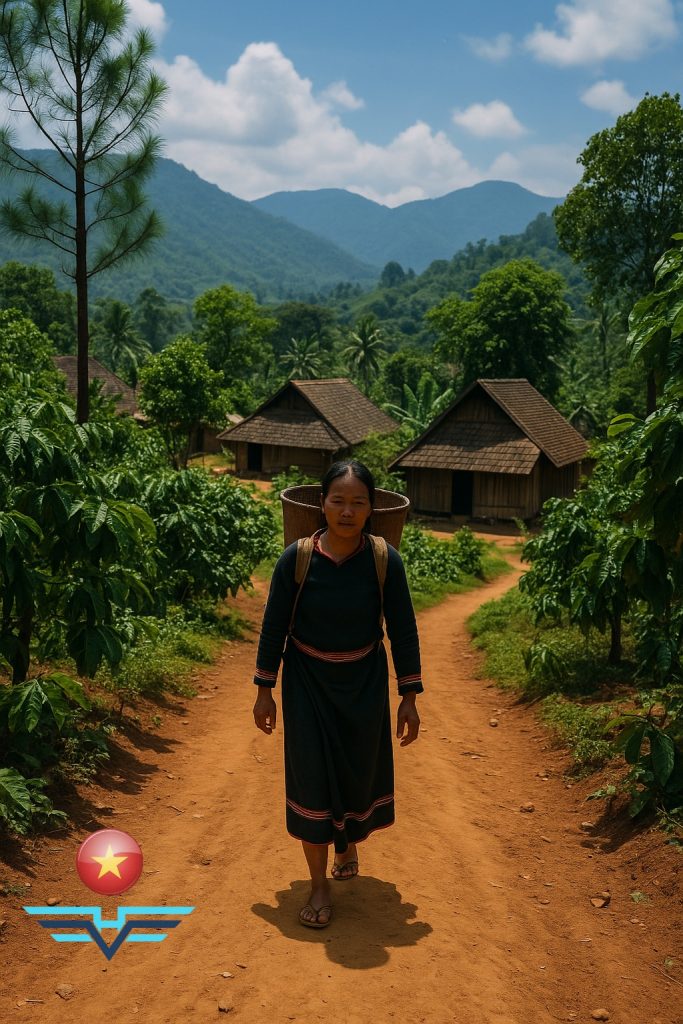
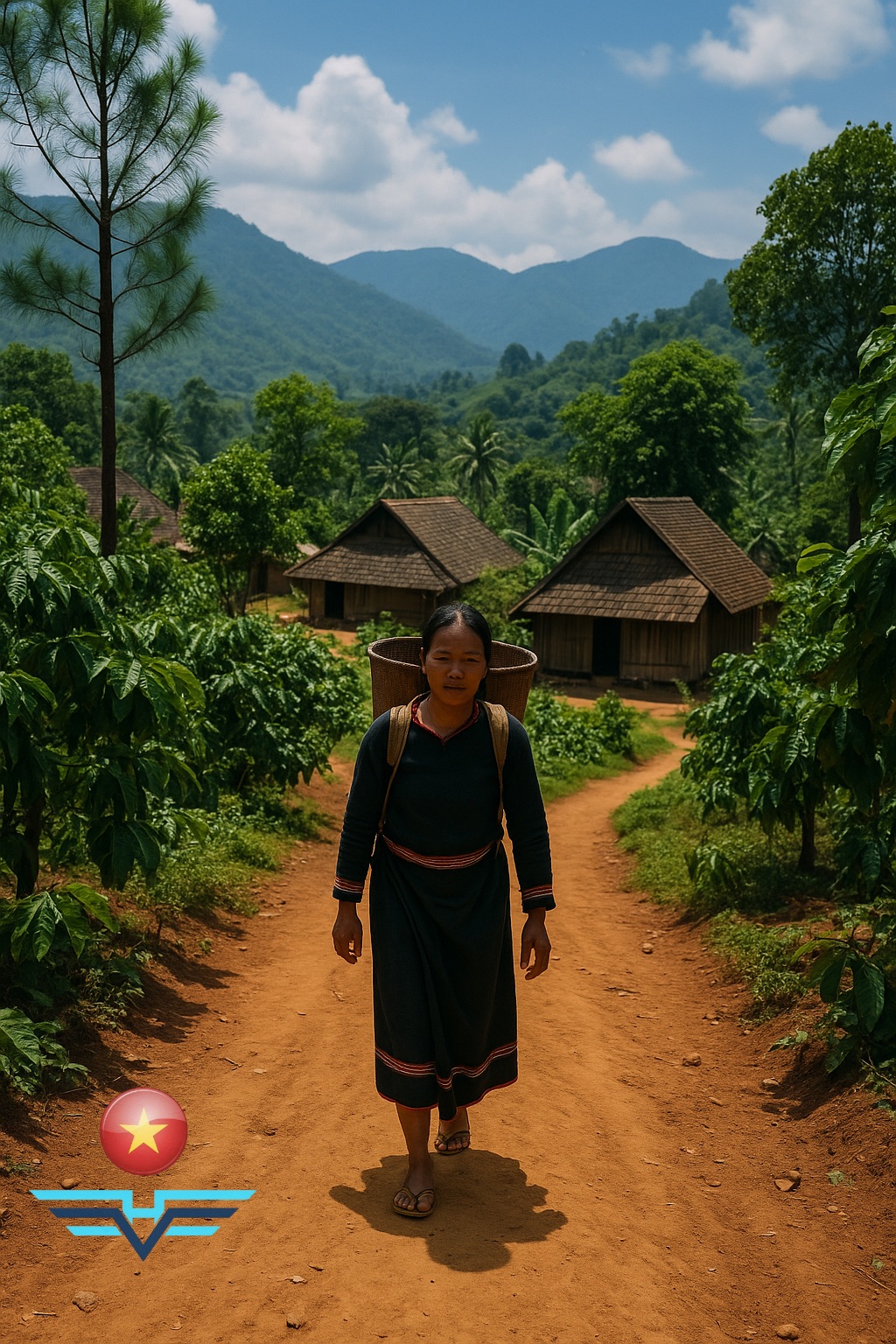
Mai, a woman from Phu Tien village in Ia Hrung commune, laughs when recalling the “money above the hearth” story: “People still do that even now!”
She herself chose a different path. Ten years ago, her family suffered chronic hunger—often skipping meals and scouring the forest for wild roots. Malaria and illness haunted them.
Then came a loan from the Women’s Union. With it, Mai bought cattle and planted vegetables. She also turned five small plots of upland into wet-rice fields, which produced as much grain as five hectares of shifting cultivation. After a few good seasons she invested in coffee and black pepper, and raised poultry.
“Now,” she says proudly, “we have over five hectares of coffee, a few hundred pepper vines, three thousand quail, and more than two thousand free-range chickens. Each year we can ‘hang’ nearly a hundred million đồng above the hearth!”
From Despair to Prosperity
In Mai village, neighbors affectionately call Ksor Mach “the cattle lady.” Before 2000 her family lived in deep poverty—rickety house, tattered clothes, constant debt.
Thanks to a two-million-đồng loan from the Women’s Union, she bought a calf and a breeding sow and started wet-rice farming.
With training in modern crop and livestock techniques, she soon harvested over five tons of rice per hectare and built up a sturdy herd of nearly ten cattle. Profits allowed her to plant forest trees and coffee. Today she lives in a solid house with a motorbike at the door.
“Back then,” she smiles, “I borrowed money and then went to school—to learn. That’s why we could rise so fast.”
Ia Grai now thrives on a movement of “women helping women.” Those who are better off lend seeds, breeding animals, or interest-free capital to poorer sisters. The spirit of “the good leaf shelters the torn leaf”—neighbors helping neighbors—runs deep.
Officials and Women’s Union leaders study each household’s circumstances, raise funds locally, and connect families with loans from agricultural and social policy banks. Hundreds of women attend training sessions on forestry, coffee, pepper, hybrid maize, and livestock raising, turning collective wisdom into economic strength.
The Kite of Ia Pếch
From the commune center, red-earth roads branch toward the remote hamlets of Ia Pếch, through rubber, coffee, and pine forests.
There, villagers once reliant on slash-and-burn farming now tend flourishing coffee gardens. Among them is Rolan Huyên, who with his wife has built a comfortable home, fishpond, rice fields, and more than a hectare of productive coffee—yielding about 20 million đồng a year in this once-impoverished highland.
Ia Pếch, once isolated and steeped in old customs, is still poor but transforming. Chairman Ksor Oét of Ia Grai district explains:
“We deliver information to those who lack it, send extension officers to teach farming methods, and provide seedlings, livestock, and loans suited to each area. With irrigation, electricity, schools, clinics, and clean-water projects now in place, life is improving dramatically.”
Across the vast Central Highlands, gongs echo in the spring air. Poverty has not vanished, but the villages are undeniably awakening—proof that the highlands’ long-held aspirations are beginning to bloom.