
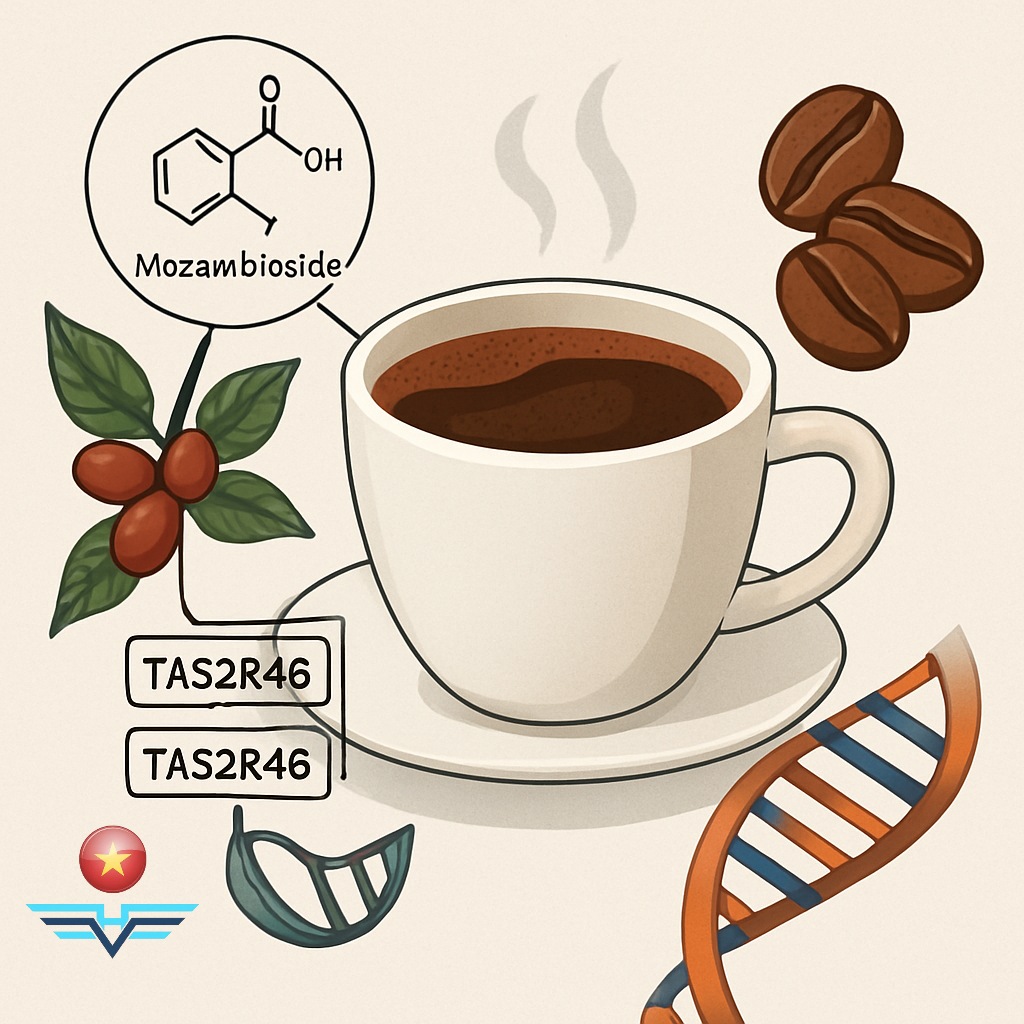
The bitterness of coffee is not caused by caffeine alone—it comes from many other factors.
Researchers at the Leibniz Institute for Food Systems Biology at the Technical University of Munich (Germany) have moved closer to explaining why coffee tastes more bitter to some people than to others.
Caffeine has long been known as a bitter compound, yet even decaffeinated coffee remains bitter. This means that many other compounds also contribute to the characteristic bitterness of roasted coffee.
Coline Bichlmaier, a doctoral researcher at the Leibniz Institute, explained: “Earlier studies identified several groups of compounds formed during roasting that contribute to bitterness. In my doctoral thesis, I identified and thoroughly analyzed a new group of compounds that had never been recognized before.”
The starting point of the research was mozambioside, a compound found in Arabica beans. Mozambioside is about ten times more bitter than caffeine and activates two of the human body’s 25 bitter taste receptors: TAS2R43 and TAS2R46.
However, according to lead researcher Roman Lang, roasting significantly reduces mozambioside levels, so it plays only a minor role in coffee’s bitterness.
The team discovered seven different breakdown products of mozambioside that form during roasting. Their concentrations vary with roasting temperature and time, and they dissolve almost completely into the coffee during brewing.
Cell-based tests showed these roasting byproducts also activate the same bitter taste receptors as mozambioside. Notably, three of these compounds are even more potent than the original. Yet their levels in brewed coffee are not high enough on their own to create a distinct bitter taste.
Only when mozambioside and its breakdown products were combined did 8 out of 11 test subjects perceive a clearly bitter taste. One person described it as astringent, while two others detected no particular bitterness.
Bitterness Also Depends on Genetics
Genetic analysis revealed that sensitivity to bitterness is partly hereditary.
Among the participants, two people had two defective copies of the TAS2R43 gene and could hardly detect bitterness. Seven had one normal and one defective copy, perceiving bitterness at a moderate level. Only two had two normal copies, and they experienced the strongest bitter taste.
These findings not only shed light on how the roasting process shapes coffee’s flavor but also open the door to developing coffee varieties with optimized flavor profiles.
According to Roman Lang, this research marks an important milestone in food and health science. “Bitter compounds and their receptors are linked not only to taste perception but also to many other physiological functions in the body—most of which remain unexplored,” he said.
Many bitter compounds in coffee are still not fully identified, and scientists have yet to determine which bitter receptors they activate—even though millions of people drink coffee every day. Much remains to be studied in the future.