
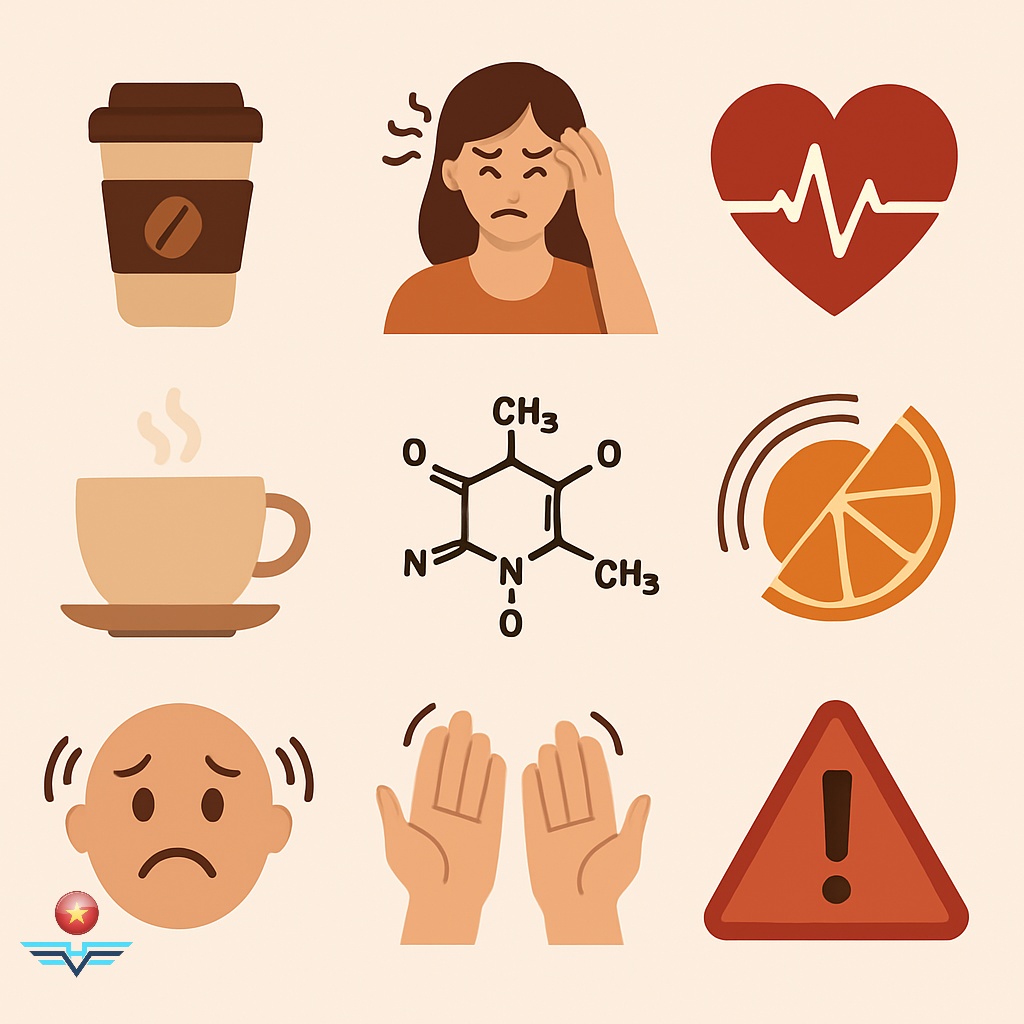
Drinking coffee is a habit enjoyed not only by men but also by many women. However, some people experience heart palpitations and a light-headed, uneasy feeling—almost like being tipsy—after having coffee.
Caffeine’s Effects on the Body
According to Dr. Trần Thị Minh Nguyệt from the National Institute of Nutrition, coffee contains caffeine, which boosts alertness and mental performance. Yet when the amount of caffeine is too high, it can cause side effects such as a rapid heartbeat, elevated blood pressure, trembling hands, or headaches. This reaction—often called “coffee intoxication” or “caffeine sensitivity”—is more likely if the coffee is strong, if someone is drinking it for the first time, or if it’s consumed on an empty stomach.
Caffeine stimulates the central nervous system and also affects the heart. It makes your heart beat faster, raises blood pressure, and triggers the adrenal glands to release more cortisol and adrenaline—the same hormones your body produces under stress. Research shows that caffeine directly raises cortisol levels.
Typically, when caffeine enters the body, most people will experience some increase in heart rate. How much it rises varies depending on factors such as the amount of caffeine consumed, how often you drink it, your body weight, and your individual physiology. Caffeine also activates the autonomic nervous system, which controls involuntary processes like heart rate and digestion, leading to faster breathing, a burst of energy, and heightened mental function.
Because caffeine elevates cortisol and adrenaline—mimicking the body’s natural stress response—too much can lead to anxiety, palpitations, and even panic attacks. If you feel dizzy or nauseous every time you drink coffee, you may have caffeine intolerance or heightened sensitivity. Occasional dizziness may simply mean you consumed too much caffeine at once, or you may have another health condition affecting your cardiovascular system. Certain compounds in coffee can also irritate the stomach lining.
How to Avoid “Coffee Jitters”
The best way to prevent dizziness or palpitations is to avoid excessive caffeine. If you’re caffeine-intolerant, evaluate how severe your symptoms are and consider reducing or eliminating caffeine entirely. Remember, caffeine isn’t only in coffee; it’s also found in cocoa, tea, energy drinks, soda, and some sports drinks, so always check product labels.
In general, if caffeine consumption interferes with your daily life, it’s better to limit or avoid it. Dr. Trần Thị Minh Nguyệt advises that people concerned about rapid heartbeat, light-headedness, or palpitations after drinking coffee should limit intake to no more than about two cups per day—or avoid it altogether if symptoms persist.