
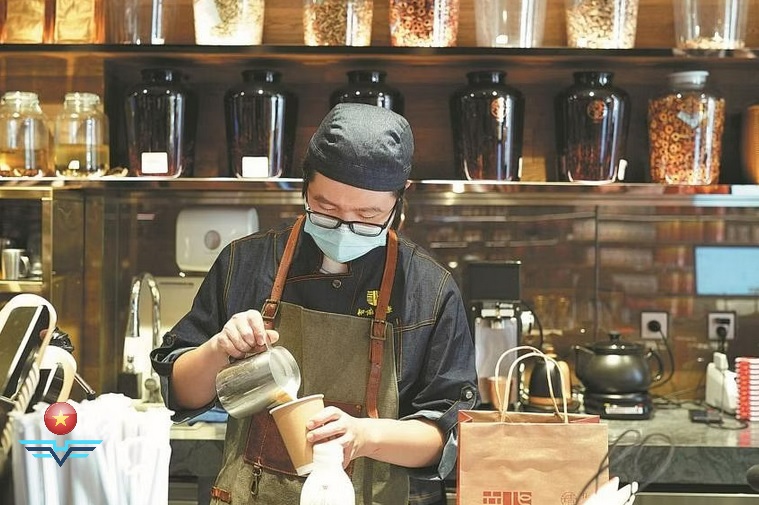
Down a quiet old alley on Gucheng Road in Nanning—the capital of the Guangxi Zhuang Autonomous Region—Lu Jiming’s coffee shop looks more like a traditional herbal apothecary than a café. Herbal Coffee, as it is called, closes at 6 p.m. each day but has quickly become a magnet for young customers seeking a cool summer treat with a medicinal twist.
“I’ve wanted to visit this café for a long time,” said a young woman named Zhang to China Daily. “My friend and I drove 40 minutes and waited another 20 minutes just to buy a rhodiola latte and a mogroside Americano. The coffee has a special fragrance and a smooth aftertaste. Sitting in what feels like a traditional Chinese medicine shop is such a novel experience—it’s worth the wait.”
Soon after, Zhang was sipping her drink, snapping selfies with friends, and sharing the unique outing on social media. She represents a growing number of people born between 1981 and 1996 who are increasingly health-conscious. For many young consumers like Zhang who already love coffee, blending it with herbal remedies has become an appealing trend.
“In the post-COVID era, people are more aware of maintaining their health. They are looking for drinks that taste good and benefit the body,” explained Chen Di’ao, manager of the Banzhanzhuyu tea shop in Nanning. “That’s why we launched health-protecting teas—our bestsellers are hawthorn water for digestion and angelica tea to warm the body.”
Business strategist Lu Buyun believes the health-protection market will be a major future trend, extending well beyond beverages to food and fitness. Likewise, columnist Zhang Shule wrote on people.cn that the unique consumer experience itself is a draw: “Young people come not just for coffee but to take photos and share them online, meeting their social needs.”
A recent survey by China Media Group, the National Bureau of Statistics, and China Post found that health-related spending now ranks third among young consumers’ expenses, behind travel and digital products.
Recognizing the opportunity, pharmaceutical companies are joining in. Beijing Tongrentang (TRT) has launched a sub-brand called Zhimajiankang and opened several stores in Beijing selling health drinks and healthy snacks priced from 32 to 88 yuan (about 106,000 to 293,000 VND). “Some customers are not yet familiar with the taste of drinks infused with traditional herbs,” a Zhimajiankang manager said. “We are actively exploring flavors that have broader appeal.”
Lu noted that his own Herbal Coffee shop, officially opened in February, has already received two partnership proposals. “China’s coffee sector is highly competitive,” he said. “Without a careful and distinctive business strategy, a café will be forced out sooner or later. The product matters, but the user experience matters even more.”