
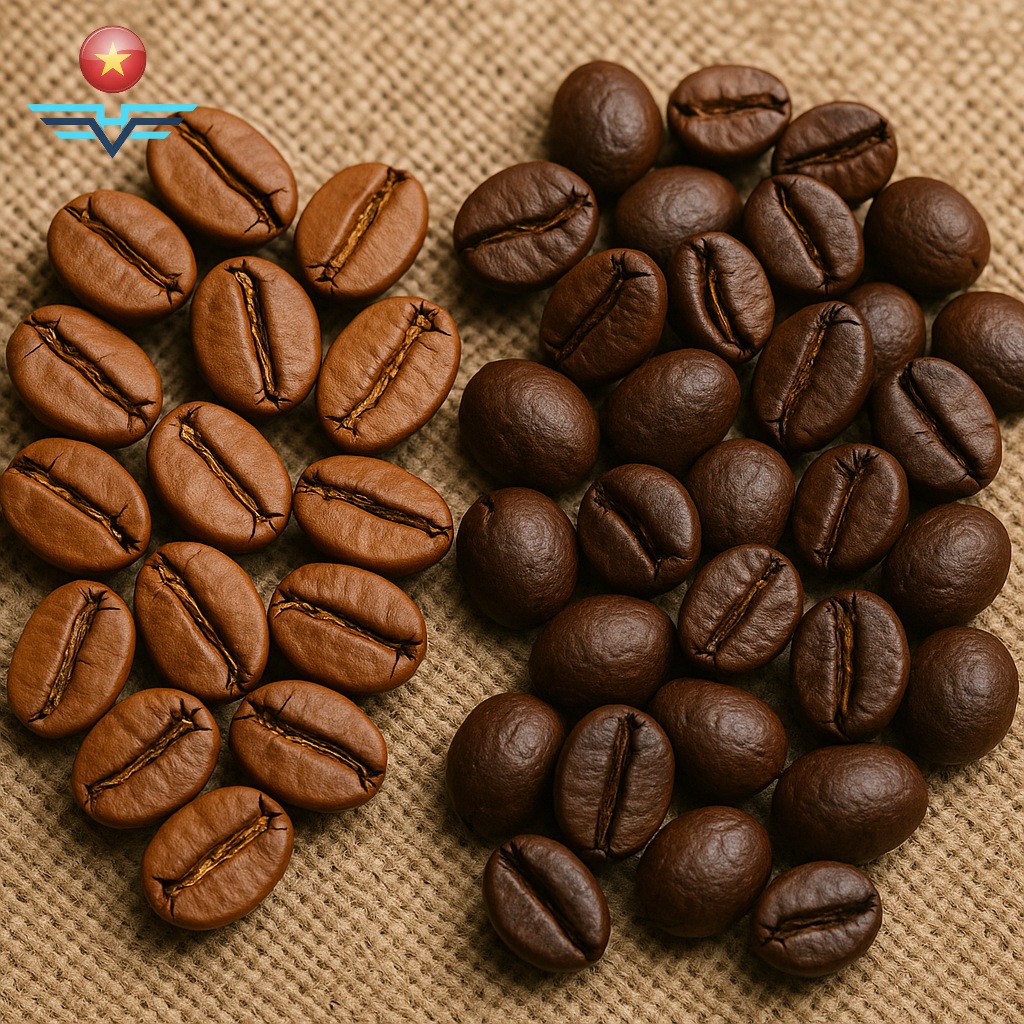
With more than 120 species of coffee cultivated worldwide, only two actually end up in your morning cup: Coffea arabica (Arabica) and Coffea canephora (Robusta).
Although roasted Arabica and Robusta beans may look similar at first glance, they are strikingly different in flavor, growing conditions, and price—differences shaped by genetics, origin, and centuries of cultivation. The coffee industry’s own quality standards have also widened the gap between these two species.
Origins of Arabica and Robusta
Table of Contents
The wild coffee plant Coffea arabica originated in Ethiopia, where it was discovered around AD 850.
Robusta’s history is much more recent, traced to the Congo Basin in the 1870s. Despite their different timelines, both species originated in Africa’s equatorial forests.
Interestingly, genetic research shows that Robusta is actually a parent of Arabica. In southern Sudan, Coffea canephora (Robusta) naturally hybridized with Coffea euginoides, giving rise to Coffea arabica.
By the late 1800s, Robusta was found across West Africa, especially around Lake Victoria in Uganda.
Today, Arabica accounts for about 70% of global coffee cultivation, mainly in East Africa, Central and South America, while Robusta is concentrated in Central and West Africa, parts of Southeast Asia (notably Vietnam and Indonesia), and India.
Growing Conditions
Coffee plants prefer mild, humid climates and are extremely sensitive to frost—one of the few traits Arabica and Robusta share.
-
Robusta thrives in lowlands (250–1,500 m) with average temperatures of 22–26 °C and annual rainfall of 1,200–2,500 mm. It bears fruit about two years after planting, with each crop taking 10–11 months to ripen.
-
Arabica grows best at higher altitudes (1,200–1,950 m), with average temperatures of 18–21 °C and rainfall of 1,100–2,000 mm. Its deep root system helps it withstand seasonal dryness. It typically flowers and produces fruit about four years after planting, with a 9-month flowering-to-harvest cycle.
Plant and Bean Characteristics
-
Height: Arabica shrubs are shorter, about 2.5–4.5 m, while Robusta plants reach 4.5–6.5 m.
-
Bean shape: Arabica beans are oval and elongated, whereas Robusta beans are smaller and rounder.
-
Yield: Arabica produces about 1–5 kg of cherries per season per plant, while Robusta can produce roughly double, making Arabica more expensive to grow.
-
Genetics: Arabica is a tetraploid with 44 chromosomes, meaning it is self-pollinating and less genetically variable. Robusta is diploid with 22 chromosomes.
Chemistry and Flavor
The key flavor differences stem from the beans’ sugars, fats, and acids:
-
Sugars and Lipids: Arabica contains ~60% more lipids and nearly twice the sugar of Robusta. These compounds create the complex, smooth flavors that define high-quality Arabica coffee.
-
Robusta’s lower oil content (10–11.5%) actually stabilizes the crema in espresso, because too much fat causes crema to collapse. For this reason, espresso blends often mix Arabica for flavor and Robusta for crema stability.
-
Caffeine and Chlorogenic Acids (CGA): Robusta has about twice as much caffeine and CGA, giving it a stronger, more bitter taste. The high caffeine and CGA levels also protect Robusta from pests and fungal diseases such as coffee leaf rust, making it hardier and easier to cultivate, though generally considered inferior in flavor.
Market Perception and History
Arabica has always been prized for its superior flavor and is used in everything from instant coffee to specialty-grade beans. Robusta, by contrast, has long been considered lower grade and typically costs about half the price of Arabica, making it the mainstay of instant coffee.
Historically, Robusta was not even recognized as “real coffee” compared to Arabica until the 1950s, when instant coffee manufacturers began mixing it into their products for cost savings. The New York Coffee and Sugar Exchange only lifted its long-standing ban on Robusta imports in the 1960s.
Today, Robusta represents roughly 40% of global coffee production, a figure that fluctuates with market prices. When Arabica prices rise, major coffee companies often increase Robusta usage as a cheaper alternative.
Arabica offers a smoother, sweeter, more complex cup, while Robusta delivers higher caffeine, stronger bitterness, and a stable espresso crema. Their contrasting genetics, growing conditions, and chemical profiles not only shape their flavor and price, but also their roles in the global coffee industry.