
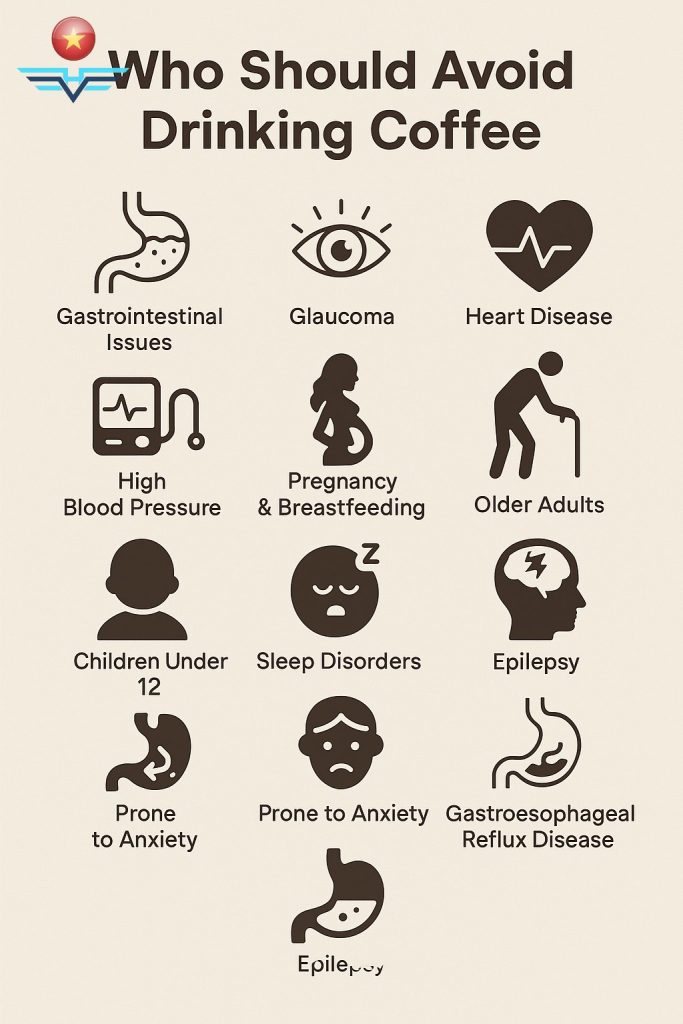
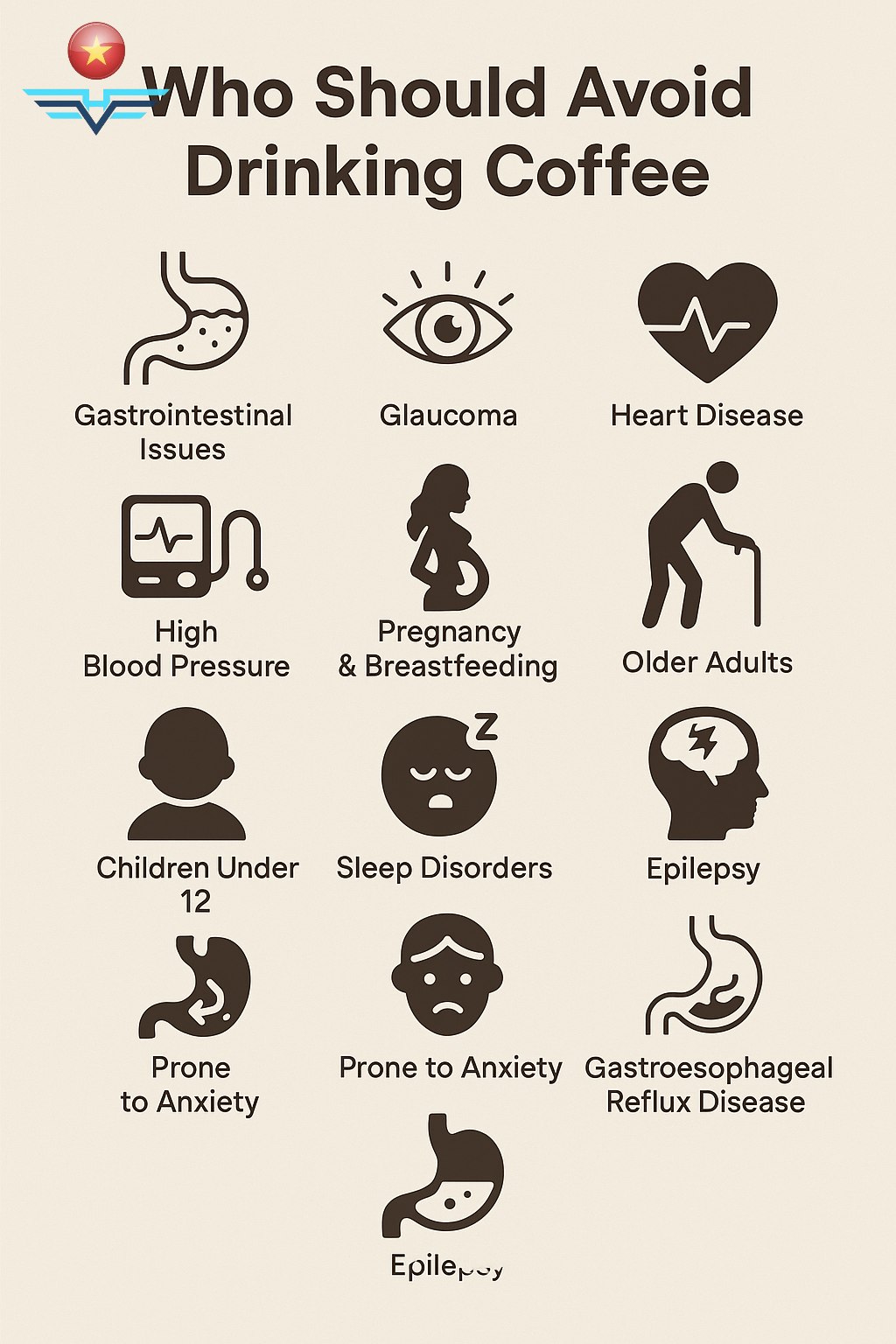
Coffee offers many health benefits, but it is not suitable for everyone. The following groups of people should limit coffee intake—or seek medical advice before drinking it regularly—to avoid potential health problems.
1. People with Gastrointestinal Issues
Table of Contents
Individuals with irritable bowel syndrome (IBS) should avoid coffee because it can cause stomach discomfort and persistent diarrhea.
Caffeine stimulates urination and increases bowel motility, which can worsen abdominal pain and diarrhea, making the condition harder to control and potentially more serious.
2. People with Glaucoma
Research from Mount Sinai shows that high caffeine intake can raise the risk of glaucoma in people already predisposed to the disease. Those with glaucoma should limit or avoid coffee.
3. People with Heart Disease
Caffeine can temporarily increase blood pressure and heart rate. Anyone with heart conditions should consult a doctor or nutritionist to determine a safe amount of coffee.
4. People with High Blood Pressure
Those with hypertension should avoid coffee or reduce intake because caffeine can elevate blood pressure.
Studies show that heavy coffee consumption, particularly in slow caffeine metabolizers, is linked to age-related rises in blood pressure.
5. Pregnant and Breastfeeding Women
Caffeine crosses the placenta and may affect fetal development by impacting the cardiovascular system and growth.
For breastfeeding mothers, caffeine’s diuretic effect can cause dehydration and reduce milk supply. It can also pass into breast milk and affect the baby’s still-developing body.
6. Older Adults
In seniors, coffee may overstimulate the nervous system and disrupt the body’s normal rhythms, leading to insomnia and other health disturbances.
7. Children Under 12
Even small amounts of caffeine can cause anxiety, restlessness, rapid heartbeat, difficulty concentrating, and stomach discomfort in children.
Coffee’s acidity can damage tooth enamel and increase the risk of cavities. For toddlers, coffee can also suppress appetite and limit essential nutrient intake.
8. People with Sleep Disorders
Coffee after a restless night might help you feel awake, but regular caffeine intake can prolong sleep difficulties.
Avoid caffeine at least six hours before bedtime—especially important for people with chronic sleep disorders.
9. People Prone to Anxiety
Caffeine is a stimulant that can intensify feelings of nervousness or stress. People prone to anxiety should limit or avoid coffee.
10. People with Epilepsy
A recent study suggests heavy coffee consumption may increase seizure frequency. Those with epilepsy should discuss caffeine intake with a neurologist.
11. People with Gastroesophageal Reflux Disease (GERD)
Caffeine relaxes the lower esophageal sphincter, the valve between the esophagus and stomach, triggering acid reflux.
Drinking coffee, tea, or soda—all of which contain caffeine—can raise the risk of GERD symptoms.