
Why Moisture Content Matters
Table of Contents
Moisture content is one of the most critical factors in coffee trading. It directly affects bean quality, shelf life, storage conditions, and international trade acceptance. Too much moisture leads to mold and spoilage, while too little moisture makes beans brittle and lowers roasting quality.
Recommended Moisture Levels
1. Green Coffee Beans (Cà phê nhân)
-
Standard: 10.0 – 12.5% (according to ICO and SCA)
-
Optimal: 11 – 12% for safe storage and shipping.
👉 Above 13%: beans are prone to mold during transport.
👉 Below 9%: beans become brittle and lose roasting performance.
2. Parchment Coffee (Cà phê thóc)
-
Should be dried to 11 – 12% before hulling.
-
Ensures stability before processing into green beans.
3. Roasted Coffee (Cà phê rang)
-
After roasting, moisture drops to just 1 – 2%.
-
At this level, beans can easily reabsorb moisture from air → airtight storage is essential.
International Standards
-
ICO (International Coffee Organization) sets the maximum moisture content at 12.5%.
-
Most international trade contracts specify 11.5 – 12% as the acceptable range.
✅ Key Takeaway
For commercial coffee trading, the ideal moisture content is between 11% and 12%. This ensures:
-
High quality beans
-
Reduced risk of mold
-
Better roasting consistency
-
Compliance with export standards
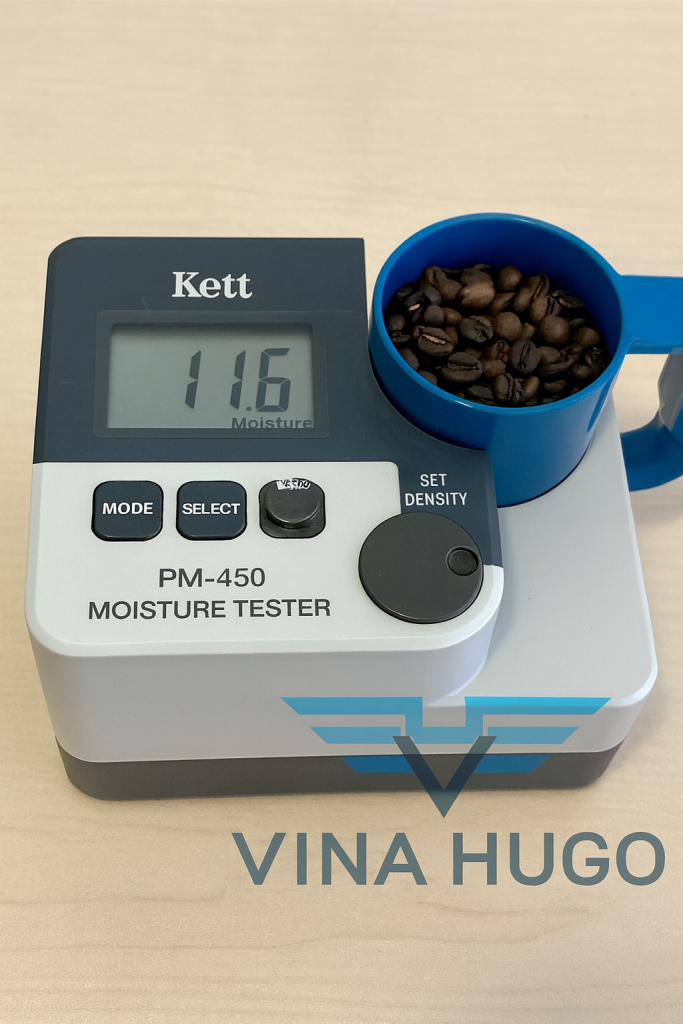
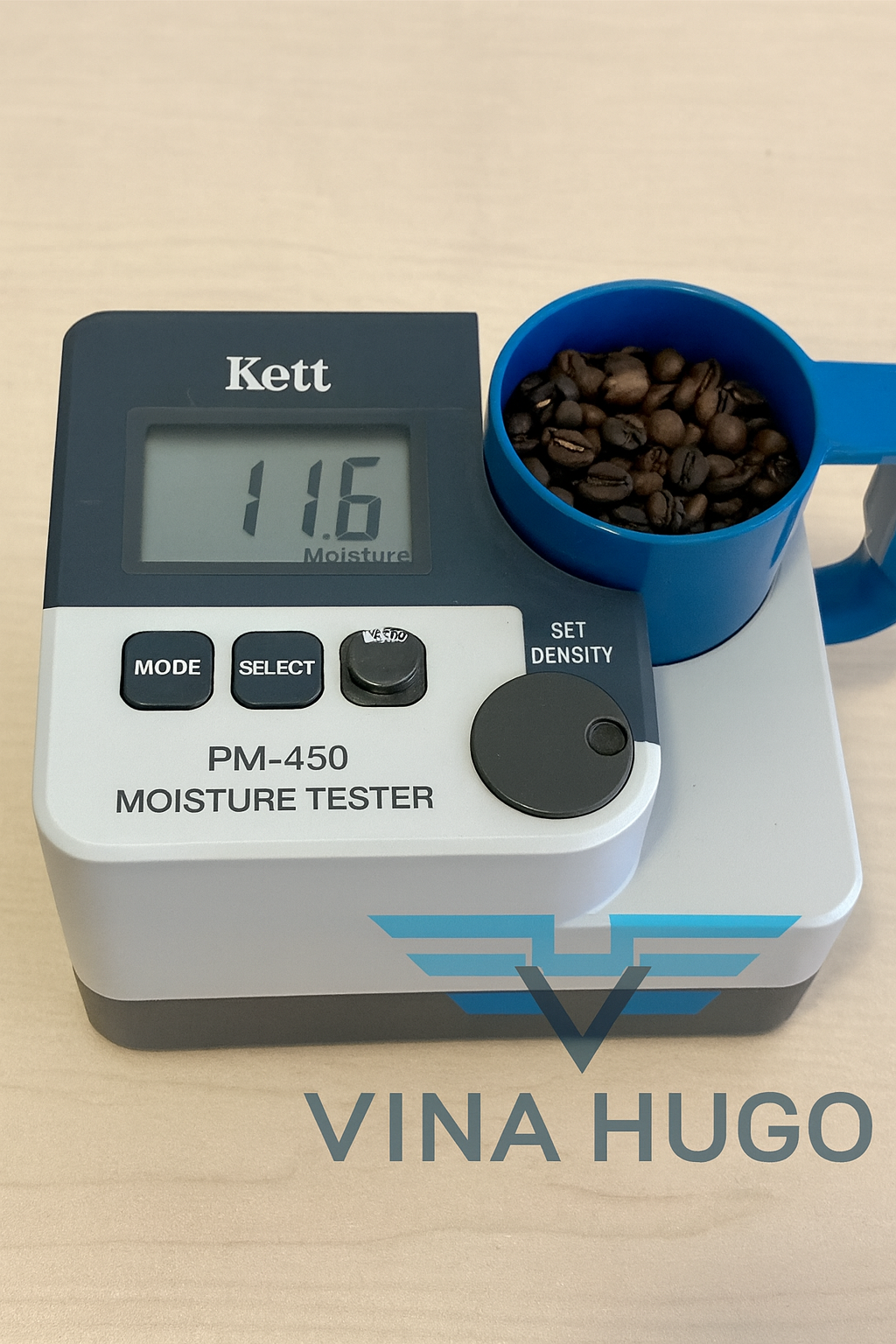
👉 This is why professional tools like the Kett PM-300 Moisture Meter (Made in Japan) are widely used in the coffee industry to guarantee accuracy and reliability in moisture testing.