
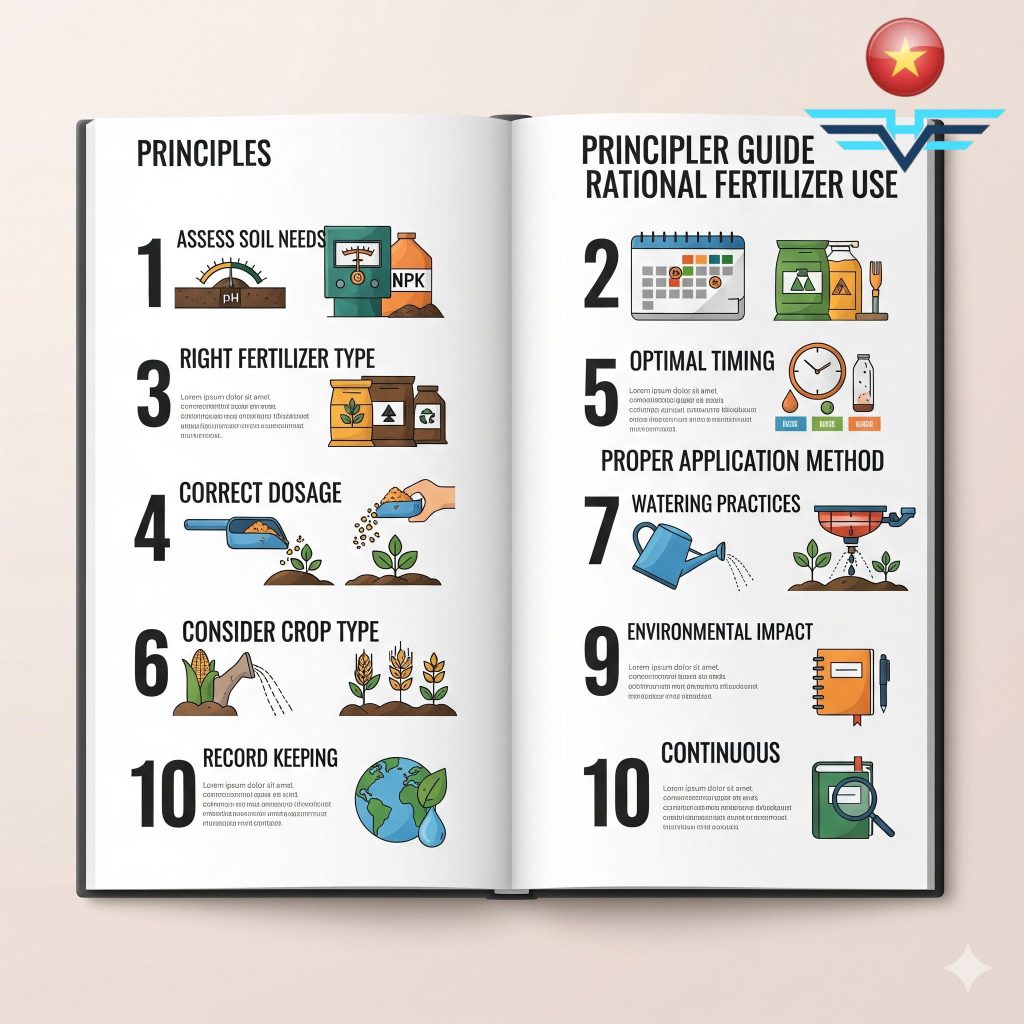

1. Work With Nature, Not Against It
Table of Contents
Fertilizing should harmonize with natural nutrient cycles. The goal is to cooperate with nature’s processes to create abundant, healthy crops—not to impose human will on the ecosystem.
2. Avoid Excess or Deficiency
Both overuse and shortage of nutrients harm crops. For example, copper (Cu) is an essential trace element, but foliar sprays above 1% concentration can burn leaves. Apply nutrients in correct amounts and at the right growth stage.
3. Stay Humble—Nature Is Complex
Scientific knowledge continues to grow, but many natural processes remain unknown. Farmers must observe their fields closely and combine long-term experience with research findings to fine-tune fertilizer strategies.
4. Respect the Web of Life
Field ecosystems are intricate. Lab results may not match real conditions. Fertilizer plans must account for the interactions among soil microbes, plants, and other organisms to avoid unexpected side effects.
5. Integrate Knowledge, Don’t Isolate
Fertilizer science is important, but excessive specialization can cause narrow thinking. Effective fertilization requires cross-disciplinary understanding of soil science, plant physiology, and ecosystem dynamics.
6. Understand Chain Reactions
External inputs trigger ripple effects throughout ecosystems. A small intervention can create large impacts over time. Sometimes minor nutrient adjustments achieve better results than heavy applications.
7. No Absolute “Good” or “Bad” in Nature
What humans label as good or bad has its place in the ecosystem. Overloading soils with “good” nutrients can disrupt balance and cause unintended harm.
8. Treat the Agro-Ecosystem as a Whole
A crop is one part of a larger living system. Improving yields requires considering all components—soil, water, microbes, and neighboring plants—not just the crop itself.
9. Support Human Health and Well-Being
Agriculture must nourish both body and mind. Over-fertilization can leave nitrate residues or heavy metals, lowering food quality and posing health risks. Rational fertilization keeps produce safe and environmentally friendly.
10. Keep a Broad, Long-Term Perspective
Avoid letting short-term weather patterns or yearly market swings dictate fertilizer strategy. Analyze the entire agricultural ecosystem and plan for sustainable productivity across seasons and years.
Key Takeaway
Balanced, well-timed fertilization maximizes yield while protecting soil health, food quality, and the environment. These ten principles help farmers create a resilient, sustainable agricultural system.