
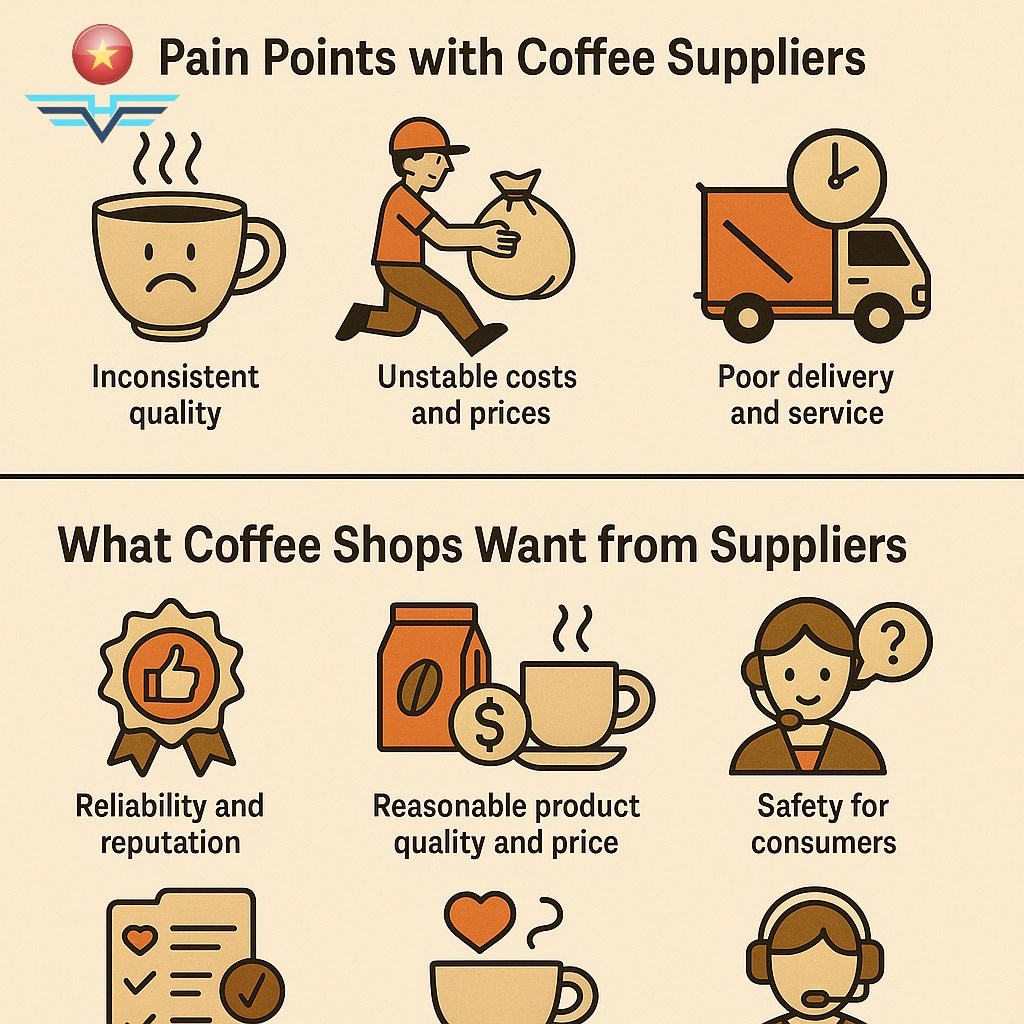
1. Inconsistent Quality
Table of Contents
-
Coffee lacks uniformity — its quality and flavor can vary from batch to batch, making it difficult for cafes to maintain consistency for their customers.
-
Adulterated or poor-quality coffee (mixed with corn, soybeans, or broken beans) is common.
-
Uncontrolled flavor variations after roasting affect the final brewed taste.
2. Unstable Costs and Pricing
-
Raw coffee prices fluctuate constantly and can spike unexpectedly, complicating financial planning for cafes.
-
When coffee prices rise, cafes cannot always raise drink prices, putting pressure on profit margins.
3. Poor Delivery and Service
-
Late or missed deliveries, especially during peak business hours, disrupt operations.
-
Inadequate packaging can cause coffee to lose aroma, freshness, or even get damaged in transit.
-
Suppliers fail to provide warranties or replacement policies for defective or low-quality products.
4. Lack of Promotions and After-Sales Support
-
No discount programs for loyal customers or bulk orders.
-
No after-sales service such as maintenance or repair support for espresso machines when problems arise.
5. Lack of Transparency and No Credit Terms
-
No clear information about product origin, quality, or food safety certifications.
-
Suppliers require upfront payment instead of allowing credit purchases, creating financial strain for cafes.
What Coffee Shops Expect from Their Suppliers
1. Reliability and Credibility
-
Coffee must come from reputable, traceable suppliers — not unverified or unbranded sources.
-
Suppliers should provide certification of origin and food safety assurance.
2. Product Quality and Fair Pricing
-
Coffee quality must be stable, controllable, and meet the shop’s specific standards.
-
Prices should be reasonable and compatible with the cafe’s pricing strategy to maintain profitability.
3. Customer Taste Compatibility
-
The coffee flavor should match the preferences of the majority of local customers.
-
The product should be appealing enough to attract new customers and build brand loyalty.
4. Consumer Health and Safety
-
Coffee must be certified for food safety and guaranteed free from harmful additives or contaminants.
-
The origin must be transparent, with proper licenses and circulation permits.
5. Customer Care and After-Sales Service
-
Suppliers should provide a long-term, stable supply to ensure uninterrupted business operations.
-
Prompt support in handling issues such as machine breakdowns or incomplete deliveries.
-
Loyalty programs, bulk order discounts, or reward systems to help cafes maximize profit and strengthen partnerships.