
The Prime Minister has just approved the national plan for agricultural land use and sector-based agricultural production up to 2020 with a long-term vision to 2030. According to the plan, agricultural production land by 2020 will total 9.59 million hectares, a reduction of about 580,000 hectares compared to 2010.
Key Land-Use Targets
-
Forestry land: 16.2–16.5 million hectares by 2020, an increase of about 879,000 hectares compared to 2010.
-
Aquaculture land: 790,000 hectares, an increase of 99,700 hectares over 2010.
-
Salt production land: remains stable at 14,500 hectares, including 8,500 hectares dedicated to industrial salt production.
Strategic Crop Areas
-
Rice: Protect a stable paddy land area of 3.812 million hectares, including 3.2 million hectares of double-crop irrigated rice, applying advanced intensive farming techniques to achieve 41–43 million tons of paddy by 2020 and 44 million tons by 2030, ensuring national food security and export capacity. Industrial rice-processing capacity will be increased to 25 million tons per year, enough to process 60% of total paddy output.
-
Tea: Stabilize long-term tea cultivation at 140,000 hectares, an increase of 10,000 hectares compared to 2010. Adopt clean-tea production standards to ensure food safety, and introduce high-yield, high-quality tea varieties for new planting and replanting. Adjust product mix toward 55% black tea and 45% green tea.
-
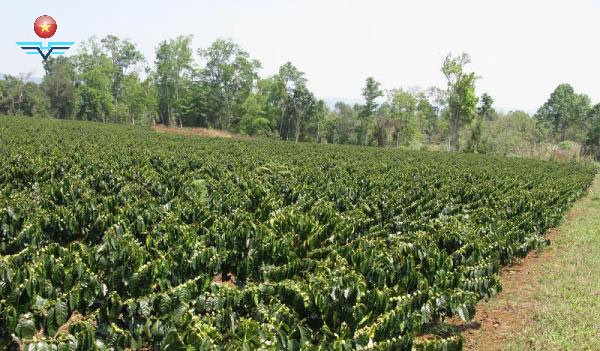
Coffee: Allocate 500,000 hectares to coffee, mainly in the Central Highlands, Southeast region, and North Central Coast. Develop the coffee sector through cooperative economic models linking enterprises and farmers. Increase the proportion of coffee processed at industrial scale from 20% in 2010, to 40% by 2015, and 70% by 2020.
-
Rubber: Maintain a stable rubber plantation area of 800,000 hectares. After 2015, assess the productivity and land resources of each region to adjust rubber plantation scale for sustainable and efficient development.