
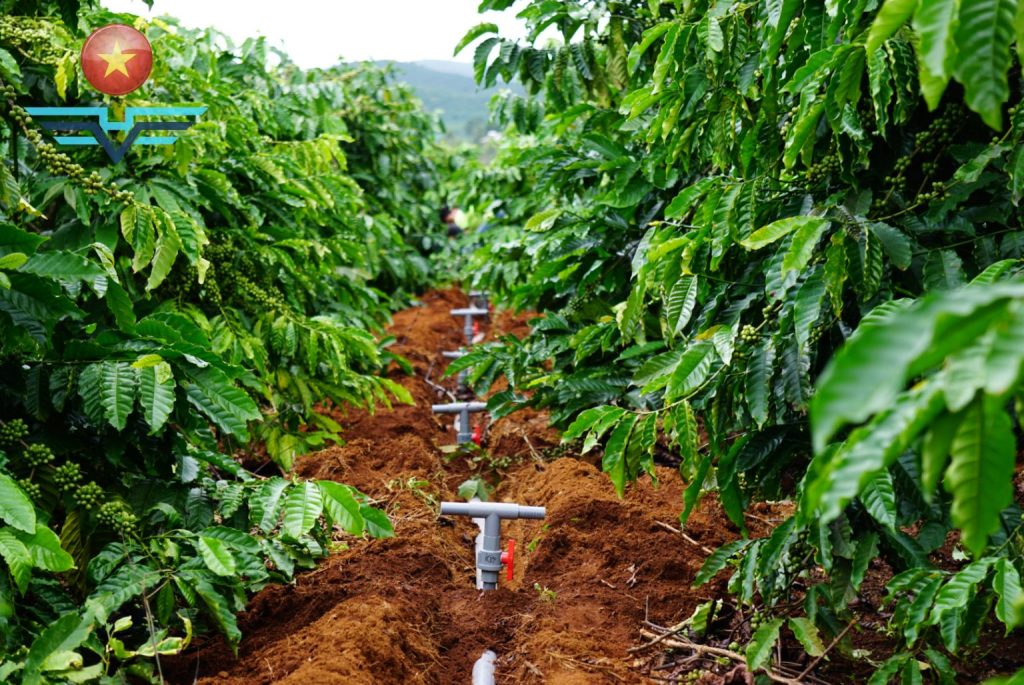
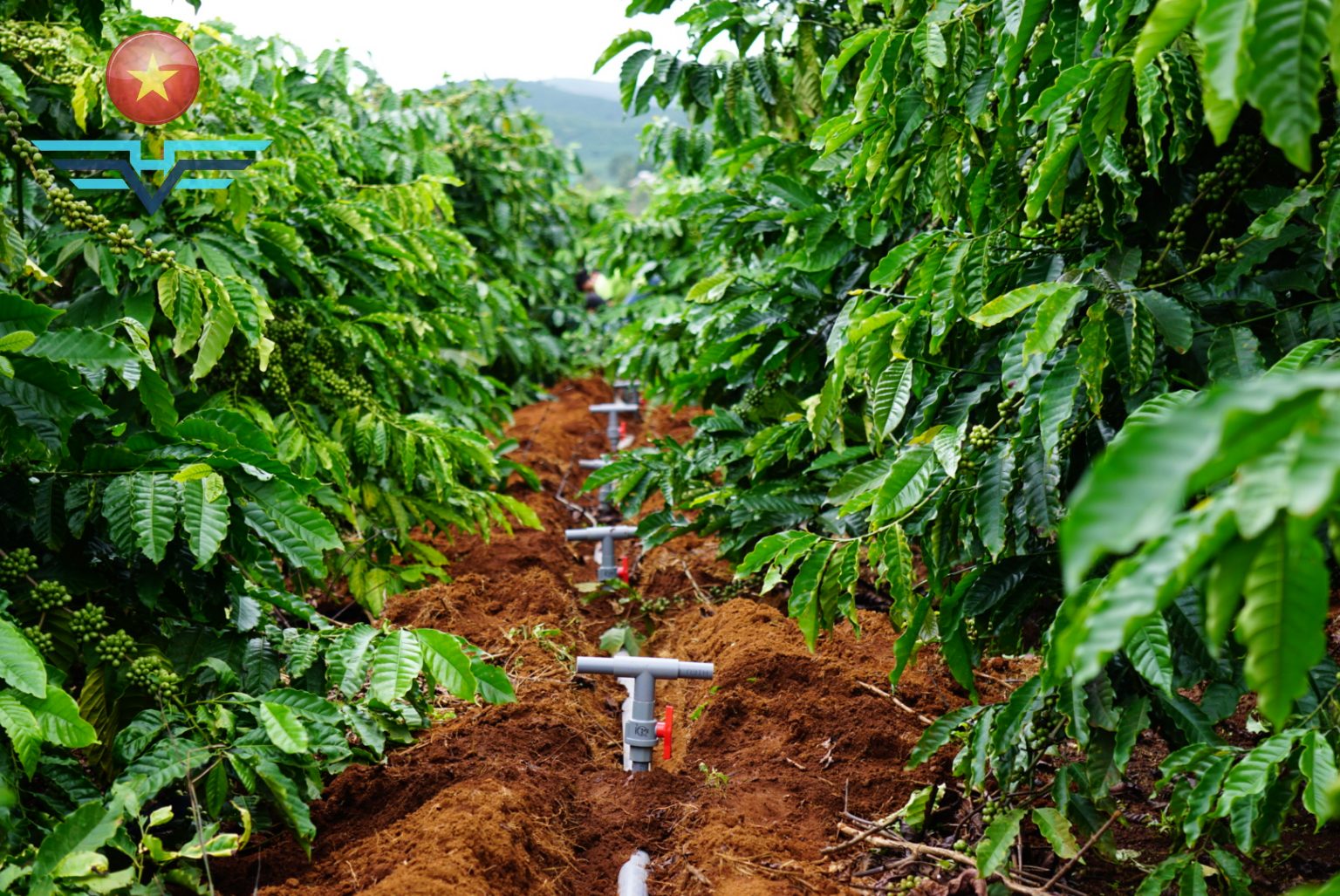
The Central Highlands is Vietnam’s coffee heartland, covering 639,000 hectares—nearly 90% of the nation’s coffee area—of which about 85% is Robusta. This region experiences two distinct seasons: a rainy season and a dry season lasting 5–6 months, typically from November through April or May. Strong seasonal winds accelerate moisture loss from both soil and plants, making dry-season management essential.
Key Focus: Irrigation and Fertilization
Table of Contents
Dry-season coffee care centers on two critical tasks:
-
Pruning after harvest – to remove old or unproductive branches.
-
Timely watering and fertilizing – to keep trees alive, trigger uniform flowering, ensure successful pollination and fruit set, and help plants recover after the previous crop.
Proper irrigation after a long dry spell helps coffee flower all at once, which is the foundation for high yields. Where no clear dry season exists, flowers bloom sporadically throughout the year and yields rarely match those of the Central Highlands.
Timing the First Irrigation
By January, after 2–3 months of drought, flower buds have fully differentiated and appear as ivory-white tips on the outer nodes. Leaves may wilt slightly at midday—a sign it’s time to irrigate.
-
Water too early, and flower-bud formation is incomplete, resulting in fewer, scattered blossoms and lower yield.
-
Water too late, and trees may suffer stress: leaves drop, flowers and branches dry out, again reducing yield.
Unseasonal rains sometimes occur. If light showers bring only 3–10 mm of rain, buds may bloom, but for normal bloom and good fruit set at least 30 mm of moisture is needed. If rainfall is below that threshold, farmers should irrigate promptly to secure proper flowering and fruiting.
Recommended Water Volumes
For productive Robusta:
-
First irrigation: 450–550 liters per tree, because 60–70% of flowers typically open during the first flush.
-
Subsequent irrigations: reduce water by about 10–15%.
-
Irrigation cycle: every 20–30 days, depending on soil and climate.
Sandy soils require smaller amounts per irrigation but at shorter intervals than heavier basaltic soils. Farms with shade trees, windbreaks, or intercropped long-lived species create a milder microclimate and can water less often.
Avoid both under- and over-watering. Excess water does not raise yields but does increase production costs and wastes a valuable resource.
Dry-Season Fertilization
Apply fertilizers during the dry season to help trees recover from the previous crop, support flowering, and nourish young fruit. Increase organic matter whenever possible to maintain soil structure and water-holding capacity.
Impact of Extended Early-Rainy-Season Drought
After fruit set, Robusta cherries enter a “dormant pinhead” stage lasting about 3–4 months, then begin a rapid growth phase early in the rainy season. The parchment layers (future seed cavities) expand and lignify; their size depends on the tree’s water status. If drought persists at this critical stage, the cavities remain small and beans develop into smaller coffee seeds, cutting yield.
When unusual early-rainy-season drought coincides with the rapid fruit-growth stage, farmers should consider supplemental irrigation to protect bean size and maintain yields.
By carefully timing irrigation and fertilization, and by adapting to changing weather patterns, Central Highlands growers can safeguard both coffee quality and productivity, even through the region’s harsh dry season.