
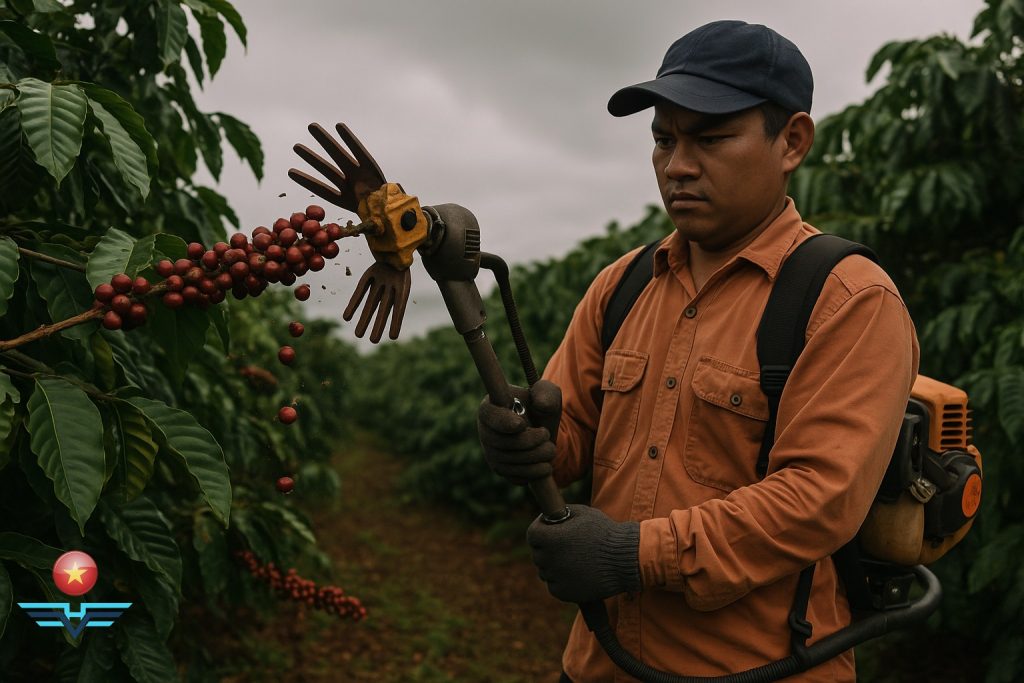
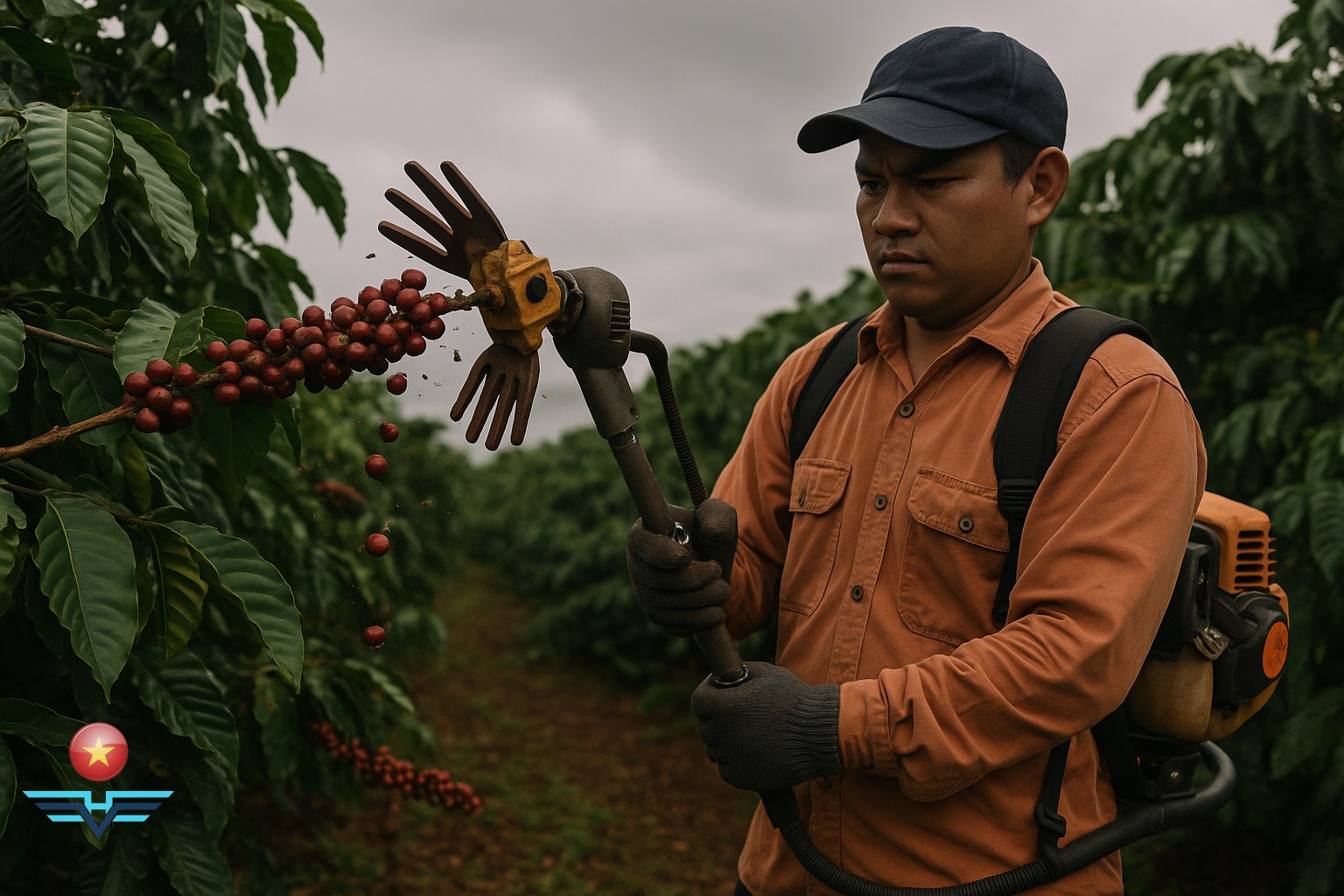
During this year’s coffee harvest, plantation owners in Đắk Lắk have been buzzing about a new gadget: a handheld “six-finger” coffee harvester.
Vendors heavily advertised the machine online as a convenient, high-capacity solution for growers. Following the online addresses, we visited agricultural machinery shops along Phan Bội Châu Street in Buôn Ma Thuột to see the device that sellers touted as a “lifesaver for coffee farmers.”
The machine is basically a grass trimmer with a modified head. Instead of a cutting blade, it carries a flexible plastic “hand” with six fingers that vibrate and clamp to strip cherries from the branches. The price ranges from 4 to 7 million VND, depending on the shop. But the biggest surprise: customers are required to sign a strict agreement—“Once purchased, no returns.”
With labor costs for coffee picking rising and workers hard to find, many farmers accepted the price and the harsh “no return” condition. Bành Trọng Thanh’s family in Ea Kpam commune, Cư M’gar district bought a machine from Minh Phát private trading company for 7 million VND and received a receipt clearly stating, “No returns accepted.” After two weeks, however, Thanh had used it only a few times before leaving it to gather dust in the kitchen.
“It’s exhausting,” Thanh said. “You have to hold a vibrating machine for hours, breathe in gasoline fumes, and the machine breaks branches, crushes leaves, and knocks off the coffee buds. It burns fuel and harvests less than hand-picking. If five people use the machine—one operating it, three or four assisting—you might collect eight 50-kg sacks in a morning. If only one person operates it, you’ll get just two to three sacks while burning a full tank of fuel. It’s far less efficient than picking by hand.”
Many farmers who tried the device were disappointed. They found the machine unsuited to the Central Highlands’ coffee trees: the fruit stalks are tough, the bushes have dense, intertwining branches, and the machine’s six fingers cannot weave through like human hands. The picking rate is slow, many cherries remain on the tree, and worse, the machine causes broken branches, damaged leaves, and stripped buds—reducing the next season’s yield significantly.