
At present, many coffee-growing areas in Vietnam’s Central Highlands are experiencing yellowing leaves and heavy fruit drop, which seriously affects both yield and quality.
Cause
Table of Contents
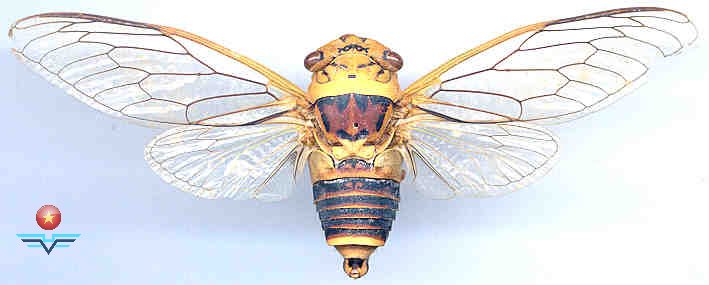
The main culprit is the cicada. Some of the hardest-hit districts include Krông Buk and Cư M’gar (Đắk Lắk), Đắk Mil (Đắk Nông), and Di Linh (Lâm Đồng). Until recently, cicadas were not considered a serious pest on coffee, so farmers know little about their impact.
Life Cycle and Damage
Several cicada species exist, but the primary coffee pest is Macrotristria dorsalis. Adults are 2–4 cm long, dark brown or black. During the breeding season, males call to attract females. Females use an ovipositor to cut small grooves into tree bark and lay several hundred eggs. Cicadas usually reproduce from early to mid-rainy season in the Central Highlands.
When the eggs hatch, the nymphs fall to the ground and burrow down to the roots, where they feed on sap for one to two years. Just before emerging as adults, they tunnel back to the surface, climb trees, shed their skins, and repeat the cycle.
The nymph stage causes the real damage: the nymphs attach to the coffee roots to suck nutrients and, while tunneling, sever fine feeder roots. This weakens the root system, causing yellow leaves and fruit drop; in severe cases the coffee trees can die.
Link with Chemical Use
Research shows that excessive use of chemical pesticides can trigger cicada outbreaks by killing their natural enemies such as ants, wasps, and spiders. This has been confirmed in the Central Highlands, where farmers have heavily sprayed to control mealybugs and applied ant poisons to make harvesting easier. Surveys show that in plantations where ants were eliminated completely, cicada populations were 5–10 times higher than in plantations where ant control was avoided or carefully limited.
Integrated Control Measures
Effective, long-term management requires an integrated approach.
-
Encourage and protect natural enemies—especially ants, which eat cicada eggs and newly hatched nymphs before they reach the soil. Avoid blanket ant-killing; if ant control is necessary, do it selectively.
-
In severe infestations, chemical control may be needed. Trials show that applying Marshal 200SC gives 90–96 % effectiveness against nymphs in the soil.
Application method: Dilute to a 0.2 % solution (2 ml of product per 1 liter of water). Using a watering can or sprayer, drench the soil evenly around each tree’s base with about 1 liter of the solution. First clear away dry leaves and weeds so the chemical penetrates the soil thoroughly.
These measures—especially conserving natural predators while using chemicals only when truly necessary—help protect coffee yields and maintain long-term plantation health.