
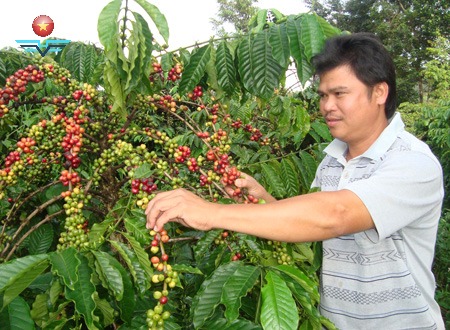
In recent years, the practice of harvesting large quantities of unripe (green) coffee cherries has remained widespread and difficult to control. The main reason is that coffee growers lack a sense of community when it comes to crop protection—each farmer rushes to harvest early for fear of theft.
This practice has led to lower coffee quality and an early harvest season. When harvesting coincides with rainy weather, the quality of coffee deteriorates even further.
To ensure the 2011–2012 coffee season is effective and produces high-quality beans after harvest, the provincial Department of Agriculture and Rural Development has advised local authorities, businesses, and individual coffee producers and traders to avoid harvesting unripe cherries. Harvesting coffee with many green beans results in both lower yields and poorer quality for commercial coffee.
Accordingly, coffee farmers should only begin harvesting when at least 95% of the cherries in their fields have ripened. At the same time, local agencies must step up communication, monitoring, and enforcement to prevent and penalize the buying or selling of coffee with excessive unripe or immature cherries beyond the allowed standards.
It is worth noting that the export value of coffee beans has helped thousands of farming households escape poverty and achieve better living standards. Yet most farmers are still unaware of the national standard TCVN 4193, which defines requirements for moisture content, impurities, and the acceptable proportion of green beans in coffee.
Therefore, to raise the economic value of this crop, besides developing production zones, transferring technology, and guiding farmers in intensive cultivation and processing, authorities must also strengthen efforts to educate farmers on proper harvesting and post-harvest storage. In addition, strict regulations and penalties should be applied to companies that intentionally purchase low-quality coffee for profit.
Only through such measures can post-harvest coffee preservation and quality control reach the desired results.