
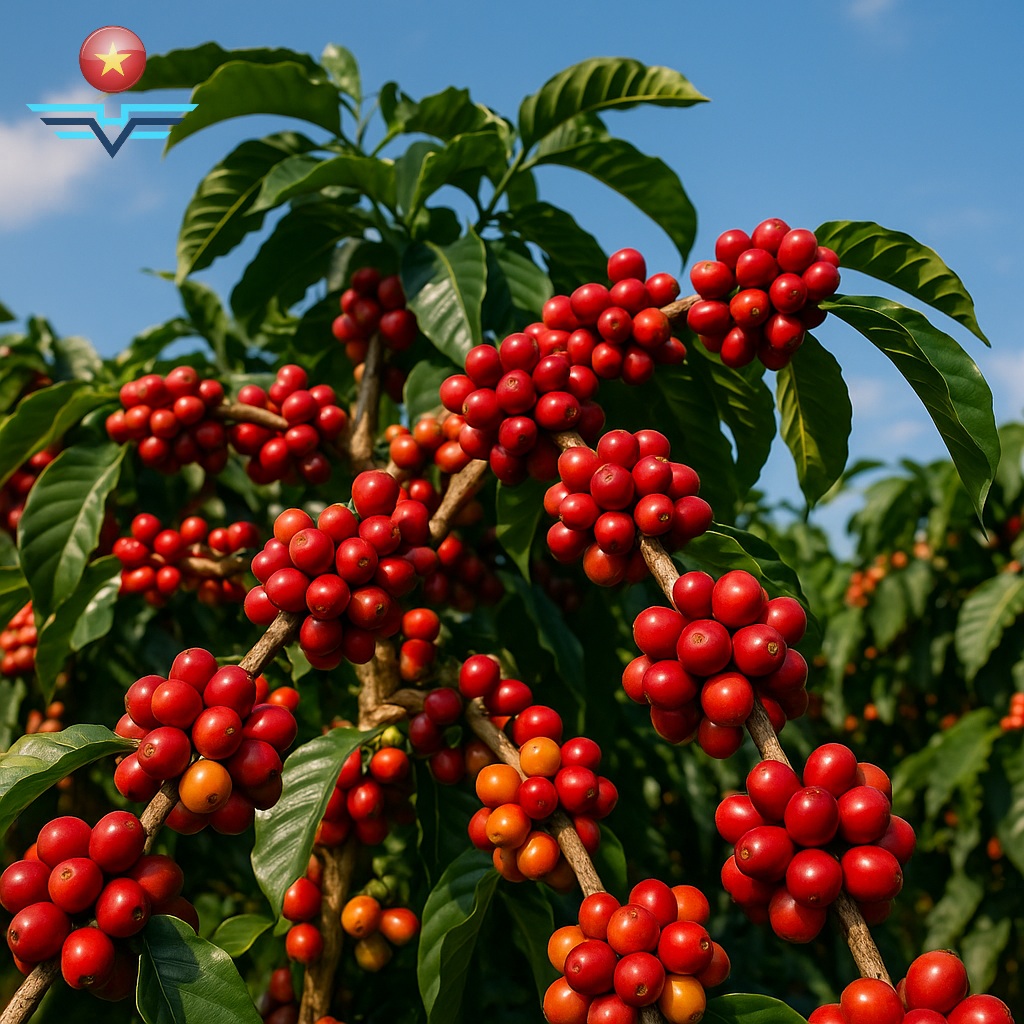
Early Ripening Signals a Promising Harvest
Table of Contents
In Đắk R’lấp District, Đắk Nông Province, coffee plantations are starting to ripen, and farmers are busy preparing for a smooth, high-quality harvest.
At Đắk Wer Commune—one of the district’s largest coffee-growing areas—families are inspecting harvesting and drying equipment such as tarpaulins, drying yards, and kilns.
“The weather has been favorable this year, so we expect higher yields than last year,” shared Ms. Trần Thị Ngọc, a farmer from Hamlet 7. “We hope prices will be as good as last season so we can feel secure.”
Focus on Quality: Harvesting Only Ripe Cherries
According to Mr. Lê Viết Sỹ, Chairman of the Đắk Wer Commune People’s Committee, local farmers are moving away from the old habit of picking both green and ripe cherries. Harvesting only fully ripe coffee has already improved bean quality significantly.
The commune has partnered with Vina Coffee Company to develop UTZ-certified sustainable coffee plots. Participating households receive:
-
Technical training in cultivation, harvesting, and post-harvest care.
-
A transport allowance of 200 VND per kilogram when selling to the company at market price.
Currently, 120 hectares, managed by over 100 households, are cultivated under the UTZ protocol, helping maintain stable yields and reduce financial pressure for farmers.
Community Security Teams Protect the Harvest
To ensure public order and crop safety, the commune has instructed all hamlets to create self-management security groups.
-
15 hamlets in Đắk Wer have already formed teams to protect coffee farms during harvest.
-
Other communes such as Đắk Sin and Nhân Đạo are also establishing security patrols to safeguard the crop.
District-Wide Coffee Production Outlook
The District Department of Agriculture and Rural Development reports:
-
Total coffee area: about 16,200 hectares.
-
2025 output: expected to be strong and stable.
Authorities continue to advise farmers to:
-
Avoid picking green cherries.
-
Prune shoots and branches correctly after harvesting.
-
Strengthen self-management teams to protect crops and maintain quality.