

Meta description: Black pepper prices in Dong Nai have plunged from over 250,000 VND/kg to under 40,000 VND, forcing many farmers to abandon or cut back their pepper fields.
From “Black Gold” to Heavy Burden
Table of Contents
Once celebrated as “black gold,” black pepper farming in Dong Nai made many growers millionaires. But since 2016, pepper prices have suffered a dramatic fall. From a record high of more than 250,000 VND per kilogram in 2015, prices have plunged and have remained below 40,000 VND/kg since early 2020. By mid-2024, pepper sells for barely 36,000 VND/kg, leaving many growers unable to cover even basic harvesting costs.
Farmers Cut Vines, Seek Alternative Crops
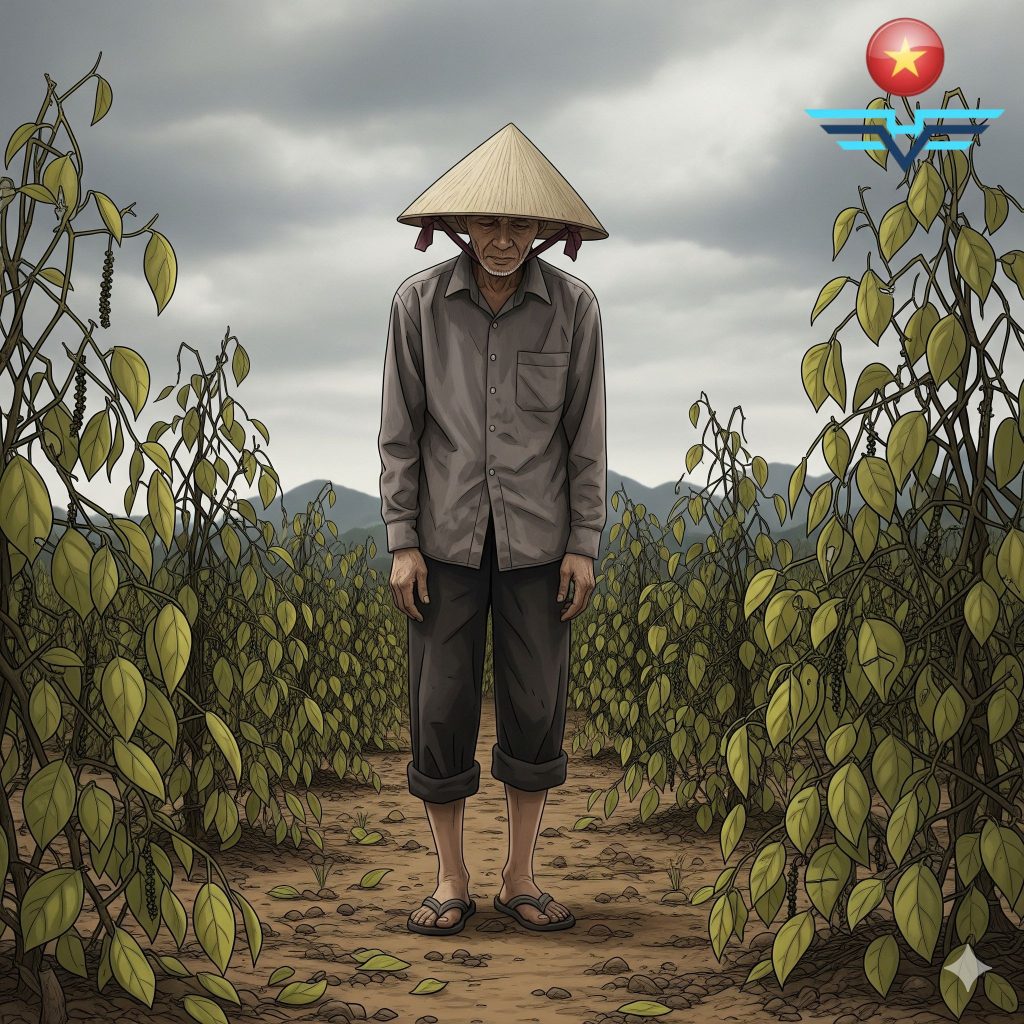
In Xuan Tho commune (Xuan Loc district)—the province’s traditional pepper hub with over 800 ha of vines—many fields now stand neglected. During the dry season, vines suffer from water stress and show yellowing leaves and dead stems.
-
Ho Van Nam, once earning billions of dong from more than 1 ha of pepper, has already cut down half of his vines to plant custard apple. If prices stay low, he plans to remove the rest.
-
Le Dinh Trong, a grower with more than 40 years of experience, still keeps his 1.5 ha pepper farm despite years of losses. Harvesting costs about 230,000 VND per worker per day, so he stores his harvest hoping for a future price rebound.
By 2018, Xuan Tho had over 800 ha of pepper, but “price storms” have reduced that figure to about 600 ha today, a drop of 200 ha in just two years.
A Province-Wide Decline
Across Dong Nai, total pepper acreage once peaked at 19,000 ha in 2018. After prices collapsed, farmers cut down more than 2,000 ha within two years. Even on surviving plantations, yields have fallen by roughly 40% as farmers scale back fertilizer and care.
Officials note that during the price boom, they warned farmers against reckless expansion, but many chased short-term profit. Now the province encourages growers to convert old or poorly located pepper fields to other crops and to adopt intercropping and cost-saving technologies where pepper is still productive.
Future Outlook
The agricultural sector plans to support farmers in producing clean, certified pepper and in linking growers with export companies to open new markets. For many households, however, the once-lucrative pepper vine—once a symbol of wealth—has become a heavy financial burden, and the road to sustainable income remains uncertain.