
From Consignment to On-Farm Storage
Table of Contents
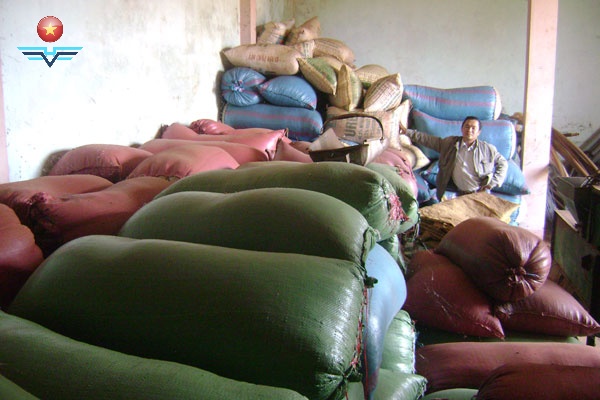
For decades, coffee growers in Vietnam’s Central Highlands traditionally consigned their harvests to local traders’ warehouses. These agents not only stored the beans but also provided fertilizer and farm inputs on credit, acting as informal financiers for farmers who often found bank loans too difficult to access.
Yet this arrangement is risky. Many traders sell the deposited coffee immediately to fund their own operations. When prices rise and farmers return to fix a higher price, the beans may already be gone. If prices fall, the warehouse operator gains.
-
Inexim (Đắk Lắk) still owes 40 households 188 tons of coffee from 1999–2000 despite years of court battles.
-
Another case involving 18,000 tons of coffee under post-price-fix contracts remains unresolved after multiple trials and appeals.
Across the Central Highlands, numerous coffee companies have collapsed owing thousands of billions of đồng due to this risky “sell first, buy later” practice.
Security and Theft Concerns
Most coffee farmers live in scattered rural plots with simple homes, making their harvests vulnerable:
-
Thieves can back a tractor into fields when families are away and steal tons of coffee.
-
Some incidents have even led to violence or theft by family members seeking quick cash.
By building small storage sheds to keep their beans until ready to sell, farmers protect their property, not speculate on prices.
Rising Prices Encourage Delayed Sales
Recently, prices of high-value crops such as pepper and coffee have climbed up to 40% near the end of the harvest season. Naturally, farmers want to delay selling until market conditions stabilize.
However, this is not speculation:
-
70% of coffee households farm only a few hectares.
-
More than half have less than one hectare.
-
With high cultivation costs, profits remain modest even when prices rise.
These smallholders simply cannot afford to build large warehouses or hold coffee purely to gamble on price spikes.
Avoiding the “Hoarding” Label
Farmers often follow a “herd mentality” when prices surge, but labeling their cautious storage as “hoarding” is misleading. Public praise for “holding back” coffee could push farmers into dangerous speculation, as shown by the recent cashew-nut market lessons, where even seasoned global traders saw fortunes made and lost overnight.
Central Highlands coffee farmers are safeguarding their harvests, not manipulating the market.
On-farm storage is a rational response to:
-
Past losses from risky consignment practices, and
-
The need to protect crops from theft and price volatility.
This trend reflects a mature, self-reliant approach to coffee marketing—ensuring farmers can sell on their own terms without being exploited by middlemen or market speculation.