
Why Organic Matter in Soil Matters
Table of Contents
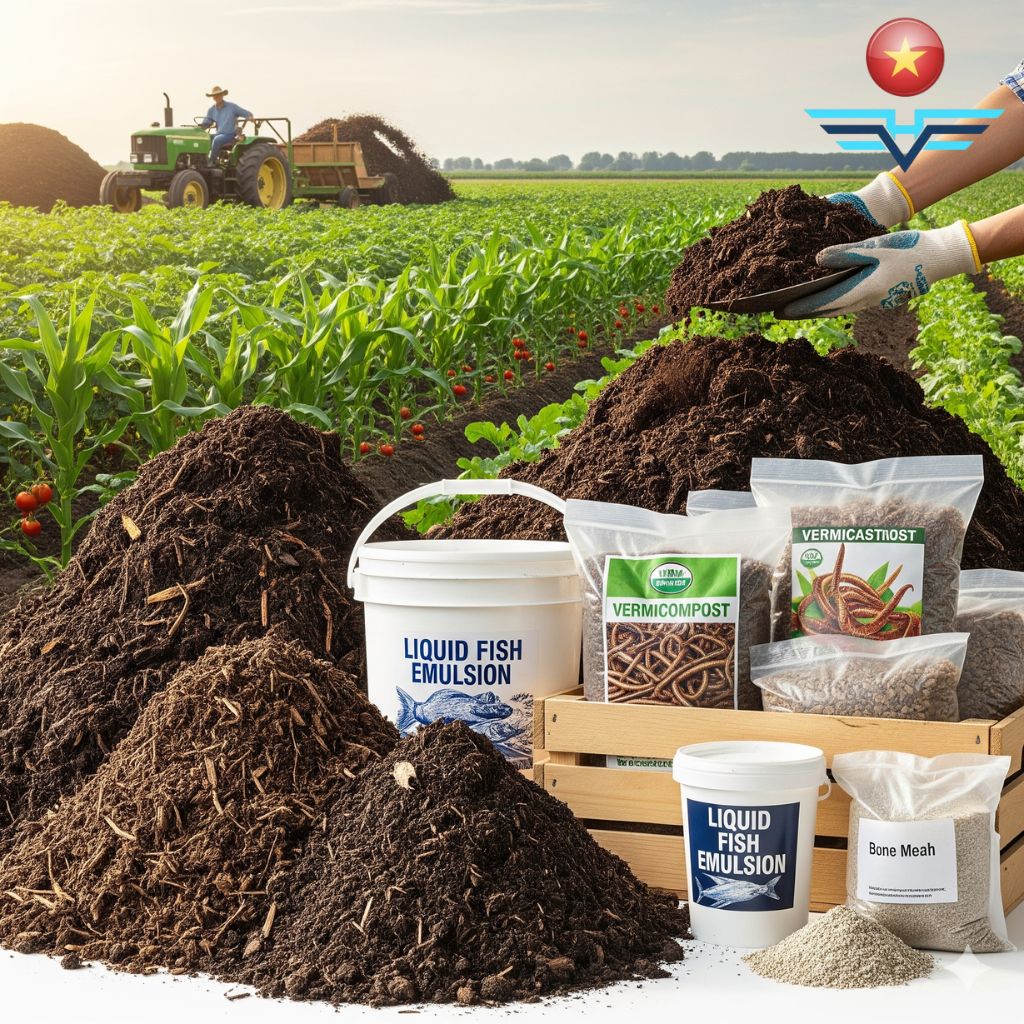
Soil organic matter is one of the most important indicators of soil fertility. A soil with a higher organic matter percentage is typically more fertile.
For example, if two soils have similar origins but one contains 1.05% organic matter and the other 5.3%, the second soil is immediately considered more fertile—even before analyzing other physical or chemical properties.
Benefits of High Organic Matter
-
Better soil structure: Rich organic matter creates a loose, well-aerated soil with stable aggregates.
-
Improved moisture retention: Soils hold water more effectively, helping crops resist drought.
-
Stable pH buffering: Organic matter buffers acidity and stabilizes soil pH.
-
Enhanced nutrient storage: Organic particles hold nutrients and release them slowly for plant roots.
Because of these benefits, agronomists strongly recommend applying organic fertilizers or at least returning part of the organic material removed at each harvest.
Main Types of Organic Fertilizers
1. Traditional Organic Fertilizers
These include manure from cattle, buffalo, pigs, poultry, goats, and sheep. Fresh manure often contains significant nutrients. For example:
-
Fresh cow manure: ~0.34% nitrogen (N)
-
Buffalo manure: ~0.31% N
-
Pig manure: ~0.67% N
Farmyard manure is usually mixed with straw, leaves, or grass as bedding, which dilutes nutrient levels but still enriches the soil.
Other sources: pond sludge, sugar mill sludge, green manure, and composted municipal waste.
2. Industrially Processed Organic Fertilizers
Modern manufacturing produces several specialized categories:
-
Organic fertilizer: ≥20% organic matter, ≥2% nitrogen, C/N ratio ~12.
-
Organic–mineral fertilizer: ≥15% organic matter and total N+P+K of 8–18%.
-
Bio-organic fertilizer: ≥5% humic/fulvic acids, humin, amino acids, vitamins or other bioactive compounds.
-
Organic microbial fertilizer: ≥15% organic matter and at least one beneficial microorganism at ≥1.5 × 10⁶ CFU/g.
-
Mineral–organic fertilizer: 5–15% organic matter and ≥18% mineral nutrients.
-
Microbial inoculant fertilizer: At least one beneficial microbe strain with ≥1.5 × 10⁸ live spores.
Balancing Nutrients for Crops
All crops require 16 essential nutrients—macronutrients such as N, P, K, Ca, Mg, S, Si and a full range of micronutrients. While organic fertilizers naturally contain many of these elements, their nutrient concentrations vary widely.
For example, to produce 3 tons of dried black pepper, plants remove roughly:
-
400 kg Nitrogen (N)
-
220 kg Phosphorus (P)
-
350 kg Potassium (K)
Growers must calculate the nutrient content of each organic fertilizer to meet these demands. When applied in adequate quantities, organic fertilizers can maintain high yields and improve soil health over time.
Key Takeaways
-
Long-term organic fertilization not only supplies essential nutrients but also improves soil structure, moisture retention, and pH stability.
-
For sustainable high yields, combine nutrient balancing with regular organic matter inputs.
-
Continuous organic fertilizer application enriches rather than depletes the soil.
Meta Description: Learn the fundamentals of organic fertilizers—types, nutrient content, and how they enhance soil fertility and sustainable crop yields, especially for high-demand crops like black pepper.