
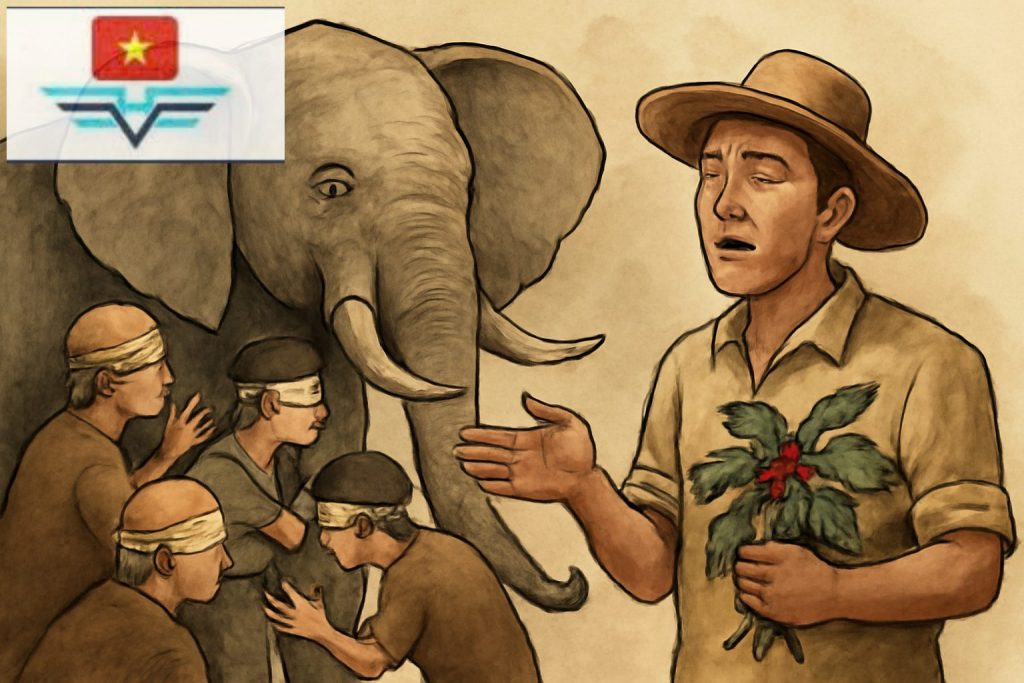
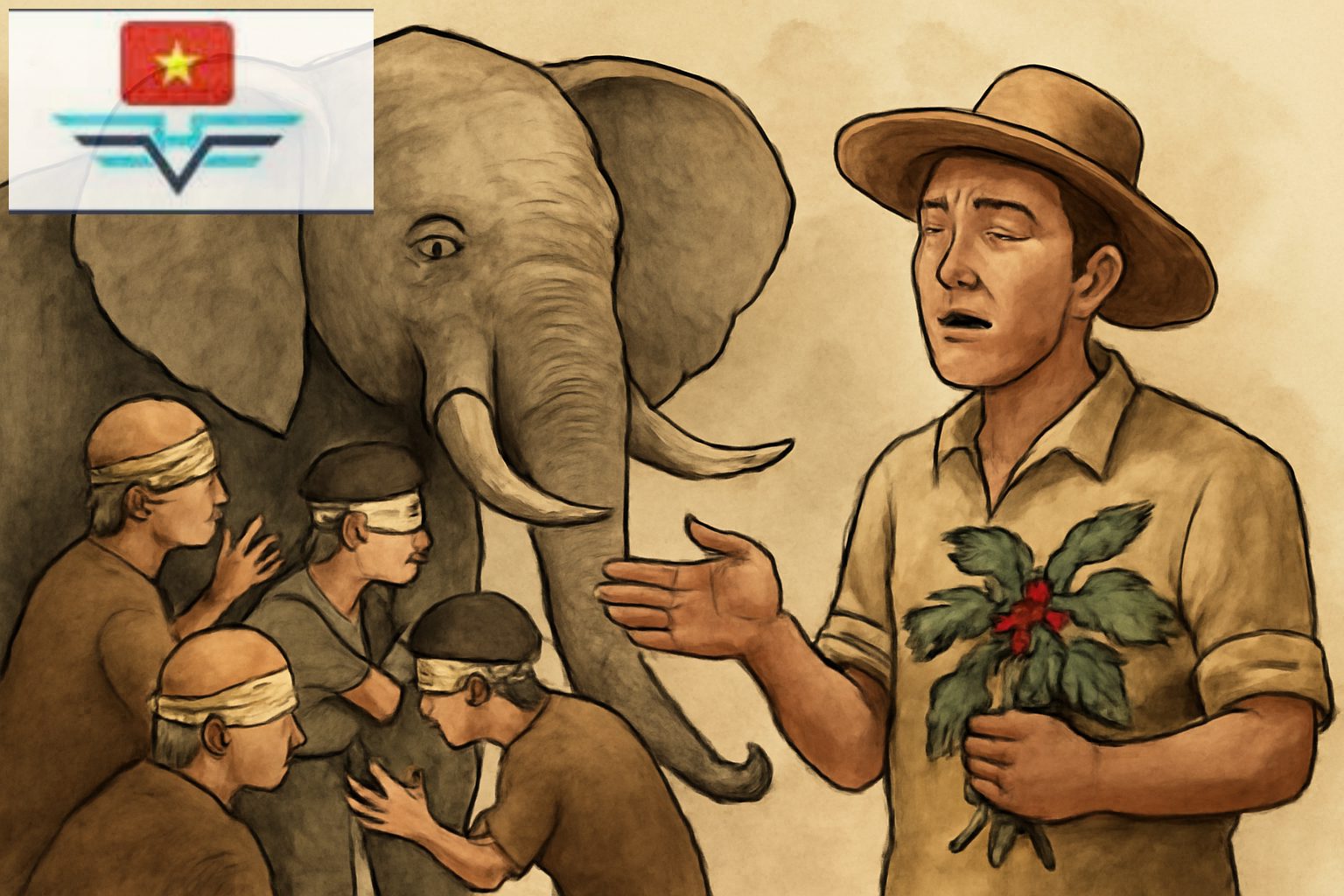
As a farmer deeply connected to the coffee industry, I feel deeply engaged and want to share my thoughts with the Y5Cafe community. It’s a mix of emotions when I see the image of a fortune teller touching an elephant being compared to our so-called “forecasters.”
It’s quite an accurate image for the current situation, and I agree with the author’s insights on several issues. The author has offered valuable advice after the bitter lessons learned by many who believed in hasty predictions.
Part 1: Analysis and Forecasting
Table of Contents
However, I must also say that while I’m not trying to “defend” the so-called “wild predictions,” there’s no denying that forecasting requires an investment in research to provide a solid foundation for predictions. It’s important to analyze the information carefully and responsibly.
As we know, the fluctuations in coffee prices on the global market depend on many factors, which I’ve briefly mentioned in previous writings. Today, I want to add some insights in the hope of discussing the complexities of the coffee business with the community.
Coffee Business Is Not Just About Selling Real Coffee
The amount of coffee traded globally is five times (or more) the amount of actual coffee produced by farmers (with a world production of approximately 127 million bags in the 2009 season). So, one coffee bag might be sold from person A to person B, and then from person B to person C, all counted as part of daily trading on the market.
This helps us understand that forecasting doesn’t just depend on news like whether Brazil has frost or the drought in Vietnam. It also depends on the positions of major investors at any given moment. Are they selling “paper” coffee contracts they bought earlier, or are they buying to sell again later in anticipation of price increases? Their actions have a huge impact on the price.
Analysts Must Monitor Currency Values of Both Producer and Consumer Countries
One of the major factors that cause significant fluctuations in coffee prices is the value of currencies in major producing or consuming countries.
For example, if the exchange rate of the Vietnamese đồng suddenly increased to 40,000 VND per 1 USD, the price of domestic coffee would double due to the exchange rate, even if global coffee prices remained unchanged. In this case, farmers would be able to sell coffee at 60,000 VND per kg, which would cause a rush to sell and immediately impact the global price of coffee.
Unfortunately, other producing countries, whose currencies remained stable, would face the consequences of this price surge. This has happened before, particularly around 1998-2000, when Brazil’s real depreciated against the USD, leading to a massive sell-off in coffee that further exacerbated the oversupply crisis.
How Currency Fluctuations Impact Coffee Prices
Let’s look at a real-life example: when coffee prices were low and the oversupply crisis was still not fully resolved in 2000, several companies (myself included) had sold futures contracts and were holding onto the profits. However, when the political gridlock during the US presidential election between George Bush and Al Gore prolonged the outcome, it impacted stock markets and the value of the USD.
In response, investors holding strong currencies like the Euro or the British pound exchanged them for USD, as the dollar was weakening, allowing them to buy more USD and then purchase coffee while prices were still low. This collective action pushed coffee prices back up, causing a surge in the market.
Lesson Learned
Unfortunately, for me and several coffee traders who had bought at that time, not only did we fail to benefit from the price increase, but we were forced to invest more due to flawed analysis and poor forecasting, much like the proverbial fortune teller who touches the elephant’s ear and believes it’s like a fan.
There are many other aspects of analysis and forecasting that I could share, but if you’re not too tired of reading, I’ll continue with the next part, “Update, Summary, Information Analysis, and Forecasting Part 2.” (To be continued)