
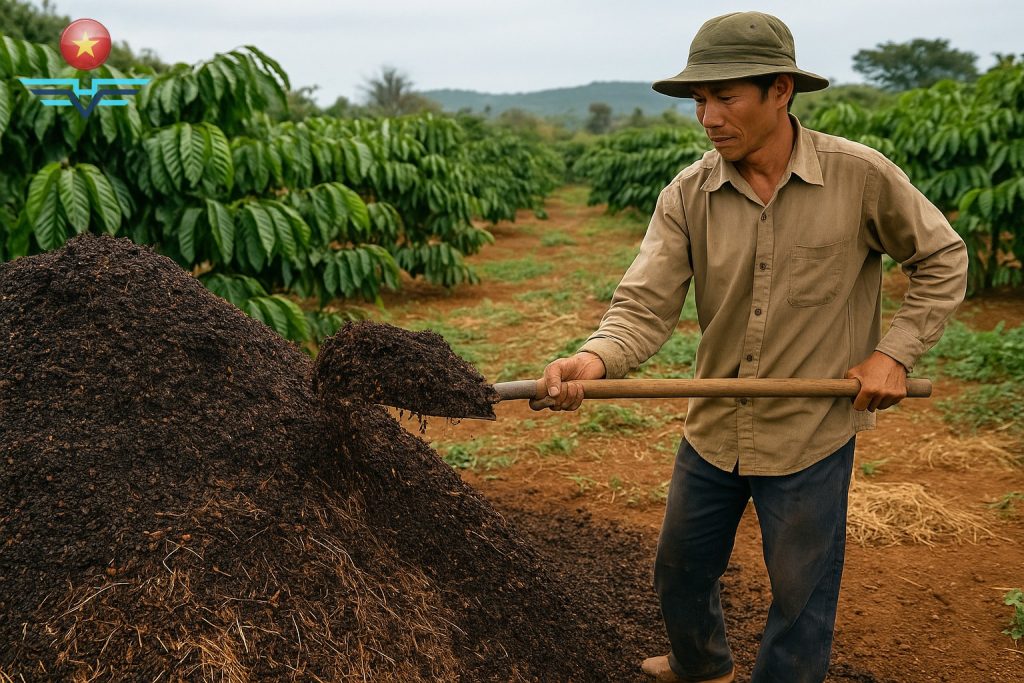
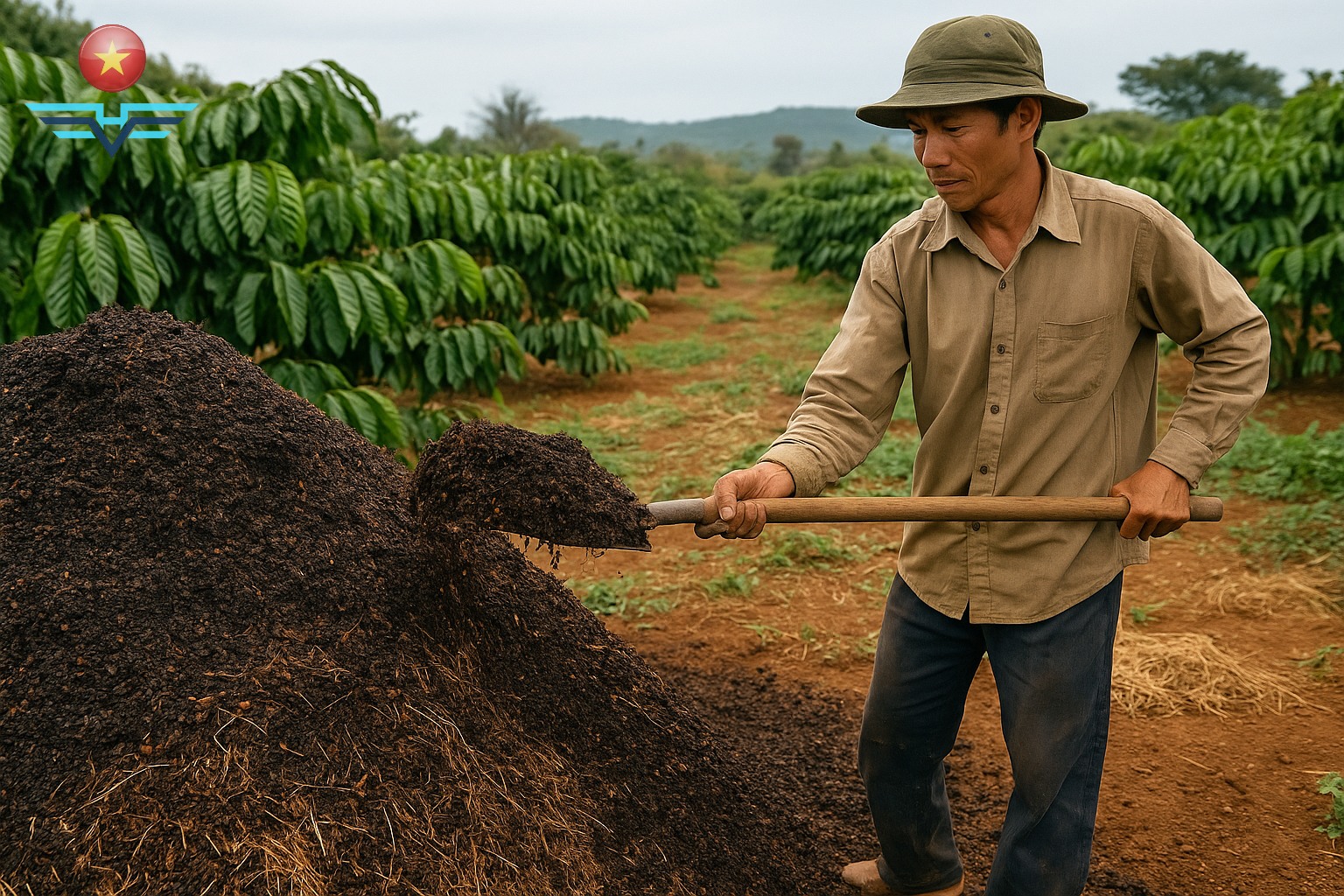
Nguyen The Tien, Head of the Agriculture Department of Di Linh District (Lam Dong Province), said that local farmers have recently mastered the process of composting bio-organic fertilizer from coffee husks. This practice enriches soil fertility, increases crop yields, reduces production costs, and helps minimize environmental pollution.
Lam Dong has several coffee-specialized districts such as Di Linh and Lam Ha. In previous years, after the coffee harvest, a huge quantity of coffee husk by-products was generated. Most of it was either discarded into the environment or burned. A small portion was reused—spread around coffee tree bases or mixed with some manure for fertilizing.
As a result, improper disposal of coffee husks not only wasted resources but also caused environmental pollution and spread diseases to the next coffee crop.
To address this, Di Linh District collaborated with the Central Institute for Agriculture and Forestry and several specialized universities to organize 150 training classes (each with 50 participants) to transfer the scientific techniques for fermenting coffee husks with microbial inoculants to farmers. After the training, farmers carried out the process directly at their own households.
Within about three months, when farmers followed the correct technical composting process and used high-quality microbial agents, they produced a type of bio-organic fertilizer with nutrient content higher than even high-quality manure: potassium levels three times higher and phosphorus 1.5 times higher. With one ton of coffee husks, combined with manure and some other fertilizers, farmers can produce about 5 m³ of bio-fertilizer.
To date, farmers across the district have widely expanded this model of making fertilizer from coffee husks, proving effective—especially in disadvantaged areas and among ethnic minority communities. Many localities and factories in Lam Dong Province have now adopted this environmentally friendly method.