
In Đắk Lắk, coffee growers have long relied mostly on experience and “whatever nature provides,” leading to low yields, inconsistent quality, and unstable prices. A new approach now being implemented here is starting to overcome these limitations.
The Sustainable Agricultural Production Alliance
Table of Contents
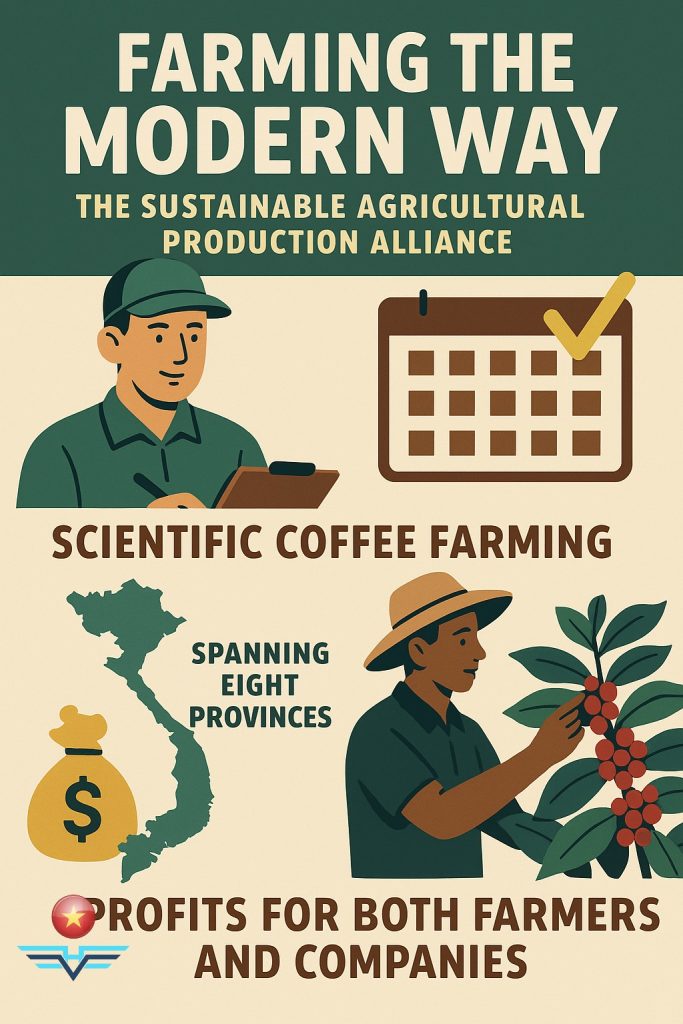
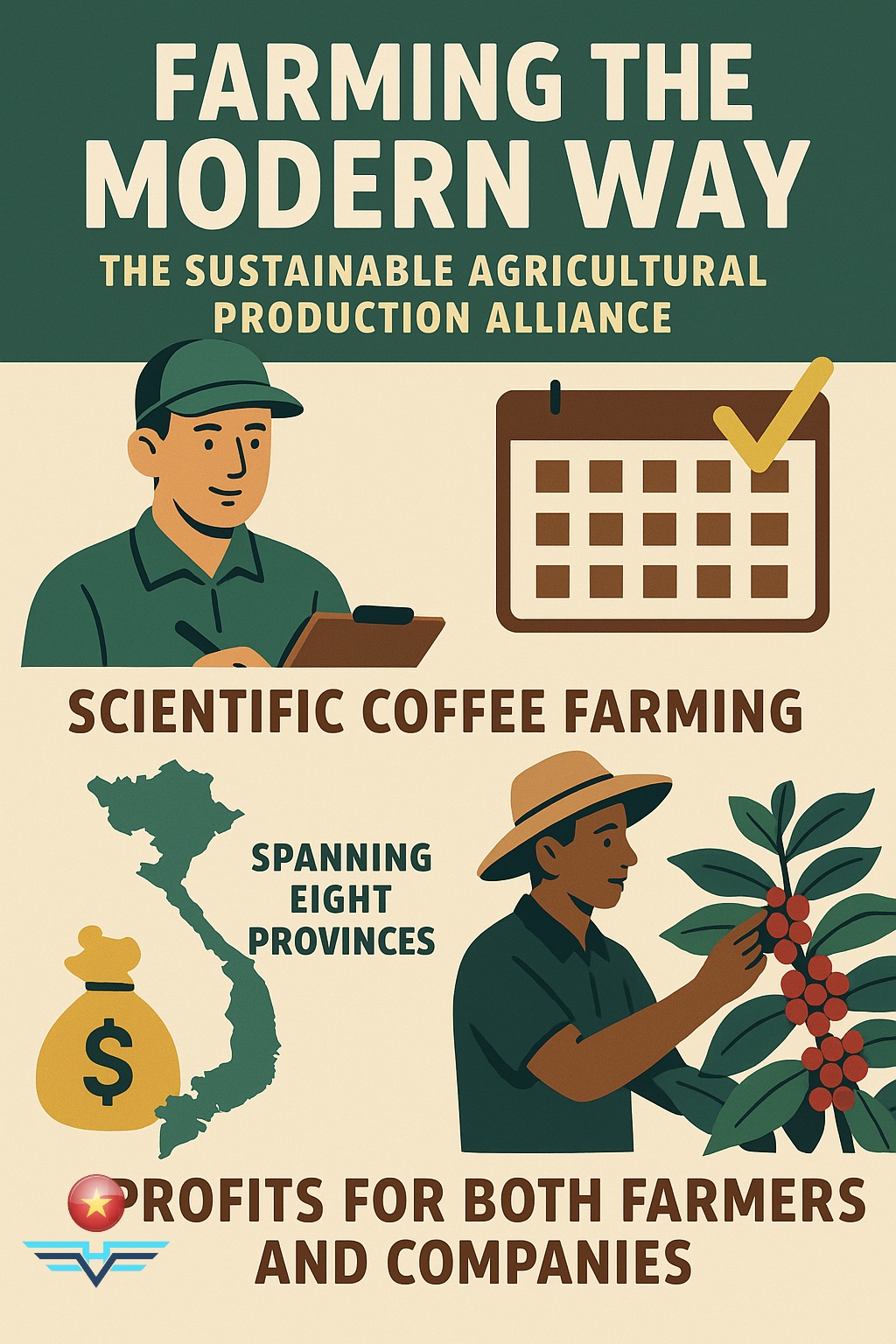
This model—known as the Sustainable Agricultural Production Alliance—has already shown notable success in coffee. Farmers who join the alliance receive a detailed annual coffee-production plan broken down by month. Experts train them in every step of coffee care: planting windbreak trees, applying fertilizer, preventing post-harvest losses, and proper drying and processing—all aligned with sustainable coffee-production standards.
Scientific Coffee Farming Across Eight Provinces
The program is part of the World Bank–funded Agricultural Competitiveness Project (2009–2013) in eight provinces—Lâm Đồng, Thanh Hóa, Nghệ An, Bình Định, Ninh Thuận, Bình Thuận, Đắk Lắk, and Gia Lai—with total World Bank funding exceeding USD 59.7 million. About USD 8 million is allocated to each province, adjustable according to local implementation capacity.
Village elder Ma Ven of Cư Êbua, Buôn Ma Thuột City, recalls: “In the past we fertilized and watered depending on how much cash we had, with no set process—just experience.” He explains that under the alliance, monthly tasks such as pruning and fertilizing are clearly scheduled, so yields and quality have improved markedly. Villagers now dry coffee on brick patios and carefully remove black beans; as a result, buyers pay higher than market prices.
Stable Supply and Better Prices
Phạm Ngọc Bằng, director of Đắk Man Coffee Processing and Export, notes that the farmer–enterprise partnership creates a stable raw-material area that meets international quality standards and earns UTZ certification. Farmers receive training in good agricultural practices and partial financial support for seedlings, fertilizer, farm inputs, drying yards, and mechanical dryers. “The greatest benefit,” Bằng says, “is a stable, high-quality supply while we help farmers upgrade their techniques.” All coffee is purchased under guaranteed contracts at prices 200–300 VND/kg higher than the market, and farmers gain other advantages such as access to affordable fertilizer and advance funding.
Profits for Both Farmers and Companies
Đắk Lắk now has four such alliances: Dakado Avocado Production Alliance; Êbur–Simexco Sustainable Coffee Alliance; Đắk Man–Hòa Đông & Ea Tu Sustainable Coffee Alliance; and a Wild Boar Production and Marketing Alliance. These are early results of the Agricultural Competitiveness Project launched in mid-2009 with a total budget of USD 8.53 million in the province.
According to project consultant Đỗ Thành Chung, the project provides non-refundable grants covering about 40% of each alliance’s eligible expenses and also funds essential public infrastructure to boost competitiveness, raise farm productivity, and lower market costs. “These are like stimulus packages for agriculture,” Chung says, “encouraging farmers and businesses to strengthen their links and increase the competitiveness of Vietnamese farm products at home and abroad.”
These alliances unite farmer groups, businesses, local planners, and scientists, producing high-quality, competitive agricultural products and ensuring both farmers and enterprises share the profits. Beyond coffee and wild boar, Đắk Lắk plans to launch new alliances for safe vegetables and honey to stabilize farm-product prices and secure raw-material supplies for the future.