
Hello friends,
I’ve read the lively debate about the victim’s fate in lawyer Nguyễn Minh Thuận’s article “The Dog Attack That Left Many Unanswered Questions.” Let me share a real story about the people you so politely call the poor who go to “pick leftover coffee.”
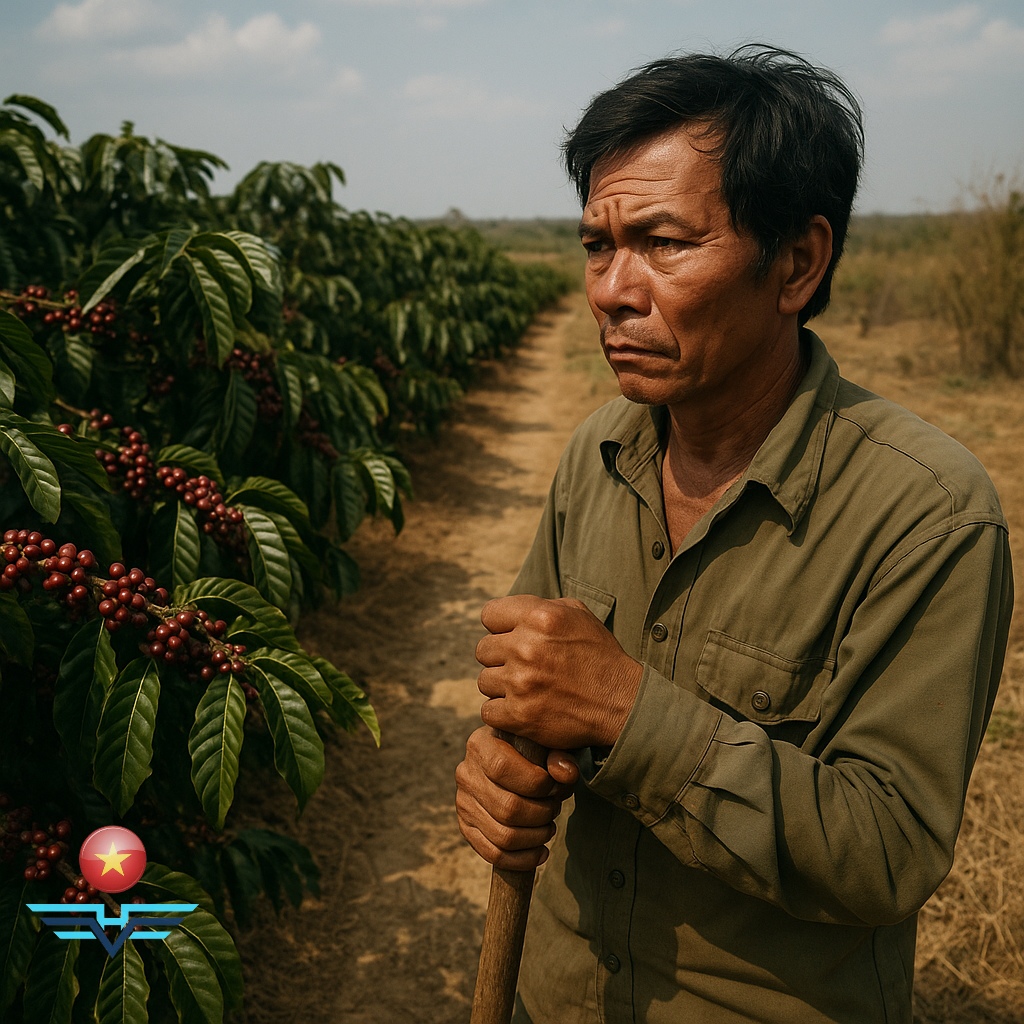
I’m 52 now, and I spent more than 18 years doing all sorts of jobs far from home—growing coffee in Gia Lai and Đắk Lắk, raising shrimp in Bạc Liêu, and many other trades. After all those years, I finally gave up everything and returned to Saigon to work in the family business.
Some of you say that if someone sneaks in to pick coffee, you should just hand them over to the authorities. Well, I once had to beg the police to intervene with these so-called “coffee pickers.” But the situation only got worse: more than a hundred of my coffee trees were stripped bare by the very people you call poor folks picking leftovers—not a branch or twig was left. Report it to the police? They were miles away from my field. When they finally came, they only offered vague promises.
What I lost wasn’t just fruit or equipment—it was the result of honest, back-breaking labor, something no amount of sheer effort could guarantee without the blessing of good weather. Yet they still came to “pick”—they stole my water pump, hundreds of meters of irrigation hose, even the sacks of fertilizer I hadn’t spread yet.
I sold everything in Gia Lai and moved to Đắk Lắk to start over, but the same scene repeated itself. I sold again and tried my luck in Long Khánh, planting rambutan and durian. After years of sweat and hardship, the rambutan finally bore fruit—only for these “pickers” to come and harvest it for themselves.
I once caught five or six of them red-handed, each clutching bags of stolen fruit. When I blocked their way and asked, “Where are you going in my orchard?” they smirked and said they were there to buy rambutan. I asked, “How much are you buying?” Each one casually handed me a few 2,000-đồng notes while still hugging their bulging bags, mocking me. I took back what they had taken. Barely a week later, my orchard was devastated—trees cut down or burned, even the little hut I built to keep watch was torched.
My son was only ten then, and his eyes already carried a look of bitter hatred, because so many wicked people kept destroying the family’s livelihood.
After nine or ten years wandering from place to place, I sold everything once more and moved to the Mekong Delta, hoping shrimp farming would change my life. But it was the same story: while I raised shrimp, they boldly came in to scoop them up. When my son cried out, they sneered, “We’re just taking a bit for drinking—why fuss?” As if it were some ancestral right. And there were many other ugly incidents.
In the end, I had to give up farming altogether and return to Saigon to start over from scratch.