
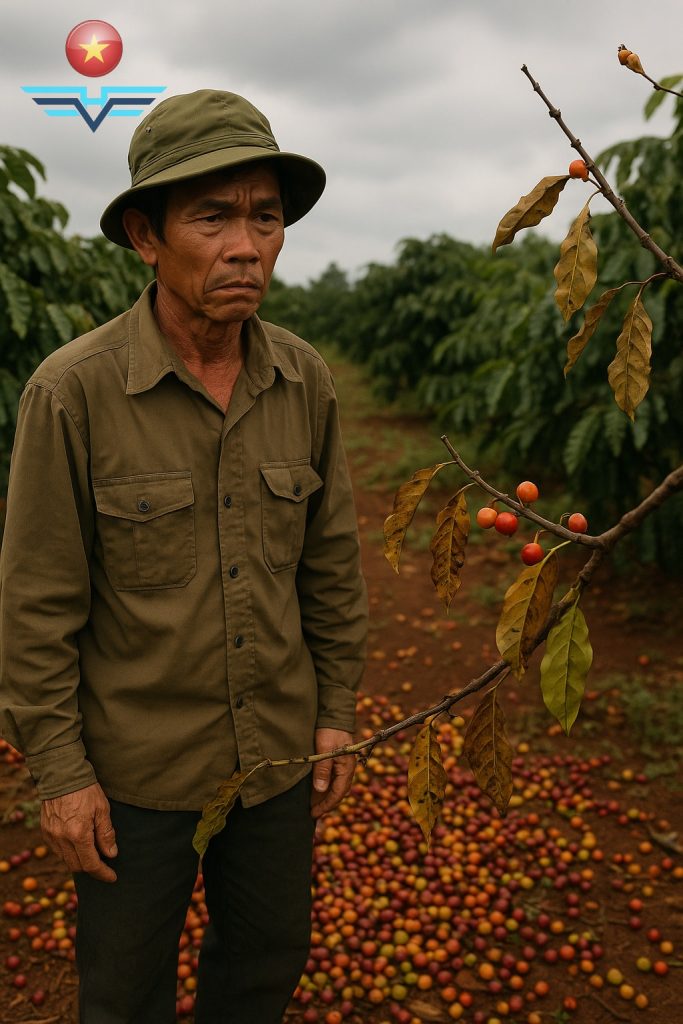
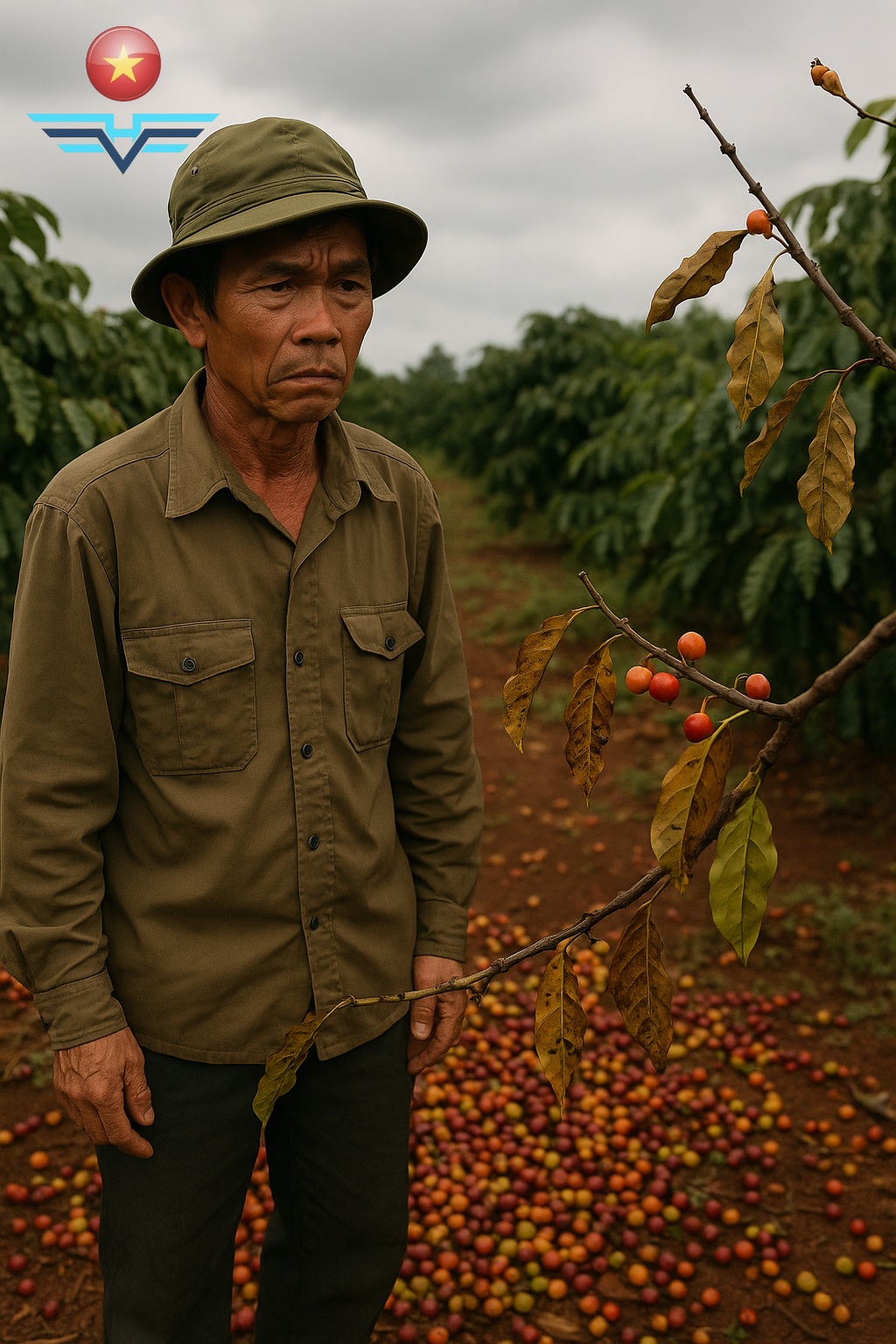
After a year of hard work, coffee farmers in Gia Lai province face the harvest season with many worries still weighing on their minds.
Falling Prices
Table of Contents
According to the seasonal calendar, mid-October is usually the time when farmers in Vietnam’s Central Highlands begin harvesting coffee. Yet from mid-October 2011, coffee prices in Gia Lai, Đắk Lắk, Đắk Nông, and Lâm Đồng have been steadily dropping. On 15 October, coffee beans sold for 43,600–43,700 VND per kilogram, but by 29 October the price had fallen to around 40,400–40,500 VND—a drop of more than 3,000 VND per kilogram.
Local buying agents explain that prices typically decline sharply before, during, and immediately after harvest because of abundant supply. As in previous years, prices often rebound—sometimes strongly—only after farmers have sold off their entire stock. Farmers wonder why they cannot simply wait for higher prices.
Trần Thanh Ngọc from Nam Yang commune, Đắk Đoa district, explains: “My family has 2 hectares of coffee and four mouths to feed, including two school-age children. All our expenses depend on this coffee farm. We must repay fertilizer and pesticide dealers as soon as we finish harvesting, meet bank loan deadlines, and pay laborers in cash. Of course we want to wait for higher prices, but we can’t. We often have to sell even before the coffee is fully ready.”
Fruit Drop and Pests
Early in the season, plentiful rains delighted farmers, but as harvest approached, many were alarmed by widespread cherry drop. Farmers suspect waterlogging from excessive rainfall. Plant protection officials add that sudden changes in humidity created ideal conditions for pests such as leafhoppers and mealybugs or for the fungus Colletotrichum coffeanum, which causes peduncle rot. Nutritional imbalances also contribute.
Vũ Ngọc Vĩnh in Phú Hòa township reports that more than 30 % of his 1 hectare plot has lost cherries; in half of that area the loss exceeds 90 %. Mid-season outbreaks of cicadas in districts like Đắk Đoa and Ia Grai have also caused fruit drop and lower yields. Some trees have died, and because there is no effective treatment for these pests, many farmers are discouraged and considering switching to pepper, which currently commands a higher price.
Fear of Theft
Vĩnh, who has grown coffee for over 20 years from Đắk Nông to Gia Lai, has witnessed many theft tactics: stealing beans drying in the yard, raiding bagged coffee in storage, stripping branches, even cutting entire trees to remove cherries. Thieves operate in teams with lookouts and transporters, making it difficult for the thinly stretched local security forces to respond. Farmers want to harvest fully ripe cherries for better prices, but constant risk of theft forces them to pick earlier.
Slim Profits
At present, fresh coffee cherries fetch about 8,000 VND per kilogram. With rising input costs for fuel, fertilizer, and labor—harvest workers now cost about 150,000 VND per person per day—smallholders who harvest and process themselves barely earn wages for their own labor. Those who must hire workers may only break even or even incur losses. Farmers can only hope that after the harvest, prices will rebound enough to ease their hardships.