
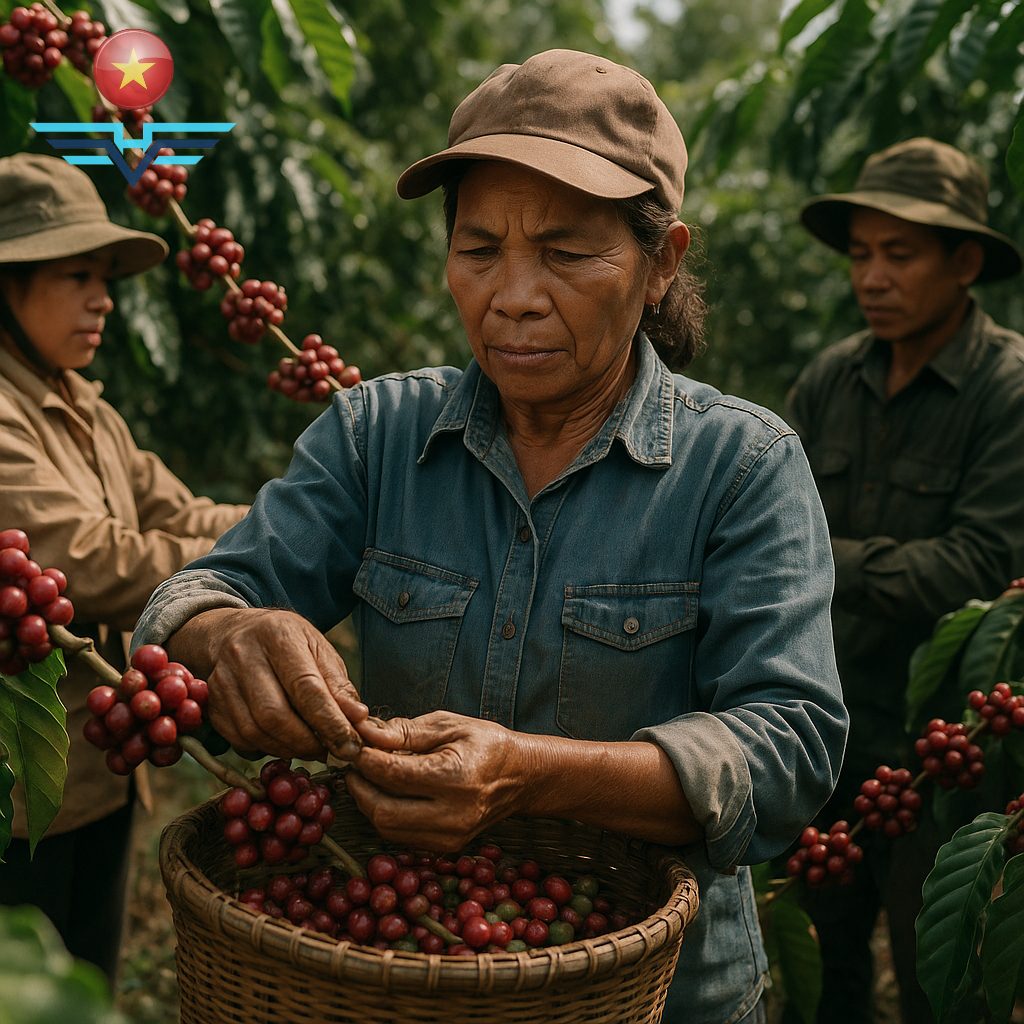
The coffee harvest has been under way for more than a month, and many farmers are pleased with both yield and price. Yet even as coffee cherries ripen en masse, growers across Gia Lai Province are scrambling to find pickers—some traveling all the way to Binh Dinh or Phu Yen to recruit workers.
Desperate Search for Pickers
Le Thi Tam, 55, of Ia Bang (Chu Prong District) owns 3 ha of coffee now fully ripe. “For a month I’ve barely slept because I can’t find anyone to harvest,” she says. In past seasons labor shortages were common, but paying higher wages usually solved the problem; this year, even cash in hand doesn’t guarantee workers.
The crunch is severe in all key coffee districts—Ia Grai, Chu Pah, Dak Doa, Chu Prong—leaving many farmers anxious. Nguyen Van Thinh, 50, of Trang commune, Dak Doa, laments: “Never have I faced a ‘one-man farm’ like this. I have nearly 5 ha of coffee but only myself to pick it—my children are still in school. Labor costs are sky-high this year, yet my family depends on this crop, so I have no choice but to toil alone.” He adds that with prices high, farmers must also hire guards against thieves, adding another burden.
Typically 1 ha requires 3–4 pickers, meaning Thinh needs at least 15–20 workers to finish on time. Last year labor cost only 1.5–1.7 million VND per person per month including meals; this year rates have jumped to 2.5–3 million, and some growers are paying 3.5 million. Even at those prices many must “bite the bullet” to avoid theft and yield losses.
The Rise of Labor “Middlemen”
Every peak harvest season brings an influx of coffee-labor brokers. Long before picking starts, they scour northern and central provinces where labor is plentiful and cheaper. Small-scale brokers collect a commission from both workers and farm owners; bigger operators organize large crews and charge lump-sum fees.
These brokers do help match workers and farmers, but many exploit the situation—canceling contracts or demanding more money. Wages often pass through the brokers first, giving them room to skim. “We know they’re taking a cut, but we have no choice,” many farmers admit.
Nguyen Van Dao, 58, of Chu Pong (Chu Se District) thought he had secured a reliable team from Phu Yen at a generous wage, but after ten days they all quit, claiming they had to harvest rice at home. With over 8 ha of cherries ripening fast, Dao was left scrambling. “Hiring early is easier than during peak season, but workers will leave if someone offers more money—usually enticed by these brokers,” he says.
A few days ago a broker promised Dao three workers from Quang Tri. He paid a deposit and agreed to an eye-watering wage. “I waited and waited—my money’s gone, the workers never came, and my coffee is turning red and starting to drop,” Dao says, exasperated.
For many Gia Lai coffee growers, a bumper crop and high prices have been overshadowed by the stress and cost of finding harvest labor—an annual headache made worse this year by aggressive middlemen.