
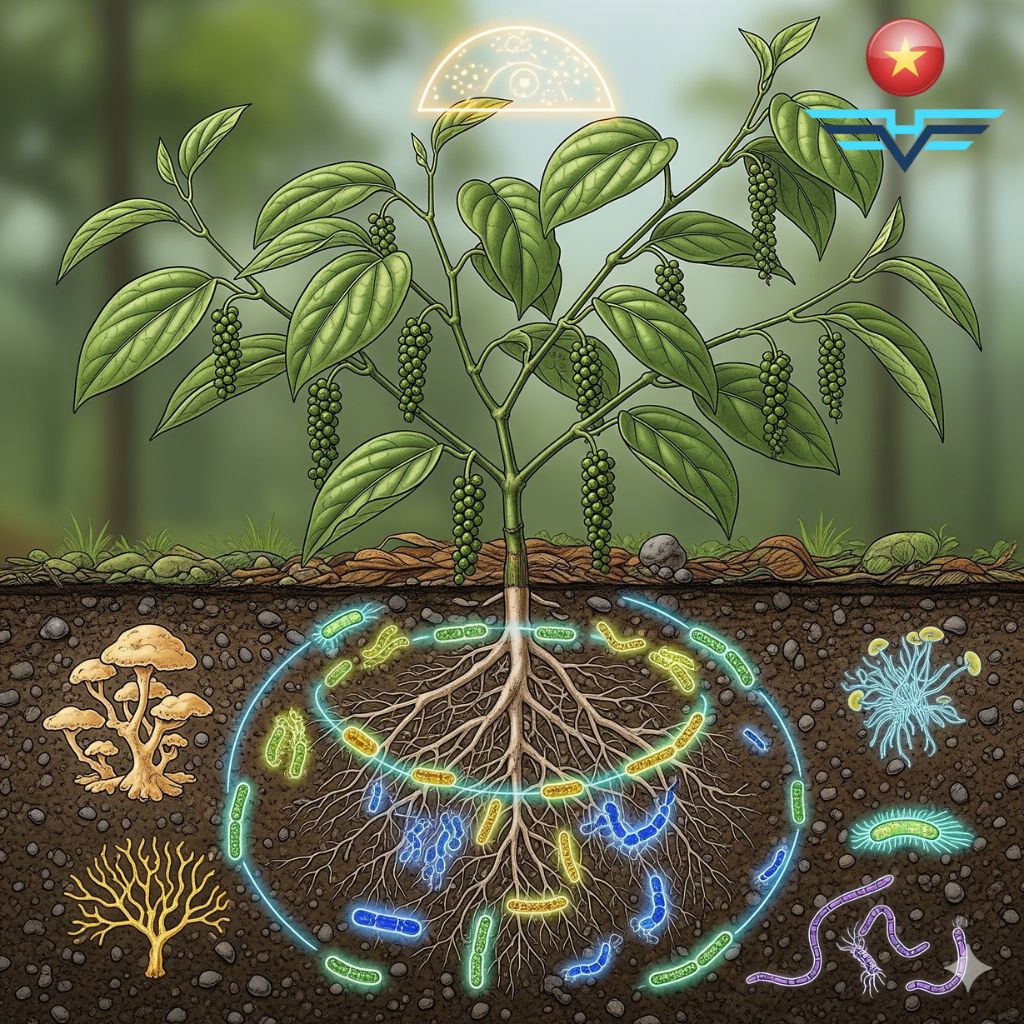
Vietnam – Unpredictable climate change is making plant diseases more frequent and severe. Among industrial crops, black pepper (Piper nigrum L.) is one of the most sensitive and difficult to cultivate, so proactive disease prevention is essential for sustainable production.
Why Pepper Farming Is Challenging
Table of Contents
Black pepper delivers high economic returns, but its care and pest management are far more complex than crops such as tea, coffee, or rubber. Farmers must pay close attention to soil conditions, moisture, and disease prevention to avoid heavy losses.
Ideal Growing Conditions for Healthy Pepper
-
Light and Shade: Pepper thrives in diffused sunlight and requires permanent shade trees to regulate flowering and fruit set.
-
Soil and Drainage: The crop needs moist, well-drained soil. Avoid low-lying areas prone to waterlogging, especially during heavy rains.
Common Pepper Diseases
Major threats include slow wilt (yellow leaf disease), quick wilt, stem and root rot, fungal infections, mealybugs, and nematodes—all of which can cause significant economic damage.
Early detection is critical:
-
Inspect pepper gardens frequently for signs such as yellowing or curling leaves, leaf spots, or waterlogged areas.
-
Remember: preventing disease is always more effective than trying to cure it once established.
Practical Guidelines for Using Plant Protection Products
When chemical treatment is unavoidable:
-
Spread granular or powdered pesticides evenly around the plant’s canopy only when the soil is adequately moist.
-
Follow the manufacturer’s recommended dilution rates when preparing liquid solutions for root drenching.
-
Never apply chemicals to dry soil.
Preventing Quick Wilt (Phytophthora sp.)
Quick wilt, common during the rainy season, is best prevented with Trichoderma antagonistic fungi:
-
Prune shade trees after fruit set to improve airflow.
-
Maintain drainage systems to prevent standing water.
-
Apply Trichoderma at least three times per year—at the start, middle, and end of the rainy season. During outbreaks, add a fourth application.
-
Avoid self-culturing Trichoderma unless you are experienced, as poor technique can reduce effectiveness.
Recommended Treatment for Active Infections
If symptoms such as green leaf drop or spreading leaf rot appear:
-
Use a fungicide blend containing Mancozeb + Metalaxyl 72WP.
-
Drench the roots once and spray the foliage twice in succession.
-
If needed, repeat both treatments once more, with no more than seven days between applications.
-
During treatment, do not apply other fertilizers or mix additional chemicals, as this can reduce efficacy or worsen the disease.
Exploring New Biological Solutions
Modern agriculture increasingly adopts beneficial microorganisms, notably antibiotic-producing Streptomyces species, as biological disease-control agents. Farmers should research and consult experts before applying these methods.
Key Takeaway
As climate change intensifies, the risk of pepper diseases will continue to rise. Combining early monitoring, proper shade management, reliable drainage, biological controls like Trichoderma, and careful, targeted chemical treatments will help farmers protect yields and maintain long-term, sustainable pepper production.