
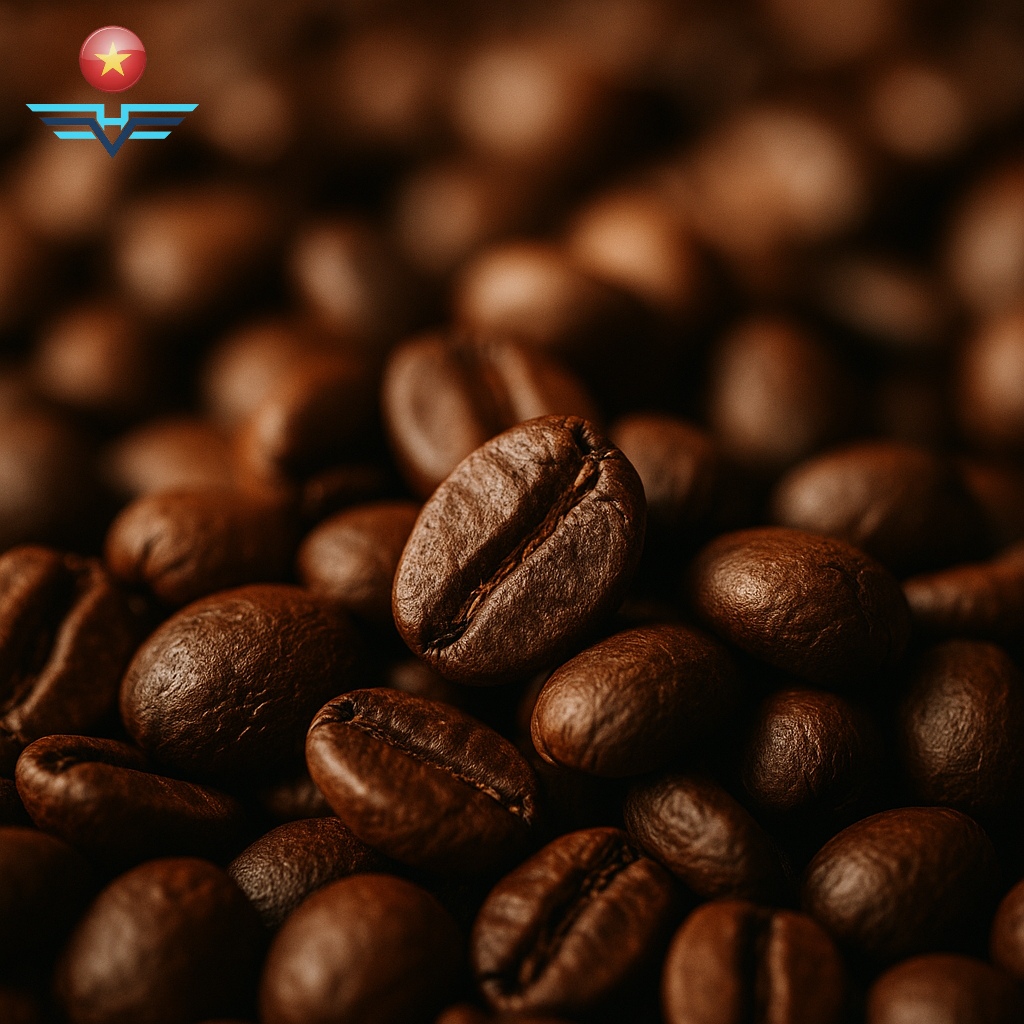
Alongside Arabica, Robusta is one of the world’s most popular coffee varieties, widely cultivated in Vietnam and many other countries. With its distinctive characteristics, it’s not difficult to recognize the signature taste of this famous coffee.
Characteristics of Robusta Coffee
Robusta coffee beans are round, about 10–13 mm in diameter, and have a deep brown color. They contain 3–4% caffeine—almost double the 1–2% found in Arabica.
Robusta thrives in areas with heavy rainfall and abundant sunlight. The ideal temperature range is 24–29 °C, and it prefers altitudes below 1,000 m—most commonly around 850–900 m—on fertile red basalt soils.
Vietnam offers many regions ideally suited to Robusta cultivation, especially Buôn Ma Thuột, Đắk Lắk, Lâm Đồng, Gia Lai, and Đắk Nông. These regions produce some of the finest, most distinctive Robusta beans. Yet, soil conditions vary, so Robusta grown in different areas develops subtle differences in flavor—something seasoned coffee enthusiasts can easily detect and appreciate.
The Authentic Taste of Robusta
Pure Robusta coffee is loved for its bold body and distinctive aroma. Generally, it has a noticeably more astringent and bitter taste than Arabica, partly because Robusta is typically processed using the dry method.
Robusta beans are also rich in chlorogenic acids (CGA). Despite the name, chlorogenic acid is not associated with sourness but rather bitterness. During roasting, CGA breaks down into caffeic and quinic acids, which, when combined with caffeine, create Robusta’s signature bitterness. So, even though Robusta contains about twice as much acid as Arabica, it tastes distinctly bitter rather than sour.
Moreover, with roughly twice the caffeine content of Arabica, blending the two produces a balanced coffee that many drinkers enjoy. This is why many Italian-style espresso blends include 10–15% Robusta—to intensify the aroma and create a rich, golden crema.