
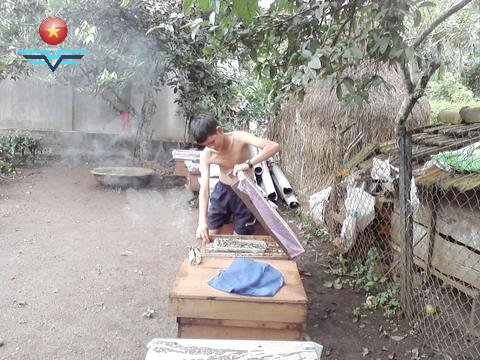
The Vietnam Beekeepers Association has advised beekeepers to move their hives away from rubber and coffee plantations to prevent pesticide contamination of honey.
Đinh Quyết Tâm, Chairman of the Vietnam Beekeepers Association, said that so far Vietnamese honey that meets quality standards is still accepted by the U.S. market, even though nearly 600 tons of honey were previously rejected due to traces of fungicide.
For the shipments the U.S. refused, the Ministry of Agriculture and Rural Development (MARD) immediately stepped in, asking U.S. authorities to reconsider because the chemical residues were far lower than the limits set by both the Codex Alimentarius and the EU (1 mg/kg).
He emphasized that the contamination was not directly the fault of the beekeepers. Instead, it came from the spraying of crop-protection chemicals—such as fungicides—on plants like rubber, cashew, and coffee, which can easily end up in honey when bees collect nectar from those flowers.
The association is now urging beekeepers to keep their hives well away from rubber and coffee growing areas to avoid such contamination.