
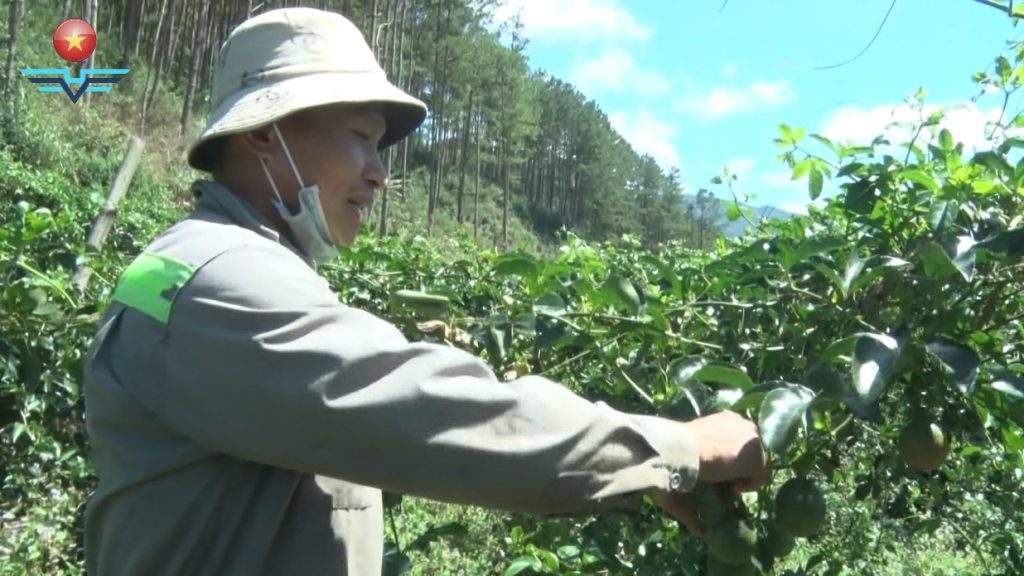
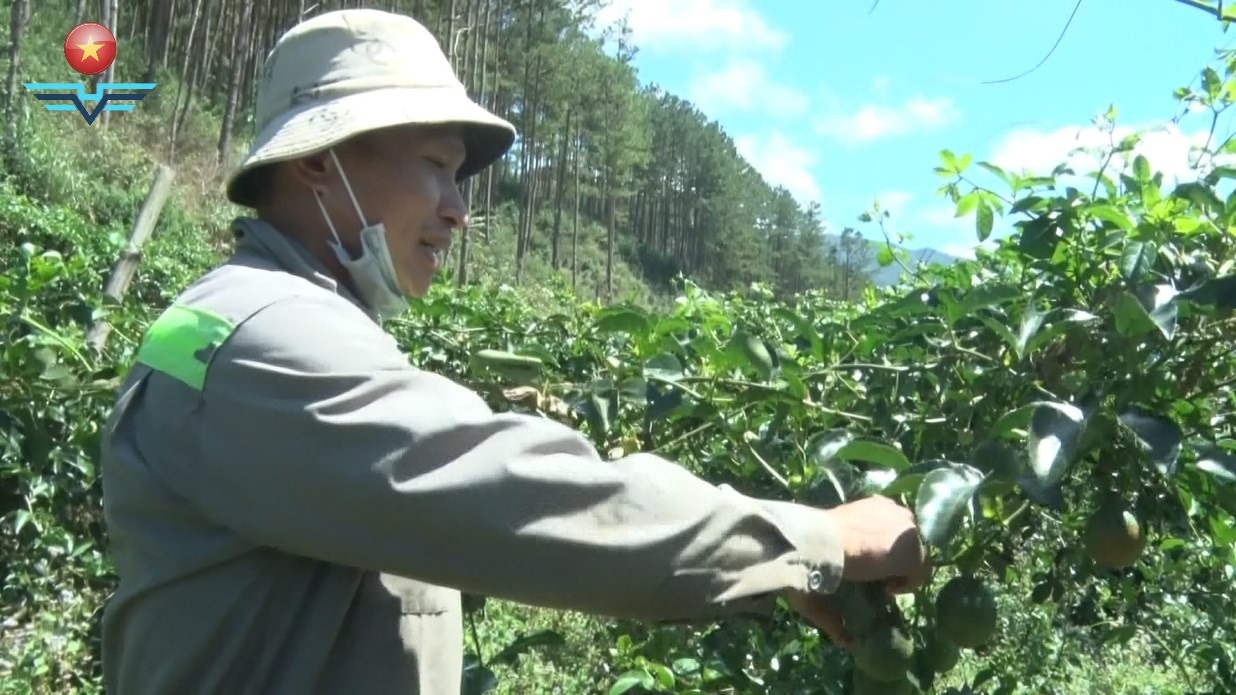
Alongside soil improvement and the shift to crops suited to local climate and soil conditions, farmers in Đạ Chais commune (Lạc Dương district) have recently expanded the cultivation of passion fruit—locally called chanh dây.
While maintaining their existing coffee acreage, many households are boldly intercropping passion fruit with coffee. This approach diversifies crops, boosts yields, and brings a more stable and higher income.
Previously, Mr. Vày Sỹ Quân’s family in Đạ Chais relied mainly on coffee for income. In 2021, after some research, he introduced passion fruit seedlings to six sào (about 6,000 m²) of coffee land.
Each month, he harvests 6–7 tons of passion fruit, selling it to a local buyer at 15,000 VND per kilogram. Thanks to passion fruit, his household’s finances have steadily improved, with reliable monthly revenue. He plans to expand the model by another hectare.
Similarly, in late 2020—when coffee prices were volatile—Mr. Trịnh Xuân Trường decided to intercrop passion fruit across 2 ha of coffee.
According to Mr. Trường, Đạ Chais’ climate and soil are well-suited for passion fruit, which suffers little from pests and produces abundant fruit. On average, each sào (about 1,000 m²) yields about 10 tons per year.
All of his passion fruit is contracted to a buyer at 15,000 VND/kg. After expenses, each hectare of passion fruit brings his family around 500 million VND annually.
Recognizing the high productivity and economic efficiency of intercropping passion fruit with coffee, the Đạ Chais Farmers’ Association has organized growers into a dedicated Passion Fruit Farmers’ Sub-Association to strengthen production links. It currently has 35 members—mostly ethnic minority farmers—covering more than 20 ha, with plans to expand to 50 ha in 2023.
Going forward, the Lạc Dương district Farmers’ Association aims to partner with farmer groups in other provinces and cities to secure stable outlets and processing partnerships for passion fruit. The district also plans to form cooperatives to develop a locally branded passion fruit industry.
Through these efforts, intercropping passion fruit with coffee is becoming a sustainable, high-value farming model for the region.