
Prolonged Heat Drains Rivers and Reservoirs
Table of Contents
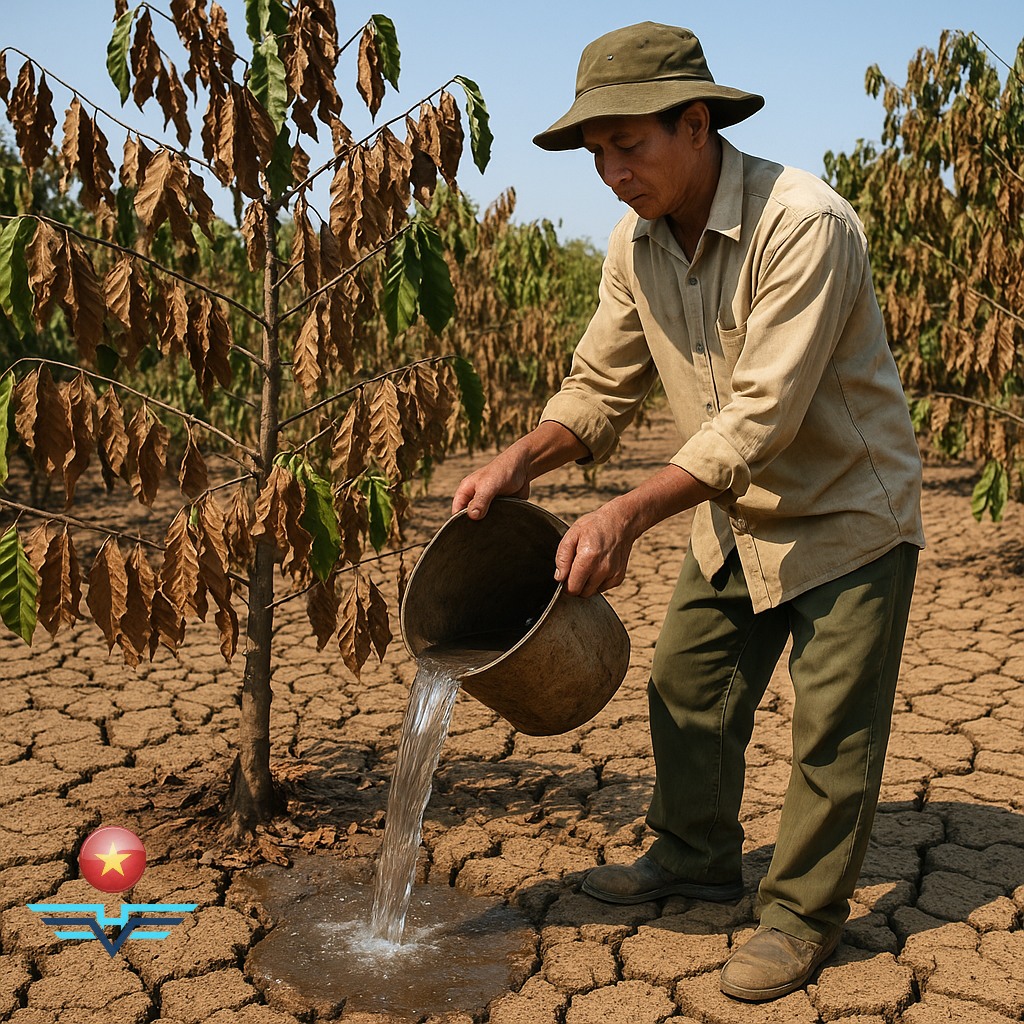
Đắk Lắk Province is grappling with record-breaking drought, rapidly lowering water levels in rivers, streams, lakes, and reservoirs. Nearly 10,000 hectares of coffee plantations are now parched, creating a high risk of massive yield losses—or even total crop failure in the upcoming season.
Krông Búk District: Coffee Heartland in Crisis
-
Area Affected: About 3,912 hectares of coffee have already missed two irrigation cycles, concentrated across seven communes.
-
Water Shortage: The district operates 37 small and medium irrigation works, but these supply only around 30% of the water needed. The rest of the coffee area relies on rivers, streams, and groundwater.
-
Since mid-February, relentless heat has dried up most irrigation sources, leaving farmers—especially ethnic minority households—scrambling to find water to keep their coffee plants alive.
Nguyễn Văn Pháp, Head of the District Agriculture and Rural Development Office, confirmed that many areas cannot even complete the second irrigation round, a stark contrast to previous years.
Farmers Struggle to Save Their Crops
To fight the drought, farmers are investing tens of millions of đồng to:
-
Buy extra plastic pipes.
-
Dig traditional wells and drill more than 100 meters deep.
-
Bore horizontal side holes or even dig into dried-up reservoirs and streams to capture subsurface water.
These emergency measures are meant only to keep coffee plants alive through the dry season, even if flowering and fruit set for the next harvest are sacrificed.
Emergency Response and Adaptation
-
Local Action: Krông Búk authorities have instructed water cooperatives to dredge wells and reservoirs, clear watercourses, and regulate fair water distribution to prevent disputes between neighboring farms.
-
Financial Support: The district plans to allocate local budget funds to help ethnic minority farmers buy fuel for pumps to maintain emergency irrigation.
-
Future Strategy: Officials advise growers in areas without reliable water sources to consider switching to other long-term industrial crops that offer higher economic returns and are better adapted to increasingly dry conditions.
With nearly 10,000 hectares of coffee at risk, the current drought in Đắk Lắk underscores the urgent need for sustainable water management and crop diversification. Without swift action, the Central Highlands’ coffee industry faces serious economic losses and long-term challenges in adapting to climate change.