
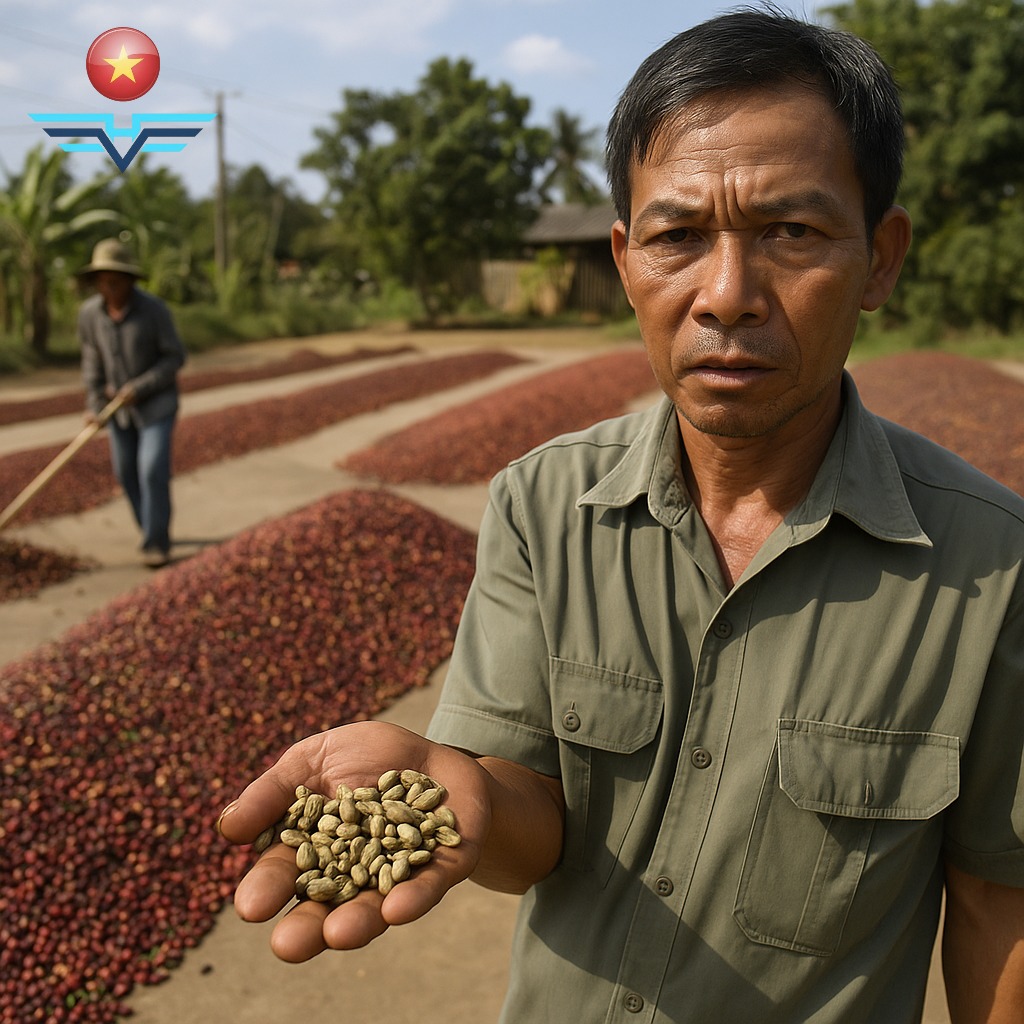
Coffee traders are advising farmers to store their harvest and release it “little by little” in order to stabilize prices. This approach also benefits domestic coffee exporters, as it reduces the pressure to raise large amounts of capital to buy up coffee and helps avoid being forced into lower prices by foreign buyers.
Nguyễn Xuân Thái, Director of Thắng Lợi Coffee Co., Ltd., recommends that farmers temporarily store coffee at home and avoid selling it in bulk, which can allow speculators to manipulate prices. “At the start of the harvest, coffee prices usually dip a little because farmers need to sell quickly to repay debts and cover expenses for the Lunar New Year and their children. In my view, farmers should keep coffee in storage and sell only when necessary. Holding coffee and selling it gradually is the way to protect prices,” Thái explained.
Nguyễn Nam Thuận, a farmer from Cư Dliê M’nông commune (Cư M’gar District), shared his experience: last season he harvested 8 tons of coffee beans but sold only 2 tons early in the season to settle debts. He gradually sold the rest and finished selling by August 2012. “I only sold when I truly needed money and saw prices were good,” Thuận said. Thanks to storing his coffee, he was able to lock in high prices—around 40 million VND per ton.
Nguyễn Huy Nam, from Ea Kiết commune (also in Cư M’gar), added: “The truth is not all farmers have the financial means to hold back coffee. No one wants to sell when prices are low, but if we don’t sell, creditors come knocking. During the season we owe money for fertilizer, labor, and other costs, and even before the harvest creditors are already reminding us. So to hold coffee in storage, we need access to working capital…”
The advantages of farmers storing their coffee are clear, but for this to be widely practiced, there must be financial support measures to help growers stockpile their crop and avoid mass selling during the peak harvest period when prices typically drop.