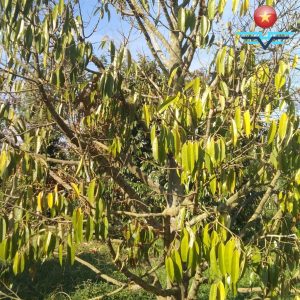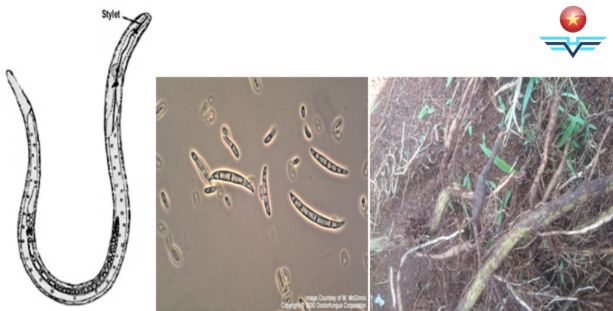
Vietnam – In recent years, agricultural researchers have made breakthroughs in protecting fruit trees and seed crops by studying how nematodes and pathogenic fungi attack plant root systems. Their work has led to innovative recovery methods that have saved orchards once thought beyond rescue.
Nematode-Related Diseases
Table of Contents
Nematodes are microscopic roundworms that live in the soil and feed on plant roots. When populations grow unchecked, they cause:
-
Root galls and lesions, reducing the plant’s ability to absorb nutrients and water.
-
Stunted growth and yellowing leaves, leading to poor flowering and lower yields.
-
Increased vulnerability to secondary infections, especially from soil-borne fungi.
The Dangerous Synergy
The greatest threat comes when nematodes and pathogenic fungi work together:
-
Nematodes create entry points for fungi, allowing pathogens to penetrate deeper into root tissues.
-
Pathogenic fungi such as Fusarium and Phytophthora exploit these wounds, causing root rot, wilt, and rapid plant decline.
This nematode–fungus combination can devastate fruit trees and seed crops, making early detection and integrated management essential.
Nematodes on Black Pepper: Gateway for Deadly Root Diseases
Parasitic nematodes on black pepper (Piper nigrum L.) include both ectoparasitic (external) and endoparasitic (internal) species. These microscopic pests attack the root system, creating mechanical wounds and tiny holes.
Such damage provides an ideal entry point for pathogenic fungi such as Fusarium sp. and Phytophthora sp., which then invade the roots and cause quick wilt (chết nhanh) and slow wilt (chết chậm). These two diseases are among the most serious threats to pepper yield and plant survival.
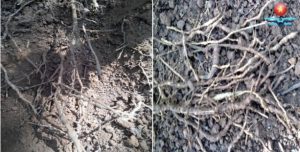
Nematodes on Black Pepper Roots: How They Damage and Weaken the Plant
Field observations show that parasitic nematodes create large galls (root knots) and cause root blackening in black pepper (Piper nigrum L.). While the mechanical wounds they produce are relatively minor, the greatest harm comes from the toxic saliva they inject while sucking plant cell sap. This toxic secretion leads to stunted growth and gradual plant decline.
Nematode Presence and Key Species
-
Habitat: Nematodes are consistently found around pepper roots, with the highest density at 5–40 cm soil depth.
-
Root-knot nematode (Meloidogyne incognita): Causes root gall disease, forming large swollen knots and tiny holes in the roots. Affected roots turn dark and decayed, leaves yellow from the base upward, and plants eventually dry out and die. Fine feeder roots are often completely destroyed.
-
Reniform nematode (Rotylenchulus reniformis): Lives inside the roots, causing root rot, yellowing leaves, poor growth, and ultimately plant death as the root system collapses.
Gateway for Fungal Infection
Roots damaged by nematodes become vulnerable to Fusarium sp. and Phytophthora sp. fungi. These pathogens enter through nematode-made wounds, triggering quick wilt and slow wilt diseases that can kill pepper vines even faster.
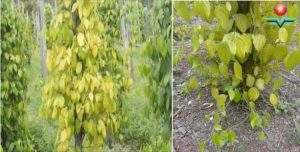
Slow Wilt and Root Rot in Black Pepper: Fungal Co-Infections After Nematode Damage
When nematodes weaken the root system of black pepper (Piper nigrum L.), they create an ideal environment for multiple soil-borne fungi to invade. Alongside Fusarium sp. and Phytophthora sp., other pathogens such as Pythium sp. and Rhizoctonia sp. often attack simultaneously, causing a complex disease known as slow wilt.
Symptoms of Slow Wilt
-
Stunted growth and smaller leaves that gradually turn yellow.
-
Progressive leaf, node, and spike drop from the bottom upward, unlike quick wilt, which causes sudden top-down wilting while leaves are still green.
-
Severely infected roots show reduced ability to absorb water and nutrients, leading to plant decline.
Quick Wilt and Root Rot (Phytophthora sp.)
The water-loving fungus Phytophthora sp., which lives in the soil, can attack alone or in combination with Fusarium sp. and Rhizoctonia sp.. This results in rapid wilting, where vines suddenly collapse and die.
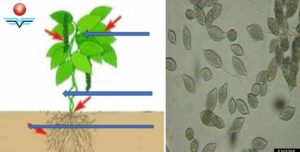
Key Infection Sites of Phytophthora in Black Pepper
The soil-borne water mold Phytophthora sp. typically attacks four key parts of the black pepper plant:
-
Leaves
-
Fruit spikes (pepper chains)
-
Collar region (crown)
-
Roots
Among these, the collar region is the most dangerous site of infection. Here the fungus destroys the plant’s vascular tissues, cutting off the flow of water and nutrients. This damage causes sudden wilting and can lead to rapid plant death.
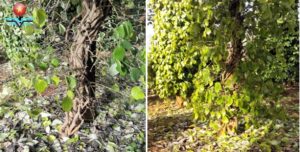
Nấm Phytophthora còn được gọi là nấm thủy sinh – do bào tử nấm ngủ yên và nảy mầm mạnh, hệ sợi phát triển mạnh trong điều kiện mưa nhiều. Nấm ngấm ngầm tấn công vào hệ rễ, khi thấy biểu hiện trên cây thì nấm đã tấn công từ rất lâu trước đó, đã làm bộ rễ hư hại nghiêm trọng. Khi vừa dứt mưa, cây hô hấp mạnh nên cây héo rũ chết hàng loạt. Bệnh chết nhanh rất khó trị vì dấu hiệu chỉ bộc lộ sau khi cây đã bị từ vài tháng trước đó nên bệnh này phòng có hiệu quả hơn trị. Nấm thủy sinh rất cần nước để bào tử nấm nảy mầm, nên vườn cây phải làm mương thoát nước, không để nước từ những vườn khác tràn vào.
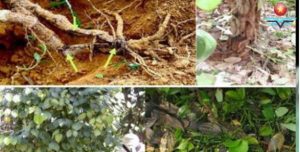
Managing the “Double Threat” of Nematodes and Fungal Pathogens in Black Pepper and Other Crops
Nematodes and soil-borne fungi often act together to damage the root systems of black pepper (Piper nigrum L.) and many other fruit and seed crops. Effective management requires understanding both the causes of infection and the integrated control methods that protect plant health.
Main Causes of Nematode and Fungal Root Diseases
-
Soil microbiological imbalance – a decline in beneficial microbes reduces natural disease resistance.
-
Low organic matter and poor soil pH, combined with inadequate drainage.
-
Excessive use of chemical fertilizers and pesticides, which weakens soil “health” and disrupts the natural microbial ecosystem.
These factors create the ideal environment for parasitic nematodes and pathogenic fungi—including Fusarium sp., Phytophthora sp., Pythium sp., and Rhizoctonia sp.—to invade plant roots.
Two Main Control Strategies
1. Chemical Measures
Apply registered nematicides and fungicides, then follow with organic fertilizers to stimulate root regrowth and restore soil vitality.
2. Biological Measures
Focus on “soil health” by supplying abundant organic matter—such as composted manure, coffee husks, or other well-decomposed crop residues. This provides the foundation for beneficial antagonistic microorganisms, which naturally suppress pests and diseases:
-
Trichoderma sp. – Parasitizes harmful fungi and releases antibiotic-like compounds, competing for nutrients and space to inhibit pathogens.
-
Bacillus sp. – Uses a siderophore mechanism to bind iron (essential for pathogen growth) and produces antibiotic-like substances that kill disease organisms.
-
Streptomyces sp. – Produces chitinase enzymes that degrade the cell walls of pathogenic fungi and also destroy the protective shells of nematode eggs, offering powerful dual control of nematodes and fungal pathogens.
-
Pseudomonas sp. and mycorrhizal fungi – Improve root health and nutrient uptake while helping plants resist infection.
Important: These beneficial microbes are most effective only when the soil contains plentiful organic matter. Always combine microbial inoculants with organic compost or manure to maximize their impact.
After Control: Stimulate Root Regeneration
Once nematodes and fungi are under control, apply high-quality organic fertilizers to stimulate vigorous root growth so plants can once again absorb nutrients and water efficiently, supporting flowering, fruiting, and long-term yield.
Key Takeaways
-
Nematodes and fungal pathogens act as a team. Controlling only one side—either nematodes or fungi—solves only half the problem.
-
Nematode feeding reduces water and nutrient uptake, increases fertilizer and labor costs, and creates entry points for opportunistic fungi such as Phytophthora sp.
-
Proactive management of Phytophthora should target all four infection sites—leaves, fruit spikes, collar (crown), and roots—to prevent rapid wilting and plant death.
-
After pathogen levels are suppressed, strengthen the root system to ensure that pepper vines and other crops regain their normal growth and deliver high yields in future seasons.
Broader Impact
These integrated strategies apply not only to black pepper, but also to a wide range of fruit trees and seed crops that grow in soil and face the same double threat of nematodes and fungi. By focusing on soil health, farmers can maintain productive orchards even as the “health of the soil” declines under modern cultivation pressures.