
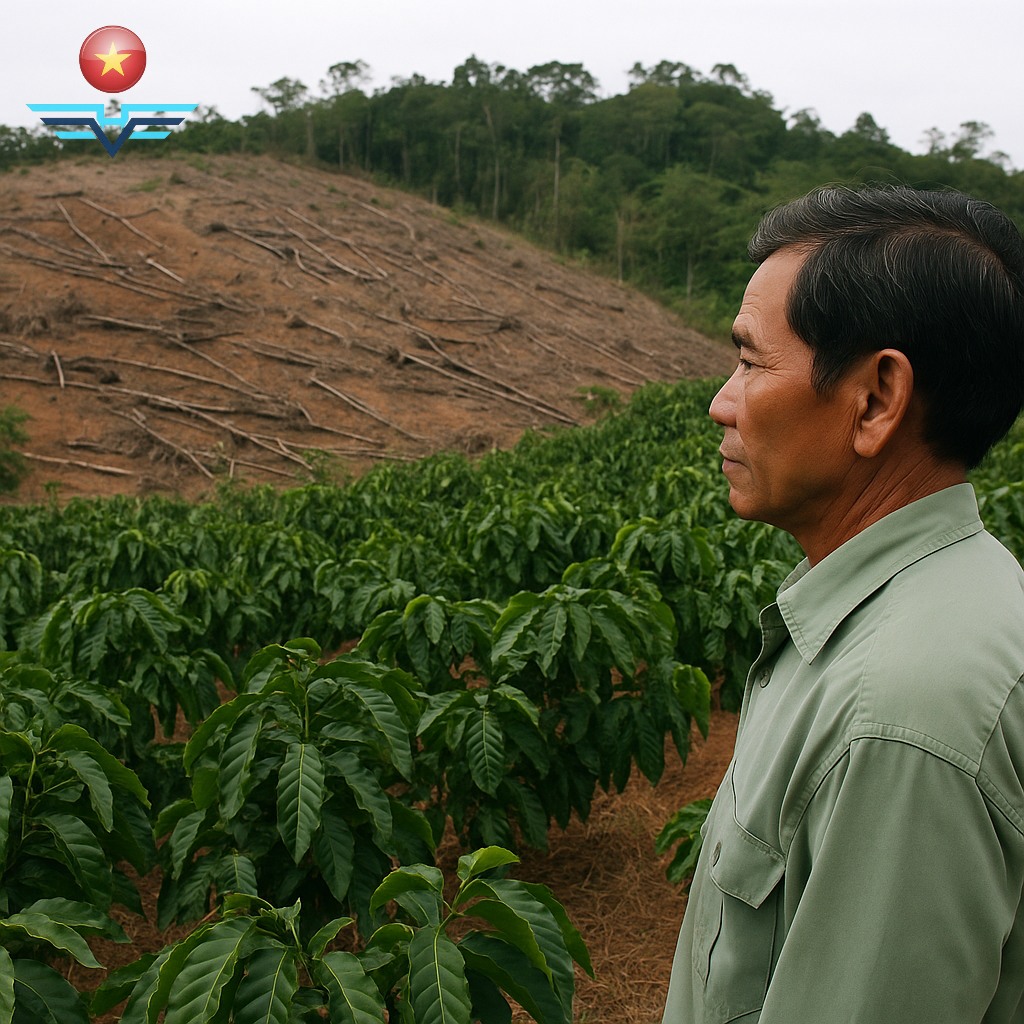
The endless cycle of cutting down and replanting crops has drained the strength and finances of countless farming families. Professor Võ Tòng Xuân shares his concerns about the way Vietnam has developed its agriculture in a kind of “wild freedom.”
Freedom That Becomes a Burden
Table of Contents
Professor Võ once remarked that “nowhere are farmers as free as here.” Does this mean the Contract 100 and Directive 10 policies, which “liberated” farmers and made them masters of their fields, successfully turned Vietnam into a “rice export powerhouse” by giving farmers the freedom to work their land creatively and productively?
He clarified: freedom in production does not mean the absence of organized production.
“When I said no farmers are as ‘free’ as ours, I meant it in a negative—not positive—sense.”
In recent decades, we have praised farmers for their sacrifices for the nation, and indeed they deserve respect and sympathy for their hardships. Yet if this continues, sympathy turns into harm, because no sector can prosper sustainably when everyone operates in total freedom. At best, success would be a fleeting stroke of luck.
Professor Võ gave examples:
-
In Tây Ninh, vast sugarcane fields disappeared the next year, replaced by cassava, soursop, or rubber.
-
In Phan Thiết (Bình Thuận), areas once planted with rice were suddenly covered in dragon fruit.
Whenever prices drop, farmers hastily cut down old crops and plant new ones—without market data or expert advice. They simply follow what seems profitable this year, only to face a changed market next year, and the cycle repeats. This “cut–replant, replant–cut” loop exhausts families’ capital and energy and prevents real progress.
Lack of Planning and Organization
Many provincial leaders and agriculture officials admit they are heartbroken, but the State cannot simply ban farmers from changing crops. The core problem is that farmers are left to “swim on their own,” with no national market-based planning to link production, processing, and export.
This leads to chronic “bumper crop, falling prices” situations.
The 2012 crisis in basa catfish farming—where hundreds of farms and processors competed fiercely and foreign traders forced prices down—was also due to poor organization and inconsistent quality.
Some farmers even cut corners, using cheap antibiotics when fish fell ill; exported fish were rejected abroad and then resold domestically.
“Such unregulated freedom cannot sustain development,” Professor Võ warned.
Lessons from Abroad
In Europe, farming is tightly regulated:
-
Farmers must hold a government license, obtained only after training.
-
They farm their own land but must follow the government’s production plan, including strict technical standards for each crop and livestock type.
-
Even fertilizer use is controlled because over-fertilizing worsens climate change. Purchases are tracked via invoices; buying too much fertilizer is proof of overuse and leads to fines.
While Vietnam cannot yet impose such strict rules, Professor Võ stresses that farmers cannot be left in a “wild freedom”. Field visits show widespread technical violations: fertilizer applied away from roots, rice broadcast too densely, excessive urea use, and more.
The Need for Modern Farmers
Vietnam must retrain its farmers and equip them with scientific and technical knowledge.
“We need farmers who innovate in agricultural production,” Professor Võ concludes.
Without such knowledge, farmers—and the nation—will continue to suffer losses and fall behind in the global race for competitiveness and cooperation.