
The Central Highlands dry season has arrived, bringing with it the familiar fears of water shortages and failed harvests. In An Khê Town, eastern Gia Lai Province, the anxiety is visible. By this time in most years, the winter–spring crop would be fully or nearly fully planted. Yet in the 2013–2014 season, only 2,700 hectares—about 69% of the planned area—have been sown.
This delay is not due to a shortage of seed or land, but to the lack of rain. Rains came late and in lower-than-normal amounts, making farmers reluctant to gamble with the weather.
Farmers Hesitate to Plant Amid Uncertain Rainfall
Table of Contents
At Song An Commune, veteran farmer Bùi Hải has planted only half of his fields. He explains: “Better to be late than to risk losing seed, labor, and fertilizer if the rains don’t come.”
The An Khê Economic Office warns that without more rain soon, both planted area and crop yields will drop sharply, threatening the region’s key crops and food security.
Heat and Fire Risk Across Key Agricultural Areas
Throughout eastern and southern Gia Lai, farmers are battling the fierce dry-season heat. Districts known for rice, sugarcane, tobacco, and pulses—including Krông Pa District—already show scattered drought damage.
-
Thanks to the Ayun Hạ reservoir, irrigation water is not yet critical.
-
However, farmers fear that the scorching sun over vast sugarcane fields in Ayun Pa and Ia Pa could spark fires.
These fears are already reality: around 200 hectares of sugarcane have burned before and after the Lunar New Year. In Kbang District, several cane fires have been reported since early 2014. On 18 February, nearly 20 hectares of sugarcane in Tơ Tung Commune were destroyed, including 4 hectares belonging to farmer Vũ Thị Huệ.
Coffee Growers Face Irrigation Challenges
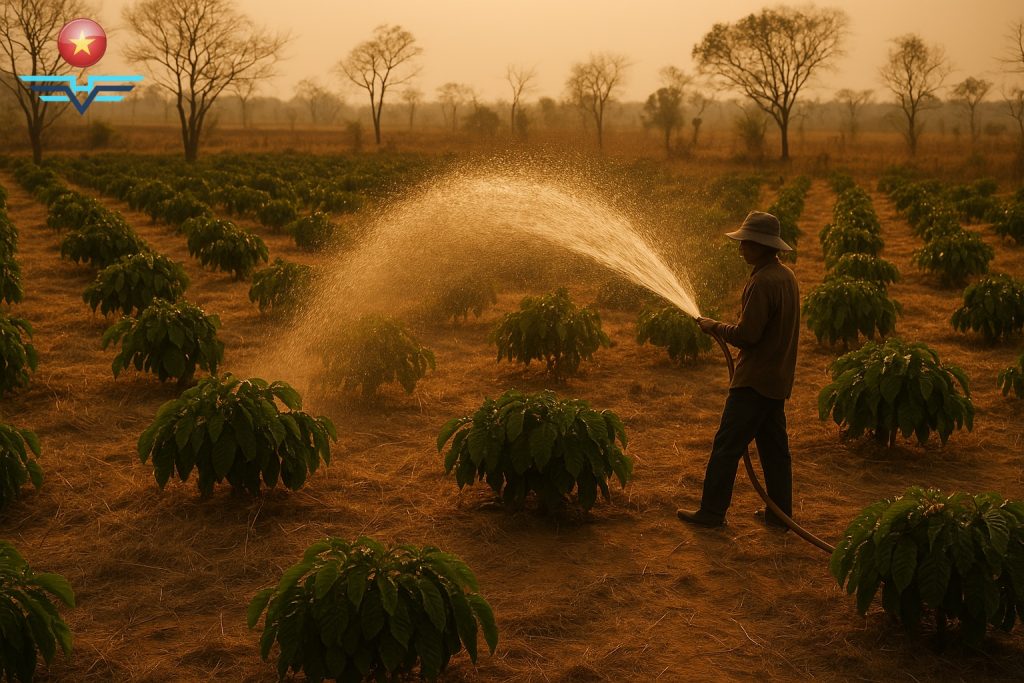
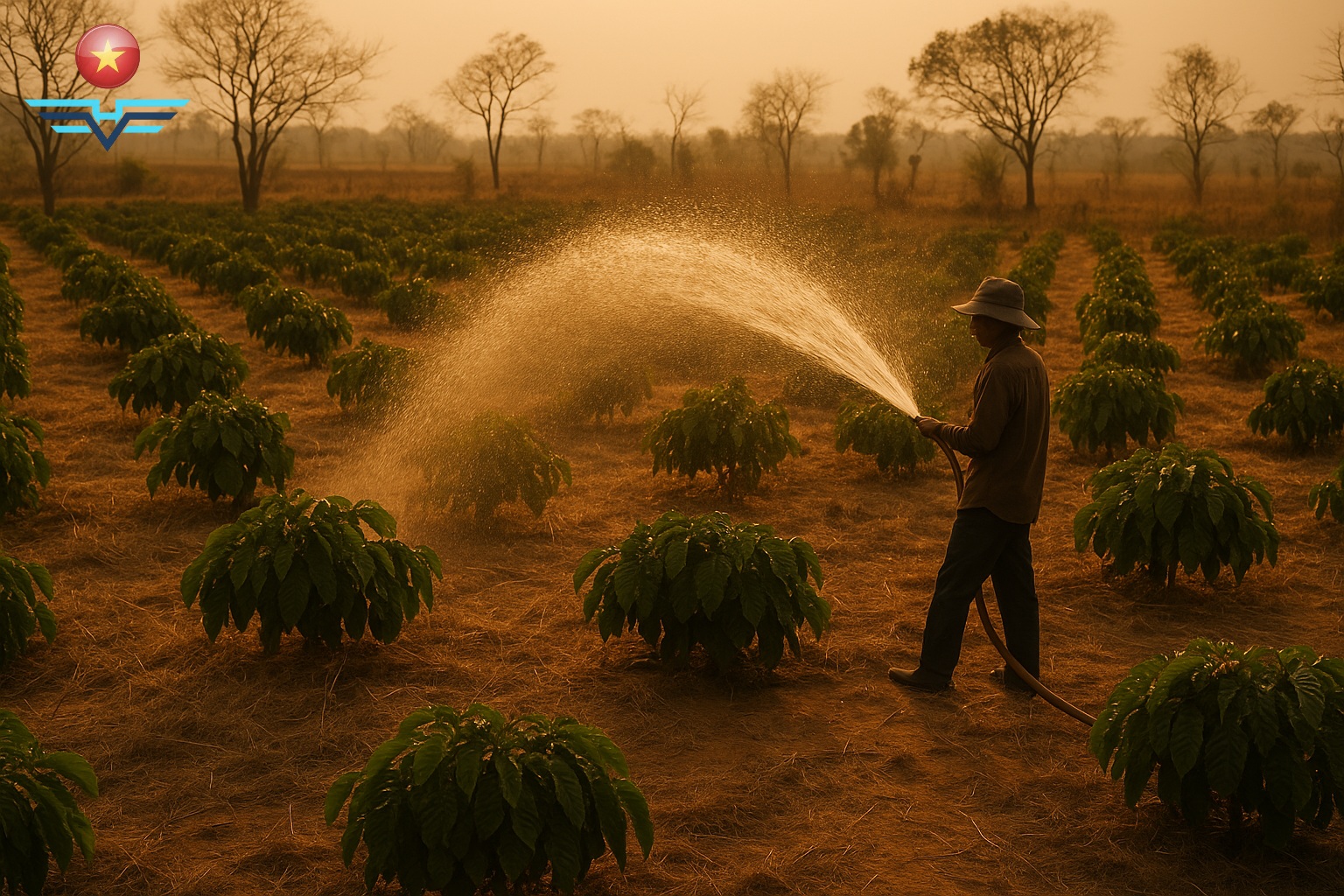
For coffee farmers, irrigation is now the top concern. In Ia Sao and other communes of Ia Grai District, farmers normally rely on reservoirs and dams, but they know the weather’s unpredictability.
-
Many have begun watering schedules early. Families with enough labor take turns irrigating through the night, while others hire workers at 40–50 thousand VND per hour.
-
Hồ Văn Thới, who manages nearly 2 hectares of coffee in Ia H’rung Commune, has already spent over a million VND hiring laborers because his wife is ill and his children are away at school.
Kon Tum’s Đăk Hà District: Coffee Wilting Under Harsh Sun
In Đăk Hà District—Kon Tum Province’s key coffee area—growers are staying up all night searching for water.
-
Hundreds of households in Hà Mòn Commune, the province’s first to achieve “New Rural” status, cannot even complete their first irrigation round, when normally the second would already be finished.
-
Nearly 100 hectares of coffee are withering under the harsh dry highlands sun.
Some farmers run pumps and pipes for kilometers to draw water from the Plei Krông hydropower reservoir, but the long distance and weak pumps make this only a partial solution.
Call for Stronger Support
Across the northern Central Highlands, farmers are enduring an unforgiving dry season. Their greatest hope is for stronger support from local authorities and agricultural agencies to help reduce the damage caused by the drought and ensure the survival of vital crops such as rice, sugarcane, and coffee.