

Meta description: Black pepper prices in Phu Yen have collapsed while disease outbreaks spread, forcing farmers to cut down pepper vines and seek alternative crops.
Pepper Prices Drop and Diseases Spread
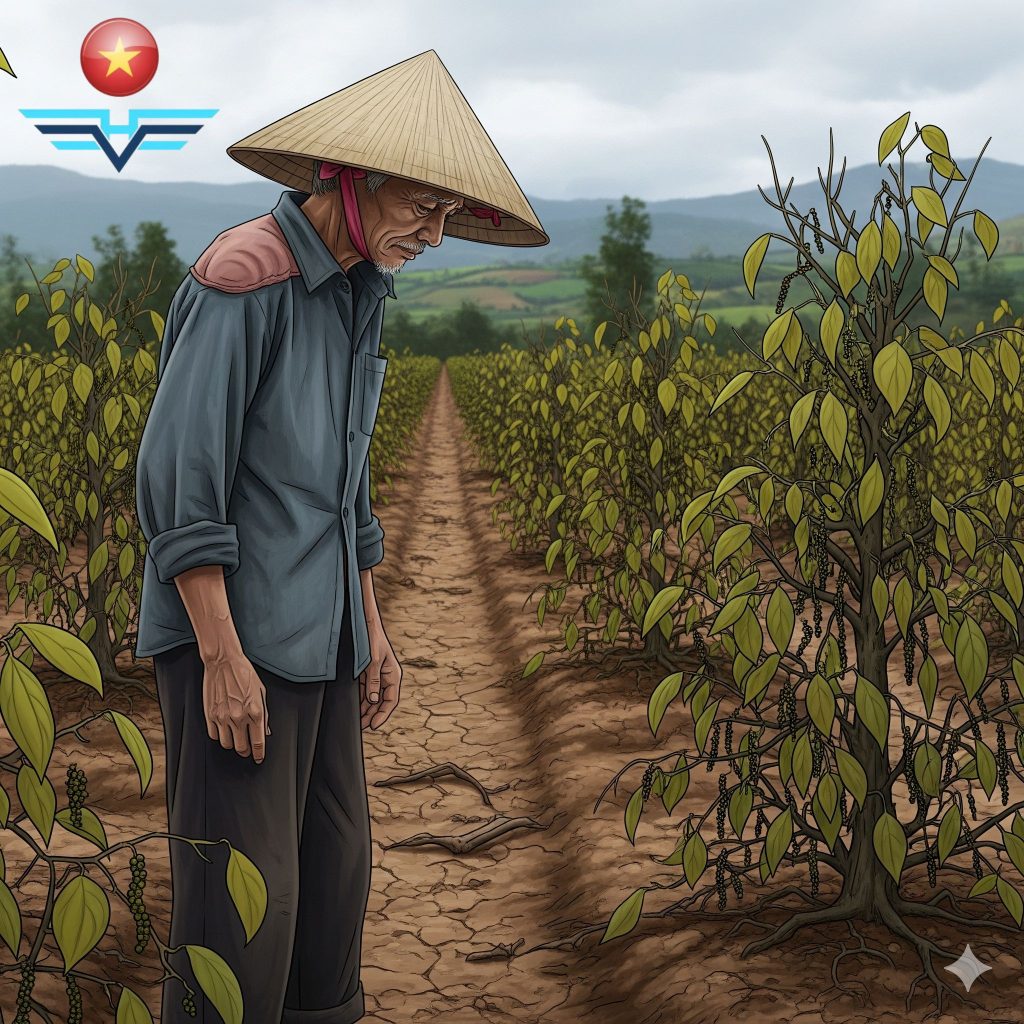
In recent years, black pepper prices in Phu Yen have fallen sharply—from record highs to only about 30,000 VND per kilogram of dried pepper. At the same time, deadly “quick wilt” and “slow wilt” diseases have ravaged plantations, causing yields to collapse and leaving many growers facing serious financial hardship.
At Son Thanh Tay commune (Tay Hoa district)—once called the “pepper capital” of Phu Yen with more than 500 ha of high-quality pepper—the situation has become bleak. Since late 2017, most households have suffered heavy losses. To cut their losses, many have started cutting down pepper vines and switching to short-term crops just to secure an immediate income.
Farmers “Exhausted” and Turning to Other Crops
According to Phan Trong Anh from Son Truong village, the cost of growing pepper is too high compared with the returns. Continuing to invest would put his family’s finances at risk. Many farmers have already shifted to crops such as corn, cassava, eggplant, asparagus, passion fruit and various fruit trees.
Farmer Doan Van Chien in Son Tinh village once cultivated 4,000 m² of pepper. Today, he has removed over half of it to plant corn and eggplant. Although these crops earn only 1–2 million VND per harvest—far less than pepper once did—they provide a temporary income to keep the household afloat.
The Son Thanh Tay commune People’s Committee reports that more than 300 ha of pepper vines have been uprooted. Most of this crop conversion is spontaneous, without formal planning or guaranteed markets.
Local Authorities Call for Long-Term Solutions
Trinh Lam Hai, chairman of the Son Thanh Tay commune People’s Committee, admitted that tearing out diseased pepper vines to plant other crops is only a short-term fix. The commune has asked provincial authorities to provide clear guidelines for choosing crops that match the local soil and climate and to help indebted farmers restructure or defer their loans.
Elsewhere, pepper acreage is also shrinking. In Song Hinh district, pepper area has dropped from about 200 ha to only 60 ha as growers switch to fruit trees or rubber.
The Ministry of Agriculture and Rural Development had planned for about 400 ha of pepper in Phu Yen by 2020. But during the price boom, farmers expanded to over 1,000 ha—2.5 times the planned area. Today, with prices down and disease pressure high, both growers and the agricultural sector face a major challenge: finding sustainable replacement crops with stable markets to secure farmers’ livelihoods.