
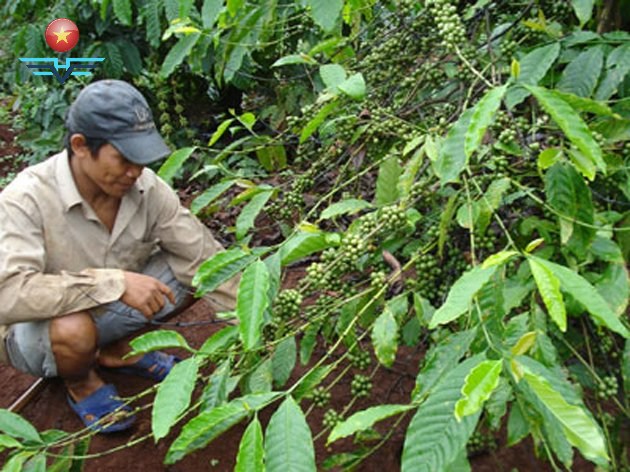
I am also a coffee grower, currently managing 5 mẫu (about 1.8 hectares) of coffee. At times, my coffee trees have shed up to one-quarter of their cherries.
From my own observation and farming experience, premature fruit drop can be caused by several factors:
Nutritional factors
Table of Contents
-
Heavy fruit load with delayed fertilization
If your trees are carrying a heavy crop and you do not apply fertilizer in time, the plants will naturally shed some fruit to balance their nutrient needs. -
Incorrect or unbalanced fertilization
At different growth stages, coffee requires varying ratios of N–P–K to support both fruit development and vegetative growth. A shortage of secondary and trace elements—nutrients that form enzymes and co-enzymes for plant metabolic processes (similar to vitamins for humans)—can also trigger fruit drop. -
Insufficient fertilizer application
If the overall amount of fertilizer is lower than the tree’s demand, nutrient deficiency will lead to cherry drop.
Pests and diseases
-
Fungal infections
During the rainy season, high humidity favors fungal diseases:-
Fungi can attack the fruit stalk, causing rot and fruit drop (especially at the young cherry stage).
-
They can infect branches, causing branch dieback and subsequent fruit loss.
-
They may damage the fruit itself and cause it to fall.
-
Some fungi defoliate the tree, reducing photosynthesis and leading to cherry drop.
-
-
Insect pests
Mealybugs are common—they suck sap from young plant tissues, weakening the plant and creating wounds where fungi can invade. -
Heavy fruit load beyond root uptake capacity
If the root system cannot supply enough nutrients for all the fruit, cherries will naturally drop. You can supplement with reputable foliar fertilizers to provide additional nutrients through the leaves.
Important management notes
-
Proper incorporation of fertilizer
If fertilizer is not well covered in the soil, a large portion can be lost through volatilization, leaching, or deep infiltration. -
Avoid applying too much fertilizer at once
Over-fertilization can raise soil salinity around the roots, damage them, and impair water and nutrient uptake, causing fruit drop. Excess nutrients can also leach away or move beyond the root zone. -
Add organic matter
On sandy loam soils with poor nutrient retention, even large fertilizer applications may result in limited nutrient uptake. Apply organic fertilizer to improve soil colloids, increase water- and nutrient-holding capacity.
Integrated approach
Premature fruit drop is usually the result of several factors combined. Therefore:
-
Inspect your coffee garden frequently to detect pests or diseases early and respond promptly.
-
Consult agronomy experts for advice on fertilizer types and correct application rates for each growth stage.
-
Provide secondary and micronutrients, typically via foliar sprays or diluted applications at the base.
-
Prune branches to keep the canopy open, reduce pest and disease pressure, and help the plant concentrate nutrients on fruiting branches.
-
Follow weather forecasts to anticipate disease outbreaks during the rainy season.
-
For insect pests, spray insecticides as soon as they appear. For fungal diseases, preventive fungicide sprays are most effective—waiting until disease is established can cause major losses. Always seek professional guidance on the right product, timing, dosage, and spraying technique.
With careful monitoring and timely interventions, you can minimize premature cherry drop and secure a more abundant harvest.