

Background
Table of Contents
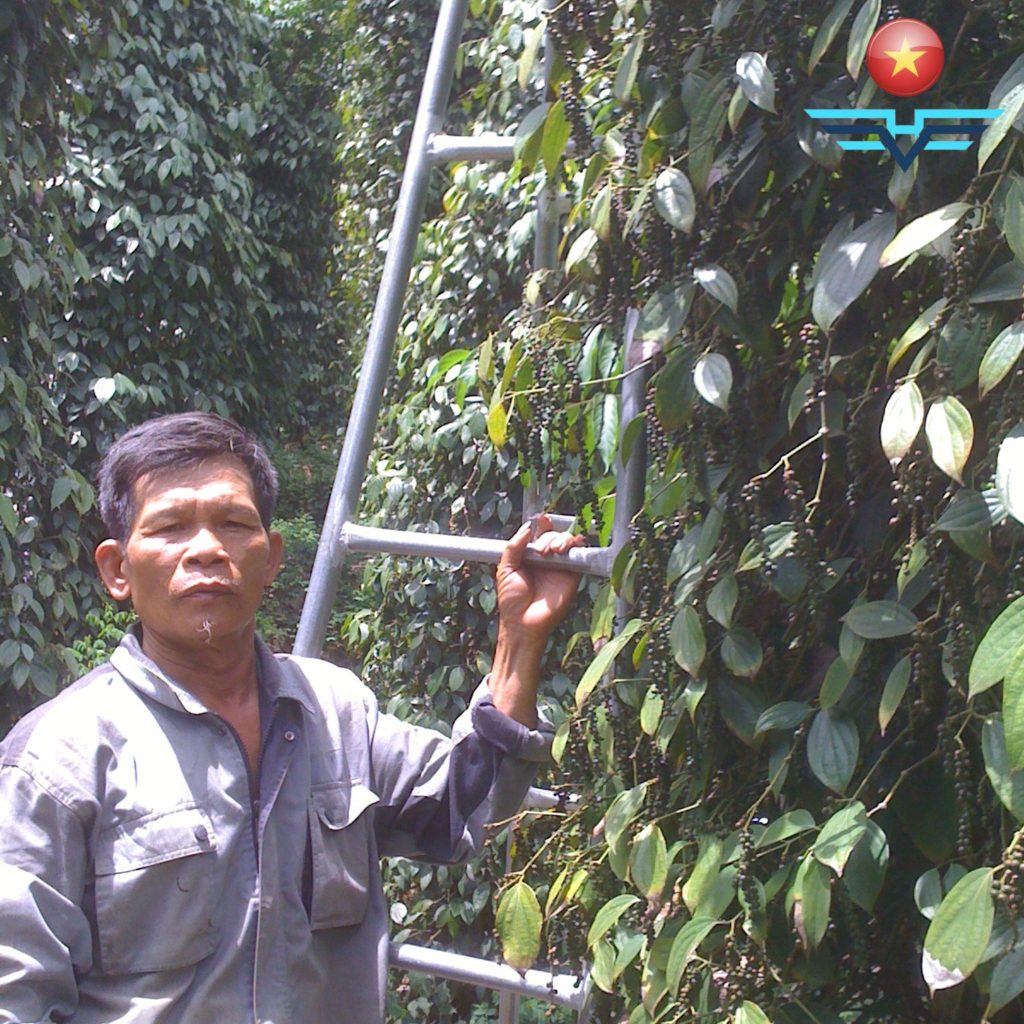
In the challenging climate at the summit of the Truong Son range—where weather patterns shift between “east sun, west rain”—farmer Trinh Van Ba developed a reliable way to make black pepper vines flower consistently. After years of experimenting with fertilizers and growth stimulants with poor results, he perfected this method in the 2013–2014 season. Some pepper posts in his garden now produce over 8 kg of dry pepper each.
Key Principle: Controlled Water Stress
Traditional perennial farming often involves immediate tilling and heavy fertilizing after harvest. But for black pepper this practice can damage roots and cause fertilizer burn. Instead, Trinh Van Ba applies a water-cut strategy to create temporary drought stress, which naturally triggers flower bud differentiation.
Step 1 – Soil Exposure & Root Pruning
-
Turn the soil across the entire garden.
-
Create a 25 cm-wide trench around the canopy line of each vine.
-
This severs some roots, effectively “cutting off water” to the plant.
-
-
Sun-dry the soil to:
-
Sterilize by killing nematodes and fungal pathogens.
-
Decompose plant residues and increase soil humus.
-
Step 2 – Morning Sanitation Spray
Immediately after trenching, spray a mix of Agrifos 400 and Amitage thoroughly on trunks, foliage, and trench soil.
-
Purpose: disinfect cut roots, suppress nematodes, mealybugs and other soil pests.
This forced dormancy promotes bud differentiation. Even if it rains soon after, flowering induction is not affected.
Step 3 – Nutrient & Moisture Recovery (after 20–25 days)
-
When new white feeder roots emerge and flower nodes begin to swell:
-
Apply fertilizers sparingly into the trench and cover with soil.
-
Irrigate to field capacity, then drench with liquid bio-fertilizer and spray organic bud stimulants twice, one week apart.
-
-
At this stage, chemical fertilizers should be minimal and evenly distributed to protect the new roots.
Ongoing Care
-
After bud set, continue standard pepper care routines.
-
Maintain regular disease prevention and balanced fertilization, as recommended by local experts such as Nguyen Vinh and Nguyen Minh Vinh.
Results & Benefits
-
Renewed root system: young, healthy roots replace old, diseased ones.
-
Improved soil health: sun-drying and organic matter enhance soil fertility.
-
Higher yields: record harvests compared to previous years, even after harsh rainy seasons.
Tip: This method combines natural plant physiology with careful disease management. For sustainable results, repeat annually and integrate with routine plant protection.
By combining strategic water stress, soil management, and timely nutrition, this farmer-tested approach can help black pepper growers achieve uniform flowering and stable high yields even in challenging climates.