
Farmers’ Decade of Hard Work Betrayed
Table of Contents
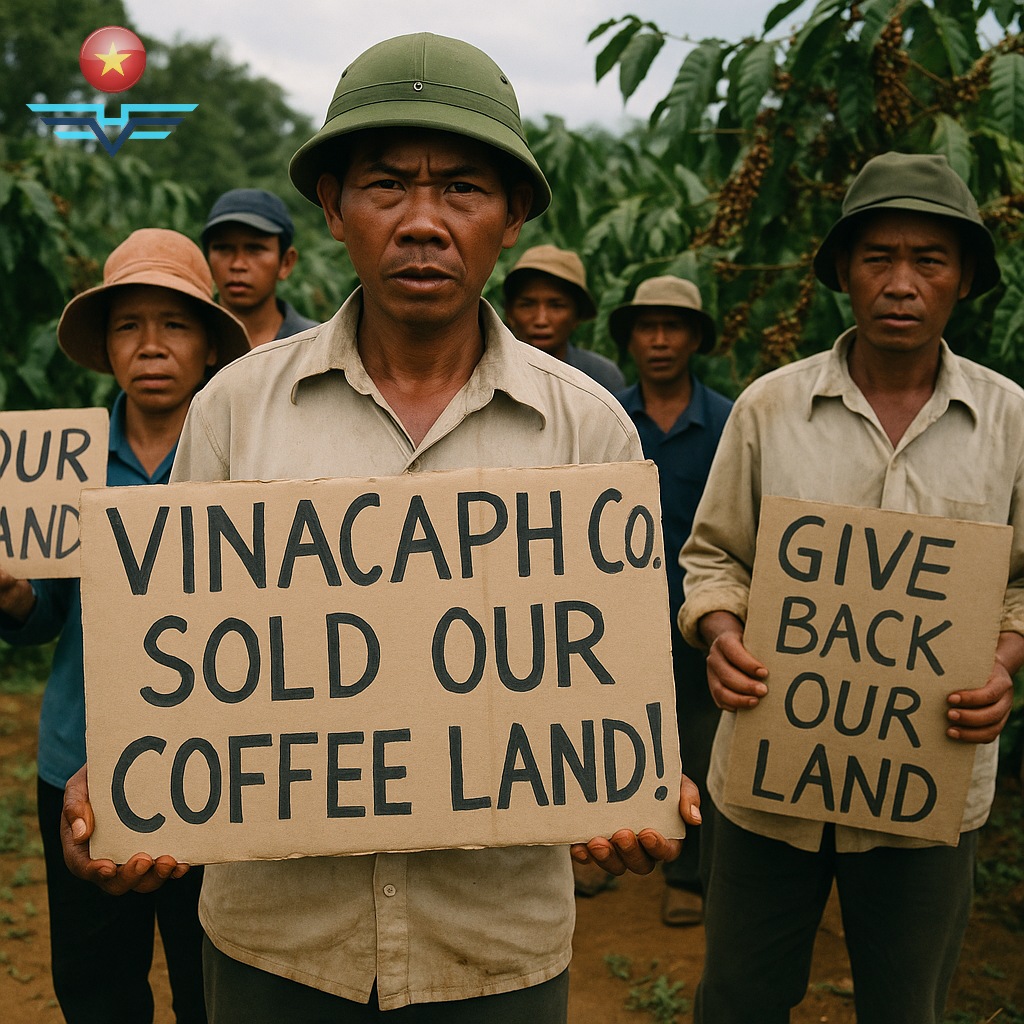
Between 2009 and 2011, investigations revealed that Vinacaphe Quang Tri suffered heavy financial losses—yet during this time the company sold 215 hectares of coffee plantations that 150 poor farming households had painstakingly reclaimed and cultivated for nearly a decade.
These families—many from Ninh Thuan, Quang Binh, and Quang Tri—had borrowed heavily to transform wild, weed-covered hillsides in Pa Tầng Commune, Huong Hoa District into productive Catimor coffee plantations. For ten years, they invested labor and borrowed capital, expecting eventual profits and secure land rights.
The Original Agreement
-
In 2002–2003, Duong 9 Coffee Company (now Vinacaphe Quang Tri) leased land from the Quang Tri Provincial People’s Committee for 45 years.
-
The company then signed civil contracts with the farmers to plant coffee, promising that after three production cycles the farmers would obtain long-term land rights and legal ownership of the coffee trees.
Despite these agreements, crop failures and high production costs meant farmers struggled for years without profit—yet they held on, trusting the company’s commitment.
Shocking Sale of Farmers’ Coffee
While farmers continued to repay debts and maintain the plantations, Vinacaphe Quang Tri secretly sold the 215 hectares—the only asset these families had built—to Khe Sanh Rubber Joint Stock Company.
-
On February 20, Khe Sanh Rubber leaders visited Pa Tầng to negotiate, claiming they had unknowingly purchased the coffee assets.
-
The farmers refused to meet, presenting evidence of their rightful ownership of the coffee trees.
Farmer Tran Xuan Nhi described the community’s sense of betrayal:
“We believed early losses would be temporary and that later we would finally see income. The company promised that after three production cycles they would secure our land rights. We never imagined such an outrageous betrayal.”
Authorities Step In
On February 24, the Quang Tri Provincial People’s Committee confirmed receiving petitions from the Pa Tầng coffee farmers and pledged to direct local authorities and relevant agencies to resolve the dispute.
The case highlights critical issues of land rights, corporate accountability, and the vulnerability of smallholder farmers who risk their livelihoods on long-term agricultural investments.