
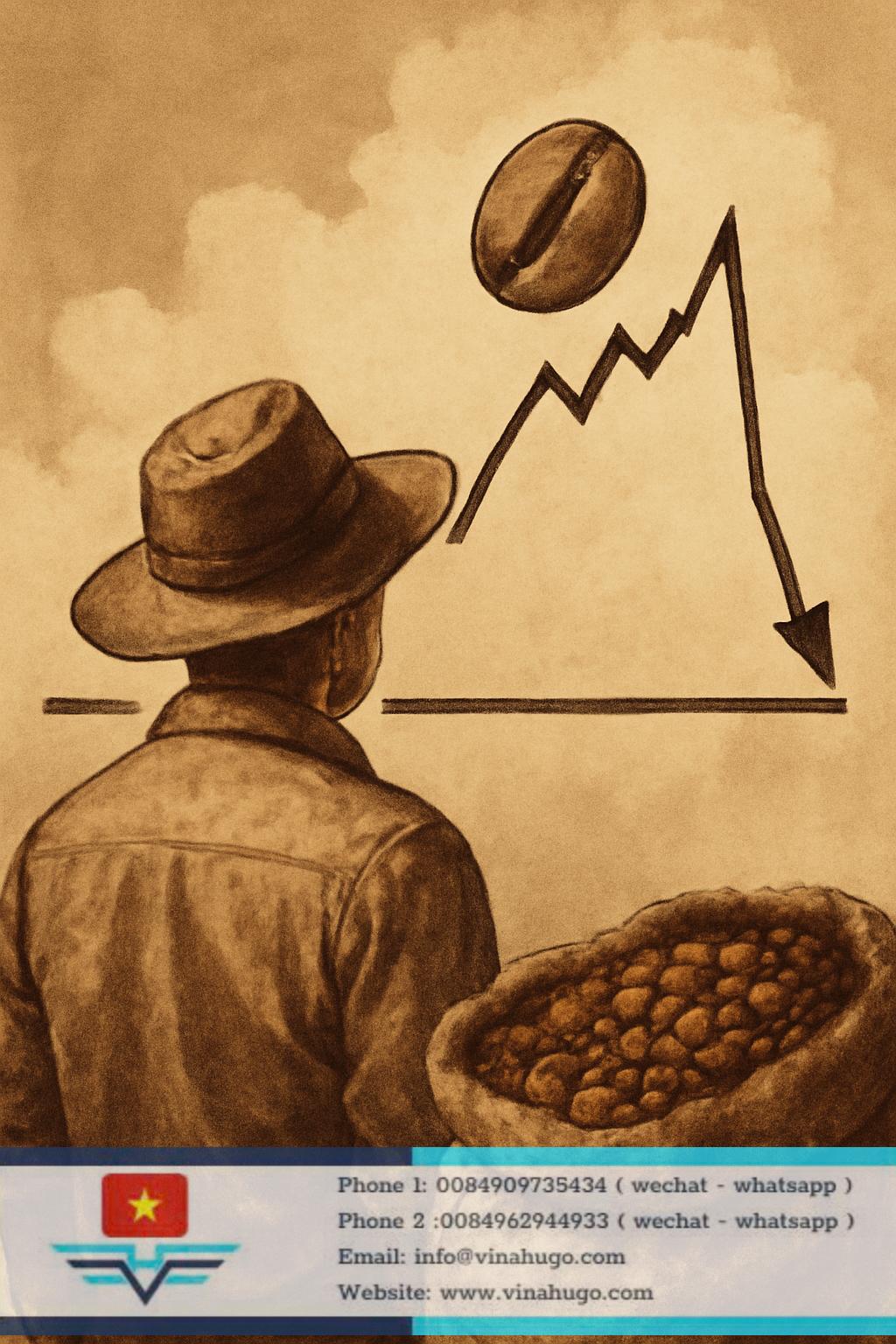
Recently, the erratic fluctuations in coffee prices have left coffee farmers feeling anxious and uneasy. The editorial team of Y5Cafe is pleased to introduce an article by the familiar writer Lê@, reflecting on today’s coffee prices. We are honored to share it with you.
Lately, there have been many articles analyzing coffee prices; mostly evaluating the factors influencing the global coffee market. Each analyst presents their own interpretation.
Some say the price increases are due to the rising value of the US dollar, the prolonged global economic downturn, especially in Greece and Europe.
Others attribute it to the ongoing unemployment crisis in the United States, which President Obama is using in his election campaign, and soon there will be restrictions on the movement of capital and technology abroad…
There are several analyses stating that the current fluctuations in coffee prices are not caused by “supply and demand,” but rather by international financial oligarchs manipulating the market to maximize profits.
Through recent market movements, we can see that many experts have provided insightful analyses of the actual factors at play.
However, it must also be emphasized that the fluctuation in coffee prices is directly influenced by the attitude of the farmers, meaning the supply and demand of coffee in the global market.
We all know that Vietnam’s Robusta coffee exports range from 1,050,000 tons to 1,150,000 tons annually, making it the leading producer of Robusta coffee in the world. Therefore, when we restrict supply, the market is inevitably impacted. Despite global economic fluctuations, the number of coffee drinkers continues to rise, and the price of coffee-based beverages and foods does not decrease.
Thus, we see that the negative price fluctuations are largely due to our own actions; our traditional approach to business has unintentionally (or intentionally?) played into the hands of global speculators.
For many years, farmers have stored all their coffee with warehouse owners (dealers and companies), and the amount of coffee that these warehouse owners hold without spending a dime is substantial—up to several thousand tons. As a result, these warehouse owners can sell large quantities and, when foreign buyers pressure the price down, the price crashes. The Vietnamese traders benefit by selling the coffee they’ve stored at higher prices, then buying it back at lower prices during price manipulation by foreign speculators.
However, when prices reverse due to manipulation, and foreign buyers can’t purchase the coffee, they raise prices again. The local traders, having already sold the farmers’ coffee and not being able to buy it back, incur losses and then try to default on debts.
In the days leading up to the Lunar New Year in 2012, the coffee price dropped dramatically because the amount of coffee delivered according to contracts for January and March 2012 had already been filled (over 300,000 tons). At this point, farmers really needed money, but the world coffee market was silent during the Lunar New Year, as Vietnam wasn’t transacting, so foreign buyers took a break and left the market empty.
Another fundamental reason impacting the market is that farmers have become “smarter” and now actively build their own storage warehouses for their coffee instead of relying on local traders. Therefore, these traders can no longer sell large quantities as they did before and are mostly engaging in buy-and-sell transactions.